



Malt flavor
Malt flavor is a flavouring ingredient designed to provide the characteristic sweet, toasted, cereal-like and caramel notes associated with malt.
It is commonly obtained from malted cereals, especially barley, although commercial malt flavours may also be produced from wheat or other grains, or formulated from concentrated flavouring substances that reproduce a malt-like profile.
During malting, cereal grains are allowed to germinate under controlled conditions, activating enzymes that convert part of the starch into simpler sugars, particularly maltose.
Subsequent drying or roasting promotes the development of characteristic flavour compounds through Maillard reactions and caramelisation, producing notes ranging from mild cereal sweetness to biscuit, toast, caramel or roasted aromas.
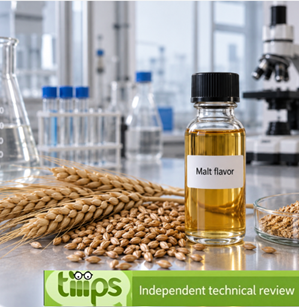
Depending on the formulation, malt flavor may be supplied as a liquid, syrup, extract or powder.
Powdered preparations may contain carriers such as maltodextrin or other carbohydrates, while liquid flavours may use water, alcohol or other suitable carriers.
From a nutritional point of view, malt flavour is generally used in very small amounts, so its contribution to the finished food is usually limited.
Calories
There is no single standard caloric value, because the energy content depends strongly on whether the product is a concentrated flavour, malt extract, syrup or powder containing carbohydrate carriers.
At normal flavouring levels, its caloric contribution to the finished product is generally negligible. Malt-based syrups or powders can, however, have a substantial energy value per 100 g.
Uses in Food
Malt flavor is used in bread, biscuits, breakfast cereals, cereal bars, confectionery, chocolate products, beverages, desserts and baked goods.
It can enhance toasted, caramel, biscuit and cereal notes without requiring large amounts of malted grain.
It is also used in milk-based drinks, plant-based beverages, ice cream, snack products and nutritional formulations.
In bakery applications, it may contribute to a richer crust-like or roasted flavour profile, although a flavouring ingredient does not necessarily provide the enzymatic activity of diastatic malt flour.
Uses in Cosmetics
Malt-derived extracts or flavour/fragrance materials may occasionally be used in personal-care formulations for their sweet, cereal-like or toasted fragrance notes.
They may occur in soaps, bath products, body-care formulations or fragranced products, although malt flavor itself is primarily a food ingredient rather than a common cosmetic raw material.
Food-grade malt flavour should not automatically be considered equivalent to a standardised cosmetic fragrance or extract.
Allergens
Allergen status depends on the source and degree of processing.
If the flavour is derived from barley, wheat or another gluten-containing cereal and allergenic proteins remain in the finished ingredient, the relevant cereal may need to be declared according to applicable regulations.
Highly purified flavouring preparations may have a different allergen status, so the specific supplier specification is important.
Assessment
A useful flavouring ingredient mainly valued for providing malted, toasted and caramel-like notes, with little nutritional impact at normal use levels.
Ingredient verdict: effective for adding malt character and toasted flavour, but its nutritional and allergen profile depends strongly on the source and formulation.
Cons: possible Allergen if derived from gluten-containing cereals

