



Dates
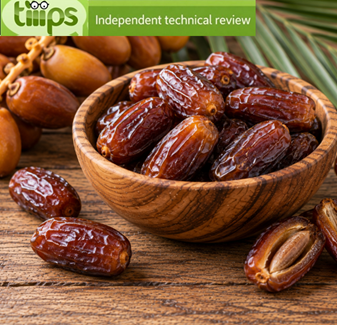
Dates are the fruits of the date palm (Phoenix dactylifera, family Arecaceae), cultivated mainly in the hot, dry regions of North Africa and the Middle East.
They may be eaten fresh, semi-dried or dried, but commercially available dates generally have a relatively low water content, resulting in a high concentration of sugars and energy.
They consist mainly of carbohydrates, especially naturally occurring sugars such as glucose and fructose, with smaller amounts of sucrose depending on the variety and stage of ripeness.
They also provide a useful amount of dietary fibre, which supports normal bowel function and can partly slow sugar absorption.
Dates contain minerals such as potassium, magnesium, copper and manganese, while their fat content is naturally very low.
They also provide polyphenols, carotenoids and other plant compounds with antioxidant activity, in amounts that vary according to variety, ripeness and processing.
Their high sugar content does not make them nutritionally equivalent to refined sugar, because they also provide fibre and micronutrients; however, they remain a food with a high sugar and energy density.
Calories
Dried dates provide approximately 275–285 kcal per 100 g.
The energy value of a single date varies considerably according to size and variety: large varieties such as Medjool provide substantially more calories per fruit than smaller types.
Uses in Food
Dates are eaten directly as dried fruit or used in desserts, biscuits, bars, muesli, porridge and breakfast products.
Their soft texture and very sweet taste make them suitable as a natural sweetening ingredient in the form of paste, purée or syrup.
They are also used in fillings, creams, desserts, energy products and plant-based preparations, where they contribute both sweetness and texture.
In Middle Eastern and North African cuisines, they may also be combined with meat, cereals, cheese, nuts and savoury dishes.
Because they provide readily available sugars, dates are also used in some foods intended for sports nutrition or rapid energy replenishment.
Uses in Cosmetics
Date extracts and date-palm derivatives may be used in cosmetics for their antioxidant, conditioning and moisturising properties.
Date seed oil contains fatty acids and lipid-soluble compounds and is used in some formulations for skin and hair care.
Fruit extracts may be found in creams, masks, serums, shampoos and nourishing or emollient products.
Food-grade dates, however, should not be considered equivalent to a standardised cosmetic extract or oil intended for topical use.
Allergens
Dates are not among the major food allergens requiring mandatory declaration in the European Union.
Rare individual reactions may nevertheless occur. In processed products, added ingredients or cross-contamination with nuts, sesame or other allergens should also be considered.
Assessment
A nutritionally interesting fruit because of its fibre, potassium and plant compounds, but with a very high concentration of naturally occurring sugars.
Ingredient verdict: an energy-dense fruit with useful micronutrients, best consumed in moderate amounts because it is a concentrated source of sugars.
Cons: high sugar content

