



Herbs
The term herbs refers to a mixture or group of plants used to provide aroma, fragrance and flavour to foods.
They may include, for example, rosemary, thyme, oregano, basil, sage, parsley, marjoram, dill and other species, belonging to different botanical families, particularly Lamiaceae, Apiaceae and Asteraceae.
Their composition therefore varies considerably depending on the blend used and cannot be attributed to a single plant species.
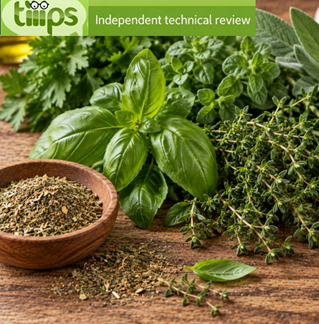
Herbs contain numerous volatile compounds, especially terpenes and essential-oil components, which are responsible for their characteristic aromatic profiles.
They may also provide flavonoids, phenolic acids, carotenoids and other plant compounds with antioxidant activity.
When consumed fresh, they may also provide vitamins and minerals, while dried herbs contain more concentrated amounts per unit of weight, although the quantities actually consumed are generally small.
From a nutritional point of view, their overall contribution to the diet is usually modest because they are mainly used as seasonings.
However, they can help increase the flavour intensity of foods without requiring large amounts of salt, sugar or fat.
Calories
Fresh herbs generally provide approximately 20–50 kcal per 100 g.
Dried herbs may provide more than 200–300 kcal per 100 g, but they are normally used in very small amounts, so their actual caloric contribution is negligible.
Uses in Food
They are used to flavour meat, fish, vegetables, pulses, soups, sauces, bread, focaccia, cheese and savoury preparations.
They may be used fresh, dried, chopped or as herb blends.
More delicate herbs, such as basil and parsley, are often added towards the end of cooking to preserve more of their aroma.
Rosemary, thyme, sage and oregano generally tolerate longer cooking times better.
Herb blends are also widely used by the food industry to provide a consistent and easily standardised flavour profile.
Uses in Cosmetics
Herbal extracts and essential oils are widely used in cosmetics for their fragrancing, deodorising, antioxidant and conditioning properties.
They may be found in creams, cleansers, shampoos, bath products, deodorants, massage oils and hair-care products.
Their function depends strongly on the plant species: rosemary and sage, for example, are often used in hair and scalp products, while lavender and chamomile are more common in soothing or fragranced formulations.
Concentrated essential oils may, however, cause irritation or sensitisation in susceptible individuals and should be formulated at appropriate concentrations.
Food-grade herbs should therefore not automatically be considered equivalent to a standardised cosmetic ingredient.
Allergens
The generic term “herbs” does not in itself identify one of the major food allergens requiring mandatory declaration in the European Union.
However, a blend may contain species capable of causing rare individual allergic reactions, so the assessment depends on the specific herbs present.
Assessment
Plant ingredients valued mainly for their aromatic and polyphenolic compounds and for their ability to improve food flavour without significantly affecting caloric intake.
Ingredient verdict: an excellent way to enhance flavour with minimal caloric impact and without needing to increase salt or fat.
Cons: possible rare individual sensitivities, depending on the herbs present

