



Tomato fiber
Tomato fiber is an ingredient generally obtained from the fibrous parts of tomato (Solanum lycopersicum, family Solanaceae), especially skins, residual pulp and sometimes seeds generated during industrial tomato processing.
It consists mainly of insoluble dietary fibre, particularly cellulose, hemicelluloses and lignin, together with a variable proportion of soluble fibre and pectins.
Depending on the manufacturing process, it may also retain small amounts of protein, sugars, minerals and bioactive compounds.
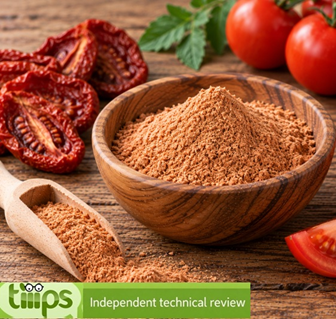
Of particular interest is the possible residual presence of lycopene, the carotenoid responsible for the red colour of tomatoes and known for its antioxidant activity.
Compared with whole tomato, concentrated tomato fiber contains much less water and a substantially higher proportion of structural plant components.
Its high fibre content may contribute to normal bowel function and help promote satiety.
It also has a good ability to absorb and retain water and fats, which makes it useful as a technological ingredient.
It should not be considered nutritionally equivalent to fresh tomato, as it contains much less water and lower amounts of some vitamins that are sensitive to processing.
Calories
When composed mainly of dietary fibre, it provides approximately 180–220 kcal per 100 g, also taking into account the conventional energy value assigned to fermentable fibre.
The actual value may vary depending on purity and the residual presence of protein, carbohydrates and seeds.
Uses in Food
It is used in bread, baked goods, pasta, sauces, meat preparations, plant-based burgers, snacks and fibre-enriched foods.
Thanks to its water-holding capacity, it can improve texture, juiciness, yield and stability.
In meat- or plant-based preparations, it may help reduce liquid loss during cooking and improve the structure of the mixture.
It can also be used to increase the declared dietary fibre content and, thanks to residual pigments, may slightly contribute to the colour of the finished product.
Uses in Cosmetics
Tomato-derived fibres and extracts may be used in some cosmetic formulations as absorbent, texturising or plant-derived ingredients.
Carotenoid-rich derivatives, particularly those containing lycopene, may be used in creams, masks, serums and antioxidant skincare products.
Finely processed plant particles may also be used in some exfoliating or cleansing products.
Food-grade tomato fiber, however, should not automatically be considered equivalent to a standardised cosmetic ingredient.
Allergens
Tomato is not among the major food allergens requiring mandatory declaration in the European Union.
Rare individual reactions may nevertheless occur, particularly in people sensitive to tomato or other members of the Solanaceae family.
Assessment
An interesting ingredient because of its high fibre content, good water-holding properties and possible residual lycopene content.
Ingredient verdict: a useful concentrated source of plant fibre and a versatile technological ingredient for improving food texture and fibre content.
Cons: possible gastrointestinal discomfort when consumed in large amounts

