



Cayenne chili pepper
Cayenne chili pepper is a spice obtained by grinding dried chilli peppers, generally varieties of Capsicum annuum and sometimes other species of the genus Capsicum, family Solanaceae.
Despite its name, it is botanically unrelated to black pepper (Piper nigrum).
Its characteristic pungency is mainly due to capsaicinoids, particularly capsaicin and dihydrocapsaicin, whose concentrations vary according to the pepper variety and degree of ripeness.
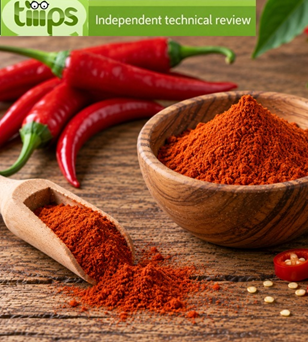
It also contains carotenoids, including capsanthin, capsorubin and β-carotene, which contribute to its red and orange colour.
The dried spice provides fibre, carbohydrates, small amounts of protein and fat, together with minerals and other plant compounds.
Capsaicin activates specific sensory receptors, producing the characteristic sensation of heat and burning without actually increasing the temperature of the food.
At normal dietary amounts, cayenne pepper is mainly consumed for flavour. Effects observed in studies using concentrated capsaicin should not automatically be attributed to the small quantities used as a spice.
Large amounts may cause oral burning, gastric irritation, reflux or gastrointestinal discomfort, particularly in sensitive individuals.
Calories
Ground cayenne pepper provides approximately 318 kcal per 100 g.
However, the quantities normally used as a spice are very small, so its actual caloric contribution is negligible.
Uses in Food
It is used to add heat, colour and flavour to sauces, soups, stews, meat, fish, pulses, vegetables and cereal-based dishes.
It is a common ingredient in spice blends, curries, chilli dishes, marinades, seasonings and hot sauces.
It can be added during cooking or at the end of preparation, with the amount used largely determining the intensity of the pungent sensation.
It can increase the flavour intensity of foods without adding significant amounts of salt, sugar or fat.
Uses in Cosmetics
Capsicum extracts and capsaicinoids may be used in carefully controlled concentrations in some formulations designed to produce a warming or rubefacient effect, such as massage and body products.
Capsaicin is more commonly associated with specific topical preparations, including some medicinal products, than with ordinary everyday cosmetics.
At excessive concentrations it can cause strong irritation, burning and redness of the skin and mucous membranes.
Food-grade cayenne pepper should therefore not be applied directly to the skin or considered equivalent to a standardised cosmetic ingredient.
Allergens
Cayenne chili pepper is not among the major food allergens requiring mandatory declaration in the European Union.
Rare individual reactions or sensitivities to Capsicum species may nevertheless occur.
Assessment
A spice valued mainly for its capsaicinoid and carotenoid content and its ability to provide intense flavour in very small amounts.
Ingredient verdict: an effective spice for adding heat and flavour with negligible caloric impact at normal use levels, although it may irritate sensitive individuals.
Cons: possible gastrointestinal irritation

