



Paprika oleoresin
Paprika oleoresin is a concentrated extract obtained from the ripe fruits of Capsicum annuum, a plant belonging to the Solanaceae family.
It is particularly rich in carotenoids, especially capsanthin and capsorubin, which are responsible for paprika’s characteristic red and orange colours.
It may also contain β-carotene, zeaxanthin and other carotenoid pigments, in proportions that vary according to the pepper variety, ripeness and extraction process.
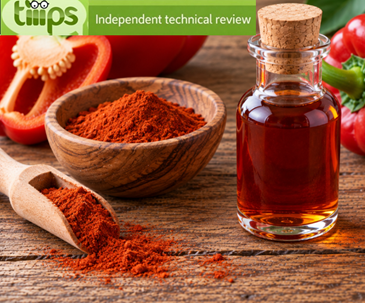
When used mainly as a food colour, paprika extract is identified in the European Union as E160c, which includes capsanthin- and capsorubin-rich preparations.
Depending on the raw material, it may contain very low or more noticeable amounts of capsaicinoids, the compounds responsible for pungency. Oleoresins made from sweet paprika are generally mild or non-pungent.
From a nutritional point of view, it is normally used in very small amounts and its role is mainly colouring and flavouring rather than nutritional.
As a concentrated extract, it should not be considered nutritionally equivalent to whole peppers or paprika powder, which also provide fibre and other nutrients.
Calories
There is no single standard energy value because paprika oleoresin may be formulated with vegetable oils or other carriers.
At normal food-use levels, its caloric contribution to the finished product is generally negligible.
Uses in Food
It is mainly used as a natural colouring and flavouring ingredient in cheese, sauces, snacks, processed meats, savoury baked goods, seasonings, ready meals and plant-based foods.
It can provide shades ranging from yellow-orange to deep red using relatively small amounts.
It is also used in spice blends and seasonings to reinforce the colour and characteristic paprika flavour.
In industrial formulations, paprika oleoresin is valued for providing more uniform and standardised colour than paprika powder alone.
Uses in Cosmetics
Paprika-derived extracts and pigments may be used in cosmetics mainly as plant-derived colourants and antioxidant ingredients.
They may be found in lip products, colour cosmetics, creams and formulations containing carotenoids.
Highly concentrated extracts may, however, cause irritation or sensitisation in susceptible individuals, particularly when appreciable amounts of capsaicinoids are present.
Food-grade paprika oleoresin should not automatically be considered equivalent to a standardised cosmetic ingredient.
Allergens
Paprika is not among the major food allergens requiring mandatory declaration in the European Union.
Rare individual reactions or sensitivities to Capsicum species may nevertheless occur.
Assessment
An ingredient mainly valued as a natural colourant and flavouring, particularly because of its high carotenoid concentration.
Ingredient verdict: an effective plant-derived colour and flavour extract, useful in very small amounts and with generally negligible nutritional impact.
Cons: possible irritation or sensitisation with highly concentrated extracts

