



Dill extract
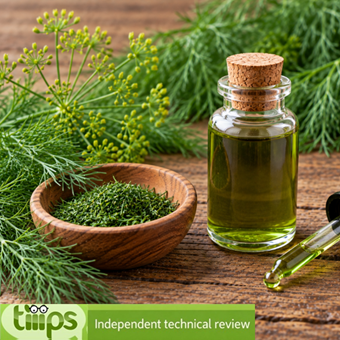
Dill extract is obtained from parts of the dill plant (Anethum graveolens, family Apiaceae), mainly leaves, seeds or aerial parts, through extraction with water, alcohol or other suitable methods.
It has a characteristic fresh, herbaceous and slightly anise-like aroma, generally more concentrated than that of the fresh herb.
Its composition varies depending on the part of the plant used and the extraction method and may include carvone, limonene, α-phellandrene and other terpenes and aromatic compounds.
It may also contain varying amounts of flavonoids and phenolic compounds with antioxidant activity.
Extracts obtained from the seeds may have a more intense and spicy aromatic profile than those produced mainly from the leaves.
From a nutritional point of view, it is normally used in very small amounts and is not a significant source of protein, fat, carbohydrates, fibre, vitamins or minerals.
It should not be considered nutritionally equivalent to fresh dill, because extraction concentrates some compounds while reducing or excluding others.
Calories
There is no standard caloric value for dill extract, as this depends on concentration and any carriers used.
At normal food-use levels, its caloric contribution is generally negligible.
Uses in Food
It is used as a flavouring ingredient in sauces, seasonings, fish products, marinades, pickles, soups, vegetable preparations and ready meals.
It provides a consistent and concentrated dill flavour without requiring large amounts of fresh or dried leaves.
It is particularly suitable for preparations containing salmon, cucumber, potatoes, yoghurt, fresh cheeses and creamy sauces.
It may also be used in industrial flavour blends when greater stability and standardisation of taste are required.
Uses in Cosmetics
Dill extracts may be used in cosmetic formulations for their fragrancing, antioxidant and conditioning properties.
They may be found in creams, serums, cleansers, bath products and hair or scalp formulations.
Concentrated aromatic compounds may, however, cause irritation or sensitisation in susceptible individuals, especially in extracts rich in essential-oil components.
Food-grade dill extract should not automatically be considered equivalent to a standardised cosmetic ingredient.
Allergens
Dill is not among the major food allergens requiring mandatory declaration in the European Union.
However, because it belongs to the Apiaceae family, rare cross-reactions may occur in people sensitive to celery, fennel, carrot or related plants.
Assessment
A concentrated ingredient mainly valued for its aromatic profile and ability to provide consistent flavour, with little nutritional contribution.
Ingredient verdict: an effective natural flavouring extract, useful in small amounts and nutritionally almost negligible.
Cons: possible rare allergic reactions or sensitisation

