



Tamarind extract
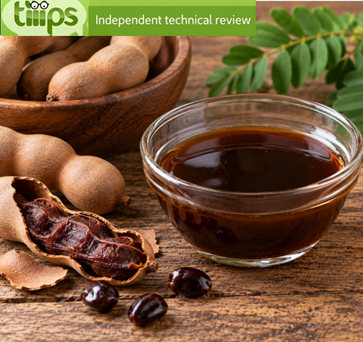
Tamarind extract is obtained from the pulp of the fruit of Tamarindus indica, a tree belonging to the Fabaceae family.
Tamarind pulp has a characteristic sweet-and-sour, strongly acidic flavour, mainly due to its naturally high content of tartaric acid.
It also contains varying amounts of naturally occurring sugars, mainly glucose and fructose, together with residual fibre and bioactive plant compounds.
These include various polyphenols and flavonoids, whose concentration depends on the extraction method and degree of processing.
Tamarind extract may be supplied as a paste, concentrate, liquid or powder, with considerable differences in nutritional composition.
In more concentrated products, removal of water increases the concentration of both organic acids and sugars.
Tamarind extract is mainly used for its acidifying, aromatic and sweet-sour properties, rather than for its nutritional value.
Calories
The energy value depends strongly on concentration. Tamarind pulp provides approximately 230–250 kcal per 100 g; concentrated extracts may have similar or higher values, while diluted extracts can be considerably lower in calories.
Uses in Food
It is used in sauces, chutneys, curries, marinades, beverages, confectionery, desserts and sweet-and-sour preparations.
It is a characteristic ingredient in many Asian, Indian, Middle Eastern, African and Latin American cuisines.
It is also used in certain condiment sauces, where it contributes acidity, sweetness and aromatic complexity at the same time.
It can be used as a natural acidifying ingredient, either instead of or together with lemon juice, vinegar or other food acids.
Its naturally occurring sugar content should be considered particularly in highly concentrated extracts or products containing additional sweeteners.
Uses in Cosmetics
Tamarind extracts are also used in cosmetics for their moisturising, conditioning and antioxidant properties.
Polysaccharides obtained from tamarind seeds may be used as film-forming, thickening and moisturising agents in creams, serums and skincare products.
Pulp extracts may also be found in masks, cleansers and exfoliating formulations, partly because of their naturally occurring organic acids.
The relatively high acidity of some extracts requires appropriately controlled formulations to avoid skin irritation.
Food-grade tamarind extract should not automatically be considered equivalent to a standardised cosmetic ingredient.
Allergens
Tamarind is not among the major food allergens requiring mandatory declaration in the European Union. Rare individual allergic reactions may nevertheless occur.
Assessment
A versatile plant-derived ingredient valued mainly for its characteristic sweet-and-sour flavour, tartaric acid content and polyphenolic compounds.
Ingredient verdict: a useful natural ingredient for adding acidity and flavour, although highly concentrated extracts may provide significant amounts of sugars.
Cons: concentrated sugars in denser extracts

