



Dill
Dill is an aromatic herb belonging to the species Anethum graveolens, family Apiaceae.
The fresh or dried leaves are mainly used, while the seeds are also used in some preparations.
It has a characteristic fresh, slightly anise-like aroma, with notes somewhat reminiscent of fennel and celery.
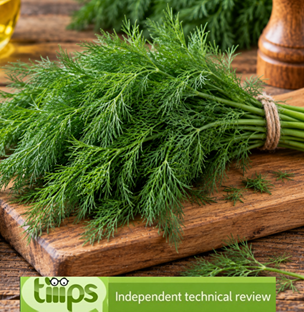
From a nutritional point of view, it provides fibre, small amounts of protein and carbohydrates, together with several micronutrients.
The leaves contain vitamin C, provitamin A, folate, calcium, iron, manganese and potassium, in amounts that vary according to freshness and processing.
Its main aromatic compounds include carvone, limonene and other terpenes, which are responsible for its distinctive fragrance.
It also contains flavonoids and other phenolic compounds with antioxidant activity.
Because dill is normally used in small amounts as a herb, its overall nutritional contribution to the diet is generally modest.
Calories
Fresh dill provides approximately 40–45 kcal per 100 g.
Dried dill is much more concentrated and may provide more than 250 kcal per 100 g, although the quantities normally used are very small.
Uses in Food
Dill is used to flavour fish, salmon, potatoes, vegetables, salads, yoghurt, fresh cheeses, sauces and egg dishes.
It is particularly common in Northern and Eastern European cuisines and is frequently paired with cucumbers, pickles and marinades.
Fresh dill can be added near the end of cooking to better preserve its aroma, while dried dill is commonly used in herb and spice blends.
Dill seeds have a stronger flavour and are also used in preserves, bread and spiced preparations.
Uses in Cosmetics
Dill extracts and dill essential oil may be used in some cosmetic formulations for their fragrancing and conditioning properties.
They may be found in soaps, bath products, creams, oils and fragranced preparations.
The essential oil is highly concentrated and may be irritating or sensitising if not properly diluted.
Food-grade dill should therefore not be considered equivalent to a standardised cosmetic ingredient.
Allergens
Dill is not among the major food allergens requiring mandatory declaration in the European Union.
However, because it belongs to the Apiaceae family, rare cross-reactions may occur in people sensitive to other plants in the same family, such as celery, fennel or carrot.
Assessment
An aromatic herb valued for its aromatic compounds, flavonoids and micronutrients, with a negligible caloric contribution at normal use levels.
Ingredient verdict: a useful herb for adding aroma and flavour without significant amounts of salt, sugar or calories.
Cons: possible rare individual allergic reactions

