



Tomato semi-concentrate
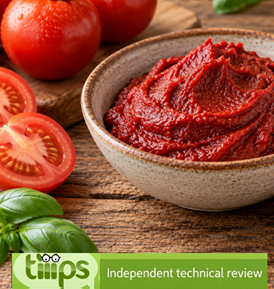
Tomato semi-concentrate is obtained from the pulp and juice of tomato (Solanum lycopersicum, family Solanaceae) by removing part of the water.
Compared with fresh tomato, it therefore contains a higher concentration of dry matter, naturally occurring sugars, minerals, carotenoids and aromatic compounds.
Its main characteristic pigment is lycopene, a carotenoid responsible for the red colour of tomatoes and known for its antioxidant activity.
The heat treatment used during production may reduce some vitamin C, while making lycopene more bioavailable than in raw tomato.
It consists mainly of water and carbohydrates, with small amounts of protein and fibre and a naturally very low fat content.
Compared with fully concentrated tomato paste, tomato semi-concentrate retains more water and therefore has a less dense texture and milder flavour.
Its salt content depends on the formulation: a product made only from tomato naturally contains little sodium, while some preparations may include added salt.
Uses in Food
It is used as a base for sauces, soups, stews, ragù, pizza, ready meals and meat- or vegetable-based preparations.
It helps increase colour, flavour and body without reaching the intensity of a more highly concentrated tomato paste.
It can also be used to adjust the consistency of sauces and seasonings or to add a natural umami and mildly sweet note.
It is also a concentrated source of lycopene, particularly when consumed with a small amount of fat, which can improve its absorption.
Uses in Cosmetics
Tomato extracts and derivatives may be used in cosmetics because of their content of carotenoids and antioxidant compounds.
They may be found in creams, serums, masks and skincare products, particularly in formulations featuring botanical ingredients.
Food-grade tomato semi-concentrate, however, should not be considered equivalent to a standardised cosmetic extract and is not normally used directly in professional formulations.
Calories
The energy value varies according to the degree of concentration. It generally provides approximately 45–80 kcal per 100 g, with higher values in more concentrated products.
Allergens
Tomato is not among the major food allergens requiring mandatory declaration in the European Union. Rare individual reactions may nevertheless occur.
Assessment
A simple and nutritionally interesting ingredient, particularly because of its lycopene content and its ability to add flavour, colour and texture with a relatively low energy value.
Ingredient verdict: a useful concentrated vegetable ingredient, valuable for flavour and lycopene and generally low in fat and calories.
Cons: none specific, except possible added salt

