



Nonfat yogurt powder
Nonfat yogurt powder is generally obtained from fat-free or very low-fat yogurt, produced by fermenting milk with lactic acid bacteria and then drying it, often by spray-drying.
It mainly contains milk proteins, lactose, minerals and carbohydrates, while its fat content is much lower than that of whole-milk yogurt powder.
The main proteins present are caseins and whey proteins, which provide a good profile of essential amino acids.
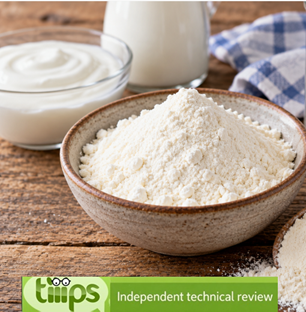
During yogurt fermentation, part of the lactose is converted into lactic acid, giving the ingredient its characteristic mildly tangy flavour.
During drying, however, the viability of the lactic acid bacteria may decrease substantially. The presence of yogurt powder therefore does not automatically guarantee significant amounts of live cultures in the finished product.
It also provides calcium, phosphorus and B vitamins, in amounts that vary according to the raw material and manufacturing process.
Because it is dehydrated, its nutrients and lactose are much more concentrated than in fresh yogurt.
Uses in Food
It is used in baked goods, biscuits, bars, desserts, creams, ice cream, beverage mixes, cereals and snacks.
It can be added to provide yogurt flavour, acidity, creaminess and additional protein.
It is also useful in dry food mixes because it is easy to store and allows manufacturers to incorporate yogurt-like sensory characteristics without adding significant amounts of water.
In sweet products, its characteristic tangy note can help balance sweetness.
Uses in Cosmetics
Yogurt- and milk-derived ingredients may be used in some cosmetic formulations for their conditioning, emollient and moisturising properties.
Yogurt powder may be found in masks, cleansers, bath products and skincare formulations, particularly as a source of dairy proteins and other milk-derived components.
Lactic acid and other milk-derived ingredients are also used in cosmetics to support hydration and the condition of the skin surface.
Food-grade yogurt powder, however, should not automatically be considered equivalent to a standardised cosmetic ingredient.
Calories
It provides approximately 350–390 kcal per 100 g, with variations depending on protein, lactose, residual fat and moisture content.
Allergens
It is derived from milk and contains milk proteins, therefore it is an allergen. It also normally contains lactose and may be unsuitable for people with significant lactose intolerance.
Assessment
A nutritionally useful dairy ingredient due to its protein and calcium content, also valuable for adding acidity and yogurt-like sensory characteristics to foods.
Ingredient verdict: a concentrated source of milk components and protein, but the powdered form does not guarantee the presence of live yogurt cultures.
Cons: Allergen

