



Beet concentrate
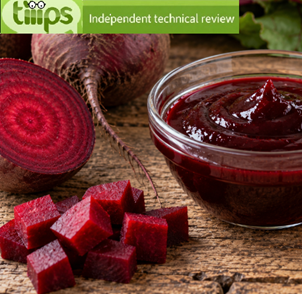
Beet concentrate is obtained from the root of beetroot (Beta vulgaris, family Amaranthaceae), generally by pressing or extraction followed by concentration of the juice.
Removing part of the water naturally concentrates the sugars, minerals, pigments and other plant compounds present in beetroot.
Its characteristic red-purple colour is mainly due to betalains, particularly betacyanins such as betanin.
These pigments are water-soluble and are also used to give foods natural red and purple shades.
The concentrate mainly contains carbohydrates and naturally occurring sugars, while fat and fibre are generally present in low amounts, especially when it is produced from juice alone.
It may also contain potassium, betaine, polyphenols and naturally occurring nitrates, in amounts that vary considerably according to the raw material and degree of concentration.
Concentration significantly increases the sugar density compared with fresh beetroot, so it should not be considered nutritionally equivalent to the whole vegetable.
Uses in Food
It is mainly used as a natural colouring and flavouring ingredient in beverages, yoghurt, desserts, ice cream, baked goods, pasta, sauces and plant-based foods.
It can provide a red or pink colour without the use of synthetic food colours.
Beetroot red used as a food colour is identified in the European Union as E162 and consists mainly of pigments belonging to the betalain group.
It may also contribute mild natural sweetness and an earthy note, although this is often barely noticeable when used primarily for colouring.
Uses in Cosmetics
Beetroot-derived extracts and ingredients may be used in cosmetics as plant-based colourants and skin-conditioning ingredients.
They may be found in some masks, creams, serums, moisturising products and colour cosmetics, where the pigments can also contribute to the appearance of the formulation.
Food-grade beet concentrate, however, should not automatically be considered equivalent to a standardised cosmetic extract.
Calories
The energy value depends strongly on the degree of concentration. Beet juice concentrate may provide approximately 180–260 kcal per 100 g; highly concentrated products around 65 °Brix may reach approximately 250 kcal per 100 g.
Allergens
Beetroot is not among the major food allergens requiring mandatory declaration in the European Union. Rare individual reactions may nevertheless occur.
Assessment
An ingredient valued mainly as a natural source of colour, thanks to its betalain pigments, while also providing characteristic plant compounds from beetroot.
Ingredient verdict: a useful natural colouring and plant-based ingredient, but concentrated forms may provide significant amounts of sugars.
Cons: concentrated sugars

