



Gluten-free oat flour
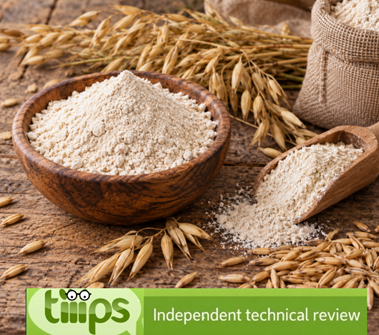
Gluten-free oat flour is obtained by milling oats (Avena sativa, family Poaceae) from a controlled supply chain designed to prevent contamination with wheat, barley and rye.
It is a good source of complex carbohydrates, fibre, protein and predominantly unsaturated fats, and also provides B vitamins and minerals such as magnesium, phosphorus, manganese and iron.
Of particular interest is its content of beta-glucans, soluble fibres characteristic of oats that contribute to the maintenance of normal blood cholesterol levels when consumed in the appropriate amounts as part of the diet.
Its fibre content may also help promote satiety, normal bowel function and a more gradual glycaemic response than many highly refined flours.
Oats naturally contain avenin, a protein that differs from the main gluten proteins found in wheat, barley and rye.
To be marketed as “gluten-free”, oat flour must be produced in a way that prevents contamination and must comply with the applicable limit of 20 mg/kg of gluten.
Oat flour has a mild, slightly sweet and characteristic flavour and, because it does not contain bread-forming gluten, it does not develop the same elastic structure as wheat flour when used on its own.
Uses in Food
It is widely used in biscuits, cakes, pancakes, porridge, bars, bread and other gluten-free baked products.
It can be blended with rice, maize, quinoa and other flours, together with binding or structuring ingredients, to improve the texture and handling of gluten-free doughs and batters.
It is also used to increase the fibre and beta-glucan content of breakfast cereals, snacks and nutritionally formulated foods.
Its naturally mild flavour makes it particularly suitable for both sweet and savoury preparations.
Uses in Cosmetics
Finely milled oats are also used in cosmetic products for their absorbent, emollient and soothing properties.
Oat-derived materials may be found in masks, gentle cleansers, bath products, body powders and formulations for dry or sensitive skin.
Components naturally present in oats, including beta-glucans, lipids and avenanthramides, are valued in cosmetic formulations intended to support skin comfort and hydration.
Food-grade oat flour, however, should not automatically be considered equivalent to colloidal oatmeal, which is specifically processed and standardised for dermatological and cosmetic applications.
Calories
It provides approximately 370–390 kcal per 100 g, with variations depending on fat, fibre and moisture content.
Allergens
Oats are subject to specific allergen declaration requirements in the European Union. The term “gluten-free” indicates compliance with the applicable gluten limit, but does not exclude the possibility of rare individual reactions to oats.
Assessment
A nutritionally interesting flour due to its good content of fibre, beta-glucans, protein and unsaturated fats, particularly useful in gluten-free formulations.
Ingredient verdict: a good alternative to refined flours, rich in fibre and versatile in both food and oat-based cosmetic formulations.
Cons: Allergen

