



Rock salt
Rock salt is a natural mineral salt composed mainly of sodium chloride (NaCl), extracted from underground deposits formed by the evaporation of ancient seas or salt lakes.
Unlike sea salt, which is obtained by evaporating seawater, rock salt is mined directly from underground mineral deposits.
It consists almost entirely of sodium and chloride, with generally very small amounts of other minerals that vary according to the geological source.
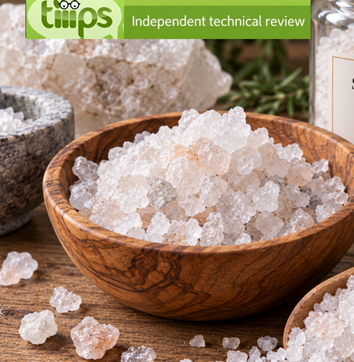
It is used as a seasoning, preservative and technological ingredient in many foods, including bread, cheese, cured meats, baked goods and prepared foods.
From a nutritional point of view, it provides no protein, carbohydrates, fat or fibre.
Sodium is an essential mineral for normal body function, but excessive salt intake can contribute to increased blood pressure and cardiovascular risk.
Rock salt offers no significant nutritional advantage over ordinary table salt, as the trace minerals it may contain are generally present in amounts too small to make a meaningful contribution to the diet.
Unless specifically iodised, rock salt is not a significant source of iodine.
Calories
Rock salt provides 0 kcal per 100 g.
Allergens
Rock salt contains no food allergens and is not subject to allergen declaration requirements.
Assessment
An essential ingredient for flavour and preservation, but one that should be used in moderation because of its high sodium content.
Ingredient verdict: useful as a seasoning and preservative, but nutritionally best limited because of its high sodium content.
Cons: sodium

