



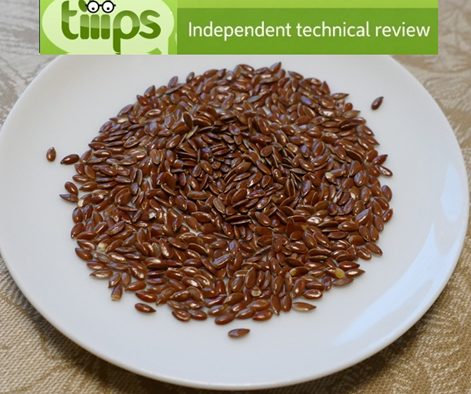
Brown flax seeds
Brown flax seeds, also known as brown linseeds, are the seeds of Linum usitatissimum, a plant belonging to the Linaceae family.
They are particularly rich in unsaturated fats, especially alpha-linolenic acid (ALA), an essential omega-3 fatty acid.
They also contain significant amounts of soluble and insoluble fibre, protein and small amounts of available carbohydrates.
Flax seeds are one of the richest dietary sources of lignans, plant compounds belonging to the polyphenol family.
They also provide magnesium, phosphorus, manganese, copper and thiamine in varying amounts.
Their fibre content contributes to normal bowel function and may help promote satiety.
To improve the availability of fats and other nutrients, flax seeds are often consumed ground, as whole seeds may pass through the digestive tract without being fully broken down.
They can be added to bread, biscuits, muesli, yoghurt, porridge, salads and other baked goods.
From a nutritional point of view, differences between brown and golden flax seeds are generally modest and depend mainly on the variety.
High intakes, particularly without adequate fluid consumption, may cause bloating or other gastrointestinal discomfort.
Calories
They provide approximately 530–550 kcal per 100 g, mainly because of their high unsaturated fat content.
Allergens
Flax seeds are not among the major food allergens requiring mandatory declaration in the European Union, although rare individual allergic reactions may occur.
Assessment
A nutritionally valuable seed, particularly rich in omega-3 ALA, fibre and lignans.
Ingredient verdict: a nutrient-dense ingredient rich in unsaturated fats and fibre, especially useful when consumed ground and in moderate amounts.
Cons: possible gastrointestinal discomfort when consumed in large amounts

