



Pregelatinized rice flour
Pregelatinized rice flour is obtained from rice (Oryza sativa, family Poaceae) that has undergone heat treatment causing partial or complete starch gelatinization, followed by drying and milling.
This treatment modifies the starch structure, allowing the flour to absorb water and thicken without prolonged cooking.
It is mainly used in baked goods, creams, sauces, instant preparations, infant foods and gluten-free formulations.
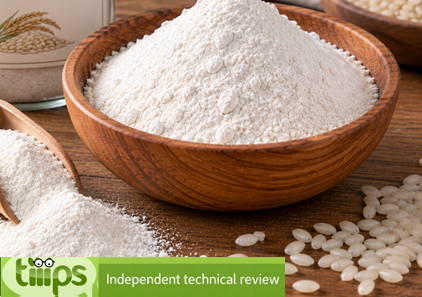
From a nutritional point of view, it consists mainly of complex carbohydrates, particularly starch, with modest amounts of protein and generally low levels of fibre and fat.
Pregelatinization does not substantially change its energy value, but makes the starch more readily accessible to digestive enzymes than raw starch.
As a result, it may produce a relatively rapid glycaemic response, especially when used in highly refined, low-fibre foods.
As it is made from rice, it is naturally gluten-free, provided that cross-contamination does not occur during production and packaging.
Compared with wholegrain rice flour, it generally contains less fibre, vitamins and minerals when produced from refined rice.
Calories
It provides approximately 350–370 kcal per 100 g, with variations depending on moisture and degree of refinement.
Allergens
Rice is not among the major food allergens requiring mandatory declaration in the European Union. Rare individual reactions may nevertheless occur.
Assessment
A mainly technological ingredient useful for rapid thickening and improving structure and texture, particularly in gluten-free preparations.
Ingredient verdict: technologically useful and naturally gluten-free, but nutritionally limited and based on readily digestible starch.
Cons: possible high glycaemic impact

