



Sourdough culture
A sourdough culture is a fermented mixture generally made from flour and water, in which yeasts and lactic acid bacteria coexist.
Unlike baker’s yeast alone, it contains a more complex microbial community and usually produces a slower and more complex fermentation.
During fermentation, carbon dioxide, organic acids and aromatic compounds are produced, contributing to leavening, a mildly tangy flavour and the characteristic aroma of sourdough products.
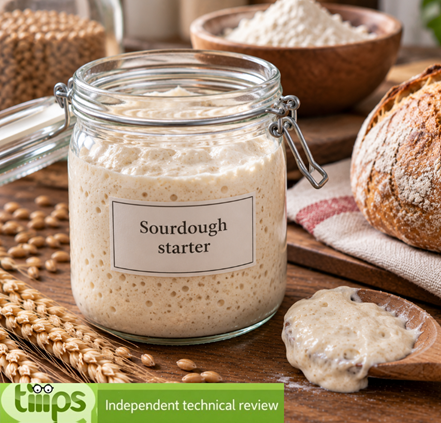
It is mainly used in bread, pizza, focaccia, panettone and other long-fermented baked goods.
Sourdough fermentation can help improve the flavour, texture and shelf life of the finished product.
It may also partially reduce phytate levels, potentially improving the availability of some minerals, while modifying part of the flour’s proteins and carbohydrates.
These processes, however, do not remove gluten when the culture is made from wheat, rye, spelt or other gluten-containing cereals.
Its nutritional composition depends mainly on the type of flour used and the amount of water in the culture.
Calories
Fresh sourdough culture provides approximately 160–200 kcal per 100 g. Dried preparations may exceed 300 kcal per 100 g.
Allergens
Allergens depend on the flour used. If made from wheat or other gluten-containing cereals, it should be avoided by people with coeliac disease and may also be unsuitable for people with specific cereal allergies.
Assessment
A traditional ingredient valued mainly for its fermentative, aromatic and technological properties.
Ingredient verdict: a useful natural fermentation culture for flavour and dough quality, but it does not make gluten-containing products gluten-free.
Cons: Allergen, if made from gluten-containing cereals

