



Spelt malt grits
Spelt malt grits are obtained from spelt grains (Triticum spp., family Poaceae) that have undergone malting and are subsequently coarsely crushed rather than finely milled into flour.
Malting involves the controlled germination of the grain, during which enzymes become active and begin converting part of the starch into simpler sugars, including maltose.
Unlike malt flour, grits retain a coarser granular structure, contributing not only flavour but also texture and visual character to the finished product.
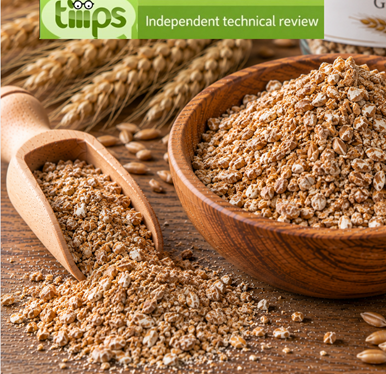
They are mainly used in bread, baked goods, cereal blends and rustic preparations, providing characteristic malty and mildly sweet notes.
From a nutritional point of view, they mainly provide carbohydrates, together with protein, fibre and small amounts of fat.
Because the grain is coarsely crushed rather than highly refined, spelt malt grits may retain a useful proportion of fibre and micronutrients, depending on how much of the outer grain layers remains.
Malting modifies some of the starch and proteins but does not remove gluten.
Their coarse structure can also contribute texture and a slightly crunchy character to baked products.
Calories
They provide approximately 340–380 kcal per 100 g, with variations depending on the type of spelt, degree of malting, moisture and processing.
Allergens
Spelt is a type of wheat and contains gluten. It should therefore be avoided by people with coeliac disease or wheat allergy.
Assessment
A malted cereal ingredient valued mainly for its flavour, texture and relatively coarse grain structure.
Ingredient verdict: useful for adding malty flavour and texture, with a slightly more interesting fibre profile than highly refined malt flours.
Cons: Allergen

