



Caramelized spelt malt flour
Caramelized spelt malt flour is obtained from spelt grains (Triticum spp., family Poaceae) that are malted and then heated to develop the colour and flavour characteristics typical of caramelized malts.
During malting, controlled germination activates enzymes that begin converting part of the starch into simpler sugars, including maltose.
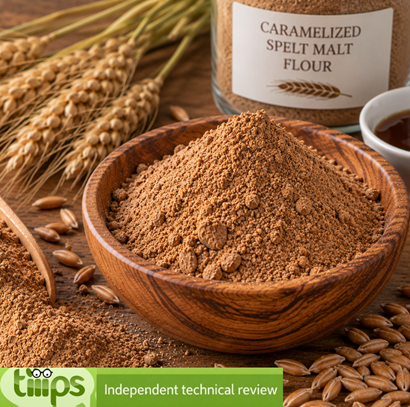
The subsequent heat treatment promotes Maillard reactions and caramelization, producing a darker colour and characteristic notes of caramel, malt, biscuit and toasted cereals.
Intense heating greatly reduces or inactivates enzymatic activity, so this flour is used mainly for flavour, colour and taste rather than to support fermentation.
It is mainly used in bread, focaccia, biscuits and other baked goods, often in combination with other malted flours.
From a nutritional point of view, it consists mainly of carbohydrates, together with protein, fibre and small amounts of fat.
Malting and heat treatment modify some of the starch and proteins but do not remove gluten.
Calories
It provides approximately 340–380 kcal per 100 g, with variations depending on the degree of malting, caramelization and moisture content.
Allergens
Spelt is a type of wheat and contains gluten. It should therefore be avoided by people with coeliac disease or wheat allergy.
Assessment
A mainly aromatic and technological ingredient used to give baked products a darker colour and distinctive malty and caramelized notes.
Ingredient verdict: useful mainly for flavour and colour, but with no particular nutritional advantage over other wheat flours.
Cons: Allergen

