



Pepper
Pepper is a spice obtained mainly from the berries of Piper nigrum, a plant belonging to the Piperaceae family.
Depending on the stage of harvesting and processing, it can be produced as black, white or green pepper, each with different aromas and intensity.
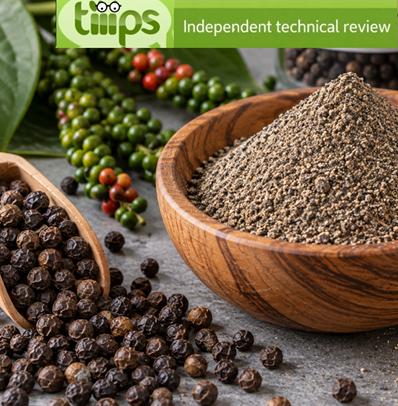
The main compound responsible for its characteristic pungency is piperine, together with numerous volatile aromatic substances.
Pepper is used in small amounts to season meat, fish, vegetables, sauces, cheeses and many other savoury dishes.
From a nutritional point of view, it contains carbohydrates, fibre and small amounts of protein and fat, as well as minerals and bioactive plant compounds.
Piperine has also been studied for its ability to influence the absorption of certain substances, although the amounts of pepper normally consumed in food are far lower than those used in studies with concentrated extracts.
In particularly sensitive individuals, large amounts may cause gastric irritation or gastrointestinal discomfort.
Calories
Ground black pepper provides approximately 250 kcal per 100 g, but the amounts normally used as a spice are very small, so its actual caloric contribution is negligible.
Allergens
Pepper is not among the major food allergens requiring mandatory declaration in the European Union. Rare individual reactions may nevertheless occur.
Assessment
A natural spice useful for increasing flavour and aroma without adding significant amounts of salt, sugar or calories at normal use levels.
Ingredient verdict: a useful aromatic spice with negligible nutritional impact at normal serving amounts and a good way to add flavour without extra salt.
Cons: possible gastrointestinal irritation in sensitive individuals

