



Wheat maltodextrin
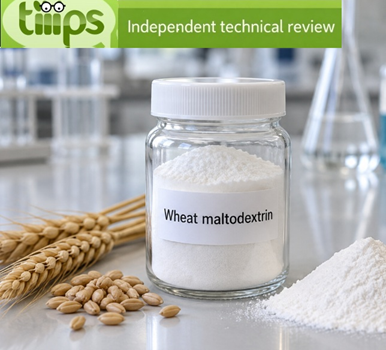
Wheat maltodextrin is a carbohydrate obtained from wheat starch (Triticum spp., family Poaceae) by partial hydrolysis.
The process breaks down the long starch chains into a mixture of oligosaccharides and glucose units of different lengths.
It is generally a white, highly soluble powder with little or no sweetness.
In the food industry, it is used as a bulking agent, thickener, stabiliser, carrier for flavourings and ingredient for improving texture and solubility.
It is commonly found in baked goods, beverages, instant preparations, supplements and sports nutrition products.
From a nutritional point of view, it consists almost entirely of rapidly digestible carbohydrates and provides negligible amounts of fibre, protein, fat, vitamins and minerals.
It is rapidly converted into glucose and generally has a high glycaemic impact, particularly when consumed in significant amounts.
It therefore offers little nutritional advantage over other refined carbohydrate sources, although it can be useful when rapidly available energy is required.
Calories
It provides approximately 380–400 kcal per 100 g.
Allergens
Although it is derived from wheat, wheat-based maltodextrins are specifically exempt from mandatory wheat allergen declaration under EU and UK food-allergen rules, because the manufacturing process greatly reduces allergenic protein.
In the United States, allergen labelling requirements depend on whether an ingredient derived from wheat contains allergenic wheat protein or has an applicable exemption.
Assessment
A mainly technological ingredient and a source of rapidly available carbohydrates, with little nutritional value in terms of fibre or micronutrients.
Ingredient verdict: technologically useful, but nutritionally limited and rapidly absorbed.
Cons: high glycaemic impact

