



Hulled barley flakes flour
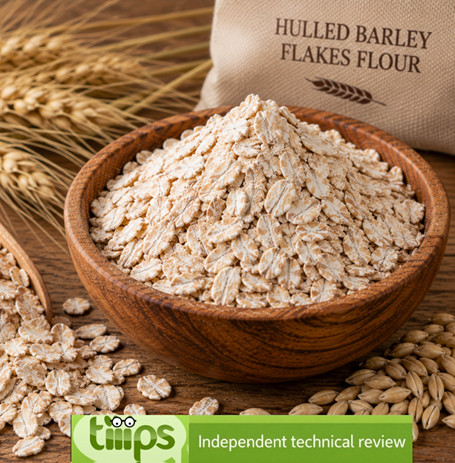
Hulled barley flakes flour is obtained by milling flakes made from barley (Hordeum vulgare, family Poaceae) after removal of the grain’s inedible outer hull.
The production of flakes generally involves steaming or heat treatment followed by flattening; the flakes are then milled into flour.
It consists mainly of complex carbohydrates, particularly starch, and also contains protein, fibre and small amounts of fat.
Barley is particularly interesting for its content of beta-glucans, soluble fibres that contribute to the maintenance of normal blood cholesterol levels when consumed in the appropriate amounts as part of the diet.
Hulling mainly removes the tougher outer layers, while still leaving a significant proportion of fibre, B vitamins and minerals, depending on the degree of processing.
Processing into flakes causes partial starch gelatinisation, which affects water absorption and the technological behaviour of the flour in doughs.
It is used in bread, biscuits, baked goods, breakfast preparations and cereal blends, to which it may contribute a mildly malty flavour and a softer texture.
Its fibre content can contribute to normal bowel function and satiety.
Calories
It provides approximately 340–370 kcal per 100 g, with variations depending on moisture, fibre content and production process.
Allergens
It is derived from barley and contains gluten. It should therefore be avoided by people with coeliac disease and by those with barley allergy.
Assessment
A cereal flour valued mainly for its fibre and beta-glucan content, with useful technological properties in baked products.
Ingredient verdict: a good source of fibre and beta-glucans, but unsuitable for people who need to avoid gluten.
Cons: Allergen

