



Dried cranberries
Dried cranberries, generally made from the American cranberry (Vaccinium macrocarpon, family Ericaceae), are fruits that have been dried to substantially reduce their water content.
Drying concentrates the carbohydrates, sugars, fibre and bioactive compounds naturally present in the fruit.
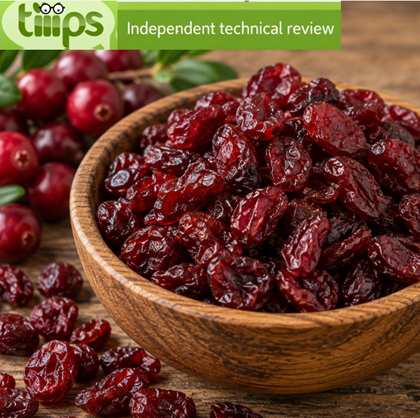
Cranberries are particularly rich in polyphenols, including anthocyanins and proanthocyanidins, compounds with antioxidant activity.
They are commonly used in muesli, bars, biscuits, baked goods, yoghurt, salads and dried fruit mixes.
Compared with fresh cranberries, the dried version has a higher energy density and a greater concentration of sugars.
Many commercial products also contain added sugar or syrups, used to reduce the naturally tart taste of cranberries. It is therefore important to distinguish simply dried fruit from sweetened dried cranberries.
Drying may reduce some of the vitamin C, while fibre and many phenolic compounds are largely retained.
Calories
Dried cranberries provide approximately 300–330 kcal per 100 g. In sweetened products, the energy value and especially the sugar content may be higher.
Allergens
Cranberries are not among the major food allergens requiring mandatory declaration in the European Union.
Assessment
A dried fruit valued for its fibre and polyphenol content, although commercial versions may contain significant amounts of added sugars.
Cons: sugars, especially when added

