



White quinoa flour
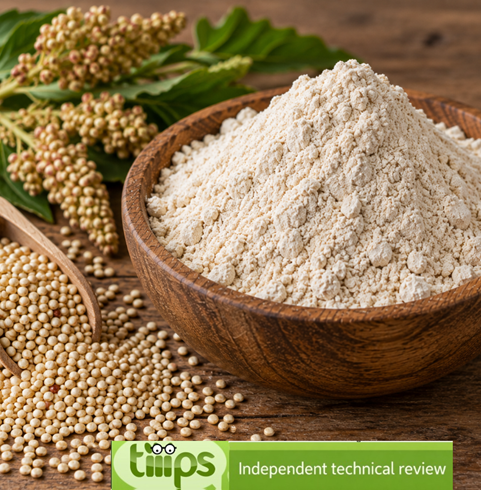
White quinoa flour is obtained by milling the seeds of white quinoa (Chenopodium quinoa, family Amaranthaceae), one of the most common colour varieties of this pseudocereal.
It is naturally gluten-free and is used in bread, biscuits, cakes, pancakes, pasta and other foods suitable for gluten-free diets.
From a nutritional point of view, it mainly provides carbohydrates, but also contains a good amount of protein and fibre.
Quinoa proteins have a good profile of essential amino acids and are relatively rich in lysine, an amino acid often present in limited amounts in cereals.
It also provides predominantly unsaturated fats, magnesium, phosphorus, iron and zinc, in amounts that vary according to cultivation and processing.
Compared with red or black quinoa, white quinoa generally has a milder flavour and lighter colour, while overall nutritional differences are relatively limited.
Quinoa naturally contains saponins, bitter-tasting compounds concentrated mainly on the surface of the seed, which are normally removed or greatly reduced during processing.
It also contains phytates and oxalates, which may partially reduce the availability of certain minerals.
Quinoa flour lacks the elasticity provided by gluten and is therefore often combined with other flours or structuring ingredients in baked products.
Calories
It provides approximately 360–390 kcal per 100 g, with variations depending on fat content and moisture.
Allergens
Quinoa is not among the major food allergens requiring mandatory declaration in the European Union, United Kingdom or United States. In gluten-free products, possible cross-contamination during processing should nevertheless be considered.
Assessment
A nutritionally interesting flour due to its good content of protein, fibre and minerals, with a generally milder flavour than darker quinoa varieties.
Cons: possible phytates and oxalates

