



Emmer flakes flour
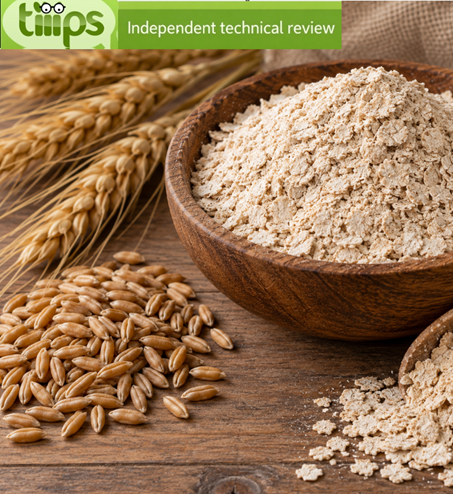
Emmer flakes flour is obtained by milling flakes made from emmer wheat (Triticum turgidum subsp. dicoccum, family Poaceae).
Emmer is an ancient tetraploid wheat traditionally cultivated in several areas of the Mediterranean region.
The production of flakes generally involves steaming or heat-treating the grain followed by flattening; the flakes are then milled into flour.
It consists mainly of complex carbohydrates, particularly starch, and also contains protein, fibre and small amounts of fat.
Depending on the degree of refinement of the grains used, it may provide varying amounts of fibre, B vitamins, magnesium, phosphorus, iron and zinc.
Processing into flakes causes partial starch gelatinisation, which can affect water absorption and the technological behaviour of the flour in doughs.
It is used in bread, biscuits, baked goods, breakfast products and cereal-based preparations, to which it may contribute a characteristic flavour and a softer texture.
Emmer wheat contains gluten; processing into flakes and subsequent milling do not remove it.
Calories
It provides approximately 340–370 kcal per 100 g, with variations depending on fibre content, moisture and degree of processing.
Allergens
Emmer is a type of wheat and contains gluten. It should therefore be avoided by people with coeliac disease or wheat allergy.
Assessment
A cereal flour with a distinctive flavour profile, useful mainly for its technological properties and the presence of emmer wheat. Its nutritional value depends largely on the degree of refinement of the raw material.
Cons: Allergen

