



Cappelli durum wheat semolina
Cappelli durum wheat semolina is obtained by milling Cappelli durum wheat (Triticum turgidum subsp. durum, family Poaceae), a historic variety selected in Italy in the early twentieth century.
Compared with remilled semolina, it generally has a coarser particle size and is particularly suitable for pasta production and certain baked products.
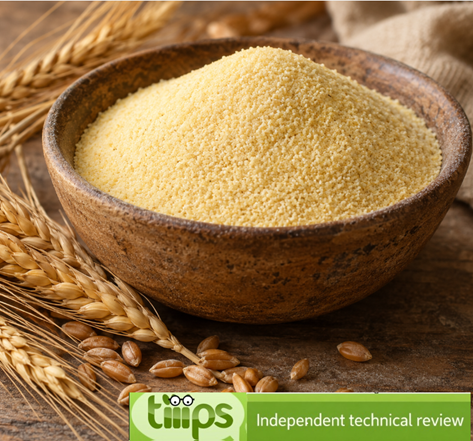
It consists mainly of complex carbohydrates, particularly starch, and also provides a good amount of protein.
The Cappelli variety is known for its generally interesting protein content and for gluten characteristics that differ from those of many modern durum wheat varieties, although it is by no means gluten-free.
Its characteristic yellow-amber colour is partly due to the carotenoids naturally present in durum wheat.
It also provides varying amounts of fibre, B vitamins, iron, magnesium, phosphorus and other minerals, depending on the degree of refinement.
It is mainly used for pasta, bread, focaccia and other baked goods, to which it may give distinctive aromatic and flavour characteristics.
Cappelli wheat is often associated with greater digestibility, but there is insufficient evidence to consider it automatically healthier or more digestible than other durum wheat varieties.
Calories
It provides approximately 340–360 kcal per 100 g, with variations depending on the product and moisture content.
Allergens
It is derived from wheat and contains gluten. It should be avoided by people with coeliac disease or wheat allergy.
Assessment
A semolina valued mainly for its traditional wheat variety, distinctive sensory characteristics and suitability for pasta and baked products. Nutritionally, however, it remains broadly similar to other durum wheat semolinas.
Cons: Allergen

