



Fresh pasteurised whole milk
Fresh pasteurised whole milk is cow’s milk that has undergone pasteurisation, a heat treatment that reduces pathogenic microorganisms while largely preserving the nutritional and sensory characteristics of the milk.
In Italy, the designation “high quality” is not merely a marketing term, but a regulated category reserved for fresh pasteurised milk that meets specific hygienic, compositional and production requirements.
In particular, Italian high-quality fresh pasteurised milk must retain at least 15.5% soluble non-denatured whey proteins in relation to total protein, indicating relatively mild heat treatment.
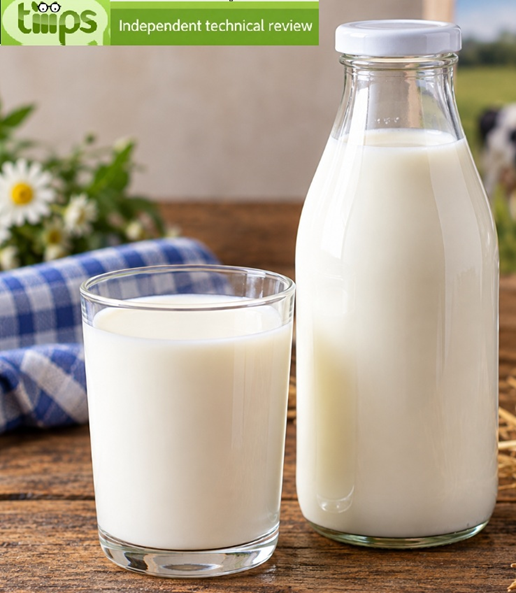
Whole milk naturally provides high-quality proteins, mainly caseins and whey proteins.
It is also a good source of calcium and phosphorus and provides vitamin B12, riboflavin and varying amounts of fat-soluble vitamins.
Its carbohydrate content consists mainly of lactose, while whole milk retains its natural fat content, including saturated fatty acids.
Pasteurisation makes milk microbiologically safer without substantially altering its protein, calcium or other major nutrient content.
People with lactose intolerance may experience gastrointestinal symptoms, while milk protein allergy is a separate condition.
Calories
Whole cow’s milk provides approximately 60–65 kcal per 100 ml, or about 75–80 kcal per 125 ml glass.
Allergens
Contains milk and milk proteins, which are major food allergens requiring mandatory declaration.
Assessment
A nutritionally valuable food and a source of high-quality protein and calcium. The Italian “high quality” designation guarantees specific production and compositional standards, but does not mean that saturated fat content and the overall diet should be disregarded.
Cons: Allergen

