



Natural sourdough starter
A natural sourdough starter is a fermentation culture made from flour and water, in which yeasts and lactic acid bacteria naturally coexist.
During fermentation, these microorganisms produce carbon dioxide, organic acids and aromatic compounds, contributing to leavening and to the characteristic flavour profile of baked goods.
It is mainly used in bread, focaccia, pizza and other long-fermented baked products.
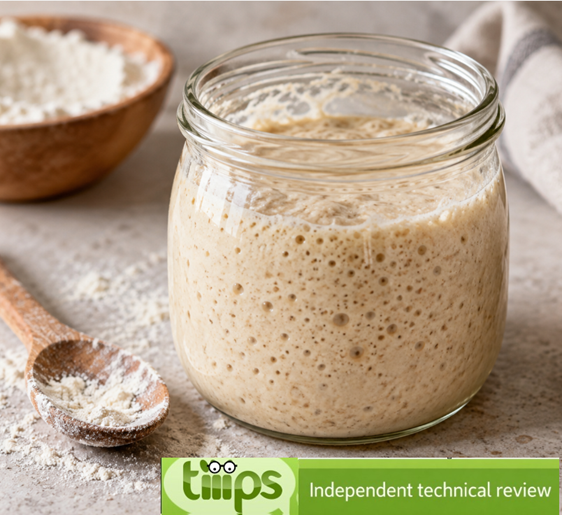
Compared with baker’s yeast alone, sourdough produces a more complex fermentation and may help improve flavour, texture and shelf life.
Fermentation may partially reduce phytate levels and modify some of the proteins and carbohydrates in the flour, but it does not eliminate gluten when the starter is made from gluten-containing cereals.
Commercial sourdough preparations may be fresh or dried and, in some cases, may also contain baker’s yeast or other added ingredients.
From a nutritional point of view, its contribution to the finished product is generally modest because it is used in relatively small amounts.
Calories
Fresh sourdough starter provides approximately 160–200 kcal per 100 g. In dried preparations, the value may exceed 300 kcal per 100 g, depending on composition.
Allergens
Allergens depend on the flour used. If made from wheat, rye, barley or other gluten-containing cereals, it is unsuitable for people with coeliac disease.
Assessment
A traditional ingredient valued mainly for its fermentative, aromatic and technological properties.
Cons: Allergen, if derived from gluten-containing cereals

