



Lemon powder
Lemon powder is an ingredient obtained from lemon (Citrus limon, family Rutaceae) by drying and subsequently powdering the juice, pulp, peel or whole fruit, depending on the product.
It is used to give foods acidity, aroma and citrus flavour and can be found in beverages, baked goods, snacks, seasonings, desserts and instant preparations.
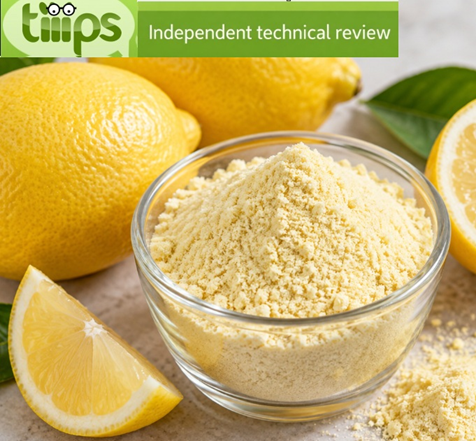
Its composition varies considerably: powder made from whole lemon or peel may contain fibre and flavonoids, whereas juice powder mainly contains organic acids and carbohydrates.
The main naturally occurring acid is citric acid, which is responsible for its characteristic tartness.
Lemon peel also contains aromatic compounds and flavonoids, including hesperidin and eriocitrin.
During drying, some of the vitamin C may be lost, so the final amount depends greatly on the manufacturing process.
Juice powders may contain carriers such as maltodextrin or other carbohydrates to facilitate drying and prevent clumping; in this case, the nutritional profile can change significantly.
Calories
The energy value is highly variable. Powder made from dried whole lemon may provide approximately 250–350 kcal per 100 g; juice powders containing maltodextrin may have similar or higher values. However, the amounts normally used in foods are small.
Allergens
Lemon is not among the major food allergens requiring mandatory declaration in the European Union, although rare individual reactions to citrus fruits may occur.
Assessment
An ingredient mainly useful as a natural flavouring and acidifying agent. Its nutritional value depends greatly on the part of the lemon used and on the presence of any added carriers.
Cons: possible presence of maltodextrin or other carriers

