



Paeonia Officinalis Flower Extract: properties, uses, pros, cons, safety
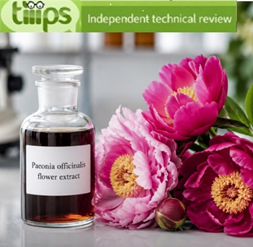
Paeonia Officinalis Flower Extract is a botanical extract obtained from the flowers of Paeonia officinalis L., commonly known as common peony or European peony. It is a complex plant-derived ingredient composed of numerous phytochemical substances whose profile depends on cultivar, geographical origin, growing conditions, harvesting time, and especially the extraction solvent and manufacturing process.
Modern botanical classification places Paeonia officinalis in the family Paeoniaceae. Kew Science recognizes the species as accepted and places it in the order Saxifragales, family Paeoniaceae. Some older chemical or regulatory descriptions still refer to Ranunculaceae, which is now considered an outdated botanical classification.
The cosmetic function associated with the ingredient is Tonic, meaning that it contributes to a pleasant sensation and to the general condition of the skin or hair. Experimental research on the flowers has also shown a significant content of phenolic compounds and in vitro antioxidant activity, but these experimental properties should not automatically be converted into official cosmetic functions or clinical claims for finished products.
Description
Paeonia Officinalis Flower Extract is not a single chemical substance but a multicomponent mixture derived from floral tissue.
The nature and concentration of its constituents can vary considerably depending on the extraction system. Aqueous, hydroalcoholic, glycolic, or deep eutectic solvent extracts may have substantially different phytochemical profiles.
Recent analyses of P. officinalis flowers have shown a particularly high content of phenolic compounds. Extracts obtained using water, ethanol, and hydroalcoholic mixtures have identified, among other substances, gallic acid, rutin, and other phenolic compounds, with marked quantitative differences depending on the extraction solvent.
Gallic acid has been identified as one of the most representative markers in the flower material studied.
The presence of polyphenols explains the interest of this extract in formulations designed to support skin condition, but the actual activity should be evaluated on the specific commercial grade and on the finished formulation.
Manufacturing process
Production generally begins with harvesting the flowers of Paeonia officinalis, followed by drying or processing of the fresh botanical material.
The process may include:
selection and botanical identification of the flowers;
removal of foreign material;
controlled drying;
grinding or milling;
extraction using water, ethanol, hydroalcoholic mixtures, glycols, or other suitable solvents;
maceration, agitation, or assisted extraction;
filtration;
concentration;
partial removal of the extraction solvent where required;
standardization;
microbiological control;
stabilization of the commercial grade.
Extraction systems based on deep eutectic solvents (DES) and ultrasound have also been investigated. Recent research using sorbitol and lactic acid-based systems produced flower extracts rich in gallic acid with antioxidant activity and in vitro inhibition of enzymes associated with skin-aging processes.
These results are experimental and should not be interpreted as clinical proof that the generic INCI ingredient has anti-aging activity.
The manufacturing method is therefore critical: two raw materials sold under the same INCI name may differ significantly in composition and activity.
Main compounds present
The composition varies strongly according to the extraction process. Constituents reported in the flowers and studied extracts include:
gallic acid;
rutin;
other flavonoids;
other phenolic acids and derivatives;
tannins and complex polyphenols;
volatile aromatic constituents;
amino acids, proteins, and esters in certain extracts;
plant pigments;
carbohydrates and other water-soluble substances.
Recent analytical work has reported substantial amounts of gallic acid in P. officinalis flowers, with concentrations varying considerably depending on the extraction solvent.
The phytochemical profile of aqueous, ethanolic, and hydroalcoholic extracts can differ significantly.
It is not appropriate to automatically attribute to the flower extract compounds or biological effects demonstrated in studies of the roots, leaves, or seeds of P. officinalis. These are different botanical parts and may have substantially different chemical profiles.
Identification data and specifications
| Characteristic | Value | Note |
|---|---|---|
| INCI name | Paeonia Officinalis Flower Extract | cosmetic ingredient name |
| Definition | extract of the flowers of Paeonia officinalis L. | botanical extract |
| Botanical name | Paeonia officinalis L. | accepted species |
| Current botanical family | Paeoniaceae | modern botanical classification |
| Plant part used | flowers | not roots, leaves, or seeds |
| Chemical category | multicomponent botanical extract | phytochemical mixture |
| Molecular formula | not applicable | not a single molecular substance |
| Molecular weight | not applicable | depends on individual constituents |
| CAS | 84929-40-8 | identifier associated with P. officinalis extracts; not exclusive to the flower extract |
| EC | 284-523-1 | European identifier associated with P. officinalis extracts |
| Cosmetic function | Tonic | documented cosmetic function |
| Cosmetics Regulation provisions | no specific provision identified | no specific Annex II–VI entry found |
ECHA associates the listed CAS and EC identifiers with extracts and physically modified derivatives obtained from Paeonia officinalis. Because this registration relates broadly to extracts of the plant, these identifiers should not be interpreted as a chemical characterization exclusive to the flower extract.
Indicative physicochemical properties
| Characteristic | Indicative value | Note |
|---|---|---|
| Commercial form | solution, liquid extract, or concentrate | depends on solvent and active content |
| Color | yellow/amber to reddish-brown | varies with extraction and concentration |
| Odor | characteristic botanical/floral odor | may be weak in purified grades |
| Solubility | dependent on extraction solvent | aqueous and hydroalcoholic grades behave differently |
| pH | variable | verify supplier specifications |
| Light stability | requires control | phenolic compounds and pigments may degrade |
| Oxidative stability | requires control | polyphenols may oxidize |
| Phytochemical variability | high | influenced by raw material and process |
| Microbiological sensitivity | relevant in aqueous grades | appropriate microbiological specifications are required |
| Formulation compatibility | vehicle-dependent | should be verified in the finished formulation |
Cosmetics
Paeonia Officinalis Flower Extract is mainly used in skin-care and hair-care products where a botanical ingredient with a tonic function is desired.
It may be present in:
facial creams;
serums;
lotions;
toners;
moisturizing products;
masks;
cleansing products;
eye-area products;
shampoos;
conditioners;
leave-on hair treatments;
formulations containing complexes of botanical extracts.
Research on the flowers has shown interesting in vitro antioxidant potential. Aqueous, ethanolic, and hydroalcoholic extracts have demonstrated antioxidant activity in different experimental systems.
Additional research on DES-derived extracts has reported antioxidant activity and inhibition of hyaluronidase, elastase, and tyrosinase in laboratory models.
These findings are relevant from a formulation-research perspective, but they should be interpreted carefully: they do not demonstrate that every cosmetic containing Paeonia Officinalis Flower Extract automatically produces clinically meaningful anti-aging, depigmenting, or anti-inflammatory effects.
Pros
It is a botanical ingredient.
It contains a meaningful fraction of phenolic compounds.
Gallic acid has been identified as an important phytochemical constituent of the flowers.
It has shown antioxidant activity in vitro in several experimental systems.
It can be used in both skin-care and hair-care products.
Properly prepared commercial grades can be compatible with many aqueous or hydroalcoholic formulations.
It can contribute to the sensory and botanical profile of skin-care and hair-care products.
Recent research suggests interesting potential for more advanced cosmetic applications, although the evidence remains predominantly experimental.
Cons
It is a complex botanical extract without universal standardization.
The same INCI name may identify extracts with very different chemical compositions.
Polyphenol and flavonoid content depends strongly on the extraction solvent.
It does not have a single chemical formula or molecular weight.
In vitro effects should not automatically be presented as clinical benefits on the skin.
Findings obtained with roots, leaves, or seeds of Paeonia officinalis cannot be transferred without verification to the flower extract.
Botanical raw materials may contain pesticides, metals, microbiological contaminants, or foreign plant material if not adequately controlled.
Aqueous extracts require particular attention to microbiological stability.
Polyphenols may be sensitive to light, oxygen, pH, and temperature.
Toxicological data specific to the exact commercial grade may be more limited than for chemically defined ingredients.
Safety, regulation and environment
The safety profile should be assessed in light of the multicomponent and variable nature of the extract.
No dedicated SCCS or CIR assessment was identified specifically for Paeonia Officinalis Flower Extract that would establish a universal safe cosmetic concentration.
As a result, supplier documentation and the safety assessment of the finished cosmetic product are particularly important.
EU Cosmetics Regulation provisions
No specific “Cosmetics Regulation provisions / Cosmetic restrictions” were identified for Paeonia Officinalis Flower Extract under Annexes II–VI of Regulation (EC) No 1223/2009.
The presence of the INCI name in the European cosmetic ingredient glossary does not by itself constitute a general authorization or a complete safety evaluation. Legally binding conditions derive from the EU Cosmetics Regulation and its applicable Annexes.
Botanical identity
A technical point requires clarification.
Older ECHA descriptions of the plant extract have referred to Paeonia officinalis as belonging to the Ranunculaceae family, while current botanical taxonomy from Kew Science places the species correctly in Paeoniaceae.
For an updated botanical description, Paeoniaceae should therefore be used.
Raw-material control
For professional evaluation of the raw material, it is advisable to obtain:
an updated SDS;
a Certificate of Analysis (COA);
technical data sheet;
confirmation of botanical identity;
confirmation of the plant part used;
geographical origin and traceability;
extraction solvent;
plant-to-extract ratio where available;
dry matter content;
phytochemical markers where standardized;
total polyphenol content;
residual solvents;
pesticide analysis;
heavy-metal analysis;
microbiological specifications;
mycotoxin data where relevant;
preservative system of the commercial grade;
pH;
light and oxidative stability data;
available irritation and sensitization data.
As with all botanical extracts, individual sensitivity or allergy to plant-derived components should also be considered, although there is insufficient evidence to classify this ingredient specifically as a cosmetic sensitizer.
From an environmental standpoint, assessment should include:
cultivation practices;
water consumption;
extraction solvents;
energy used for concentration or drying;
management of residual biomass;
biodegradability of the commercial carrier system.
Plant origin alone does not guarantee a low environmental impact.
Conclusion
Paeonia Officinalis Flower Extract is a botanical extract obtained from the flowers of Paeonia officinalis L., a species belonging to the family Paeoniaceae according to modern botanical classification.
Its composition is complex and highly dependent on the extraction process. Studies specifically performed on the flowers show a significant presence of polyphenols, particularly gallic acid, together with interesting in vitro antioxidant activity.
More recent research also suggests potential applications in cosmetic formulations designed to address oxidative stress and processes associated with skin aging, although the evidence remains mainly experimental.
No specific Cosmetics Regulation provisions are identified for this ingredient.
Paeonia Officinalis Flower Extract can be considered a cosmetically interesting botanical ingredient, but its assessment should remain closely linked to the quality and standardization of the specific extract. The most important parameters are botanical identity, plant part used, extraction solvent, phytochemical profile, pesticides, metals, microbiological quality, stability, and safety documentation of the commercial grade.

