



Whole einkorn flour: properties, uses, pros, cons, safety
Definition
Whole hulled emmer wheat flour is obtained by milling emmer wheat (Triticum dicoccum, also often indicated as Triticum turgidum ssp. dicoccum, family Poaceae), while retaining a significant portion of the grain’s outer layers and germ.
Compared with a more refined flour, the whole version generally contains a higher amount of fiber, minerals, and compounds from the outer part of the cereal, with a more rustic sensory profile and a darker color. It contains gluten (with rheological behavior different from modern common wheat), so it is not suitable for people with celiac disease.
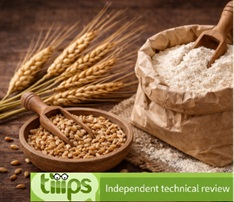
From a technological standpoint, it is a flour with a strong cereal identity, used in breadmaking, fresh pasta, baked goods, and blends, where it contributes aroma, structure, and a “whole-grain” product perception.
Production process
The production process generally includes:
Cleaning and selection of emmer (removal of foreign bodies, foreign seeds, impurities).
Dehulling/husking (hulled emmer is a hulled cereal and requires removal of the glumes).
Possible moisture conditioning of the grain.
Milling (roller or stone), set up to preserve the whole-grain fraction.
Sieving and particle size standardization.
Packaging with control of moisture and packaging suitability.
Key controls include moisture, particle size, ash (as an indicator of mineral/outer-fraction content), microbiological load, cereal-chain contaminants, and sensory stability during storage (odor, oxidation notes).
Key constituents
Whole emmer flour is a complex matrix composed mainly of starch, proteins, fiber, germ lipids, and micronutrients.
Starch: main energy component of the flour.
Favorable aspect: provides energy and contributes to structure and consistency in doughs and baked products.
Less favorable aspect: it remains a starch-based ingredient; the glycemic behavior of the finished product depends on recipe, processing, and portion size.Emmer proteins (including gluten): important for dough behavior.
Favorable aspect: support structure and holding capacity in many applications.
Less favorable aspect: emmer gluten may show rheological behavior different from modern soft wheat, with doughs sometimes less tenacious/easier to overwork; it is also contraindicated in celiac disease.Dietary fiber (insoluble + soluble fraction): higher than refined flour.
Favorable aspect: supports satiety, intestinal regularity, and the nutritional profile of the finished product.
Less favorable aspect: rapid increases in consumption may cause bloating in sensitive individuals.Germ lipids (modest amounts but relevant for stability):
Favorable aspect: improve the overall nutritional profile compared with more refined flours.
Less favorable aspect: increase sensitivity to rancidity/oxidation, especially under poor storage conditions.Minerals (e.g., magnesium, phosphorus, iron; variable):
Favorable aspect: greater micronutrient contribution than refined flours.
Less favorable aspect: real impact depends on recipe percentage and portion.B vitamins (variable):
Favorable aspect: support the nutritional profile.
Less favorable aspect: may decrease with intensive processing and prolonged storage.Phenolic compounds and phytates (outer fractions):
Favorable aspect: matrix contribution with potential antioxidant role.
Less favorable aspect: phytates may reduce the bioavailability of some minerals in the context of the meal, especially in poorly varied diets.
Identification data and specifications
| Parameter | Value | Note |
|---|---|---|
| Ingredient name | Whole hulled emmer wheat flour | Flour obtained from whole emmer grain |
| Botanical name | Triticum dicoccum | Cereal of the Poaceae family |
| Plant part | Caryopsis (endosperm + bran + germ) | “Whole” = higher fiber and mineral content |
| Nature | Powder with starch-protein-fiber matrix | Cereal ingredient containing gluten |
| Key components | Starch, proteins, fiber, germ lipids, minerals, vitamins | Complex matrix |
| Allergen | Gluten: yes | Not suitable for celiac patients; possible concern for wheat/gluten-containing cereal allergy |
| Calories | Indicatively ~320–360 kcal/100 g | Variable by moisture, batch, and specification |
| Key parameters | Moisture, particle size, ash, fiber, microbiology, oxidative stability | Quality and batch consistency drivers |
Indicative physicochemical properties
| Parameter | Indicative value | Note |
|---|---|---|
| Physical state | Powder | Fine → medium, depending on milling |
| Color | Beige / hazelnut / light brown | Darker than refined flours due to bran/germ presence |
| Odor | Cereal-like, slightly rustic | Rancid notes indicate possible oxidation |
| Water solubility | Not soluble | Forms dispersions; starch gelatinizes during cooking |
| Water absorption | Medium–high | Influenced by fiber, particle size, and degree of whole-grain content |
| pH | Variable (suspension) | Depends on batch and measurement method |
| Stability | Good if kept dry and well stored | Critical points: moisture, pests, oxidation |
| Heat sensitivity | Normal for cereal flours | Modifies viscosity/structure via gelatinization and protein denaturation |
| Typical issues | Clumping, rheological variability, rancidity, overly rustic mouthfeel | Depend on batch, milling, and storage |
Main uses
Food use
Whole hulled emmer flour is used in:
Bread and baked goods (often alone or blended with other flours).
Flatbreads, rustic pizzas, and leavened doughs (with hydration and processing adjustments).
Biscuits, shortcrusts, cakes, and loaf cakes, where it provides cereal flavor and warmer color.
Fresh pasta and traditional emmer-based products.
Blends for baking mixes and whole-grain products.
In breadmaking, performance depends on flour quality and management of hydration, timing, and mixing intensity. In many applications, use in blends is useful to balance workability and sensory yield.
Industrial use
The main industrial drivers are:
particle size consistency,
water absorption,
storage stability,
consistent sensory profile across batches,
management of rheological variability on the line.
Nutrition and health
Compared with more refined flours, the whole version tends to provide a higher amount of fiber and micronutrients, with a possible advantage for the nutritional profile of the finished product. It still remains a cereal base: the overall impact depends on recipe, portion, and consumption frequency.
From a health perspective, it is important to consider:
the presence of gluten (therefore not suitable for celiac disease);
individual tolerance to fiber;
the overall quality of the finished product (added sugars, fats, salt).
Pros
Higher fiber and micronutrient content than refined flours.
Characteristic sensory profile, with a more rustic cereal taste.
Good versatility in bakery, pasta, and traditional preparations.
Can improve whole-grain product positioning and satiety (within the recipe context).
Cons
Contains gluten: not suitable for people with celiac disease.
May be harder to manage in some doughs than standard modern flours.
Greater sensitivity to oxidation/rancidity than more refined flours.
In sensitive individuals, rapid increases in fiber intake may cause bloating/discomfort.
Portion note
Portion should be assessed on the finished product (bread, pasta, biscuits, etc.), considering:
percentage of whole hulled emmer flour in the recipe,
presence of other ingredients (salt, sugars, fats),
pairing with proteins, vegetables, and other fiber sources in the meal.
Safety (allergens, contraindications)
Allergens: contains gluten; it may also be relevant for individuals with allergy to gluten-containing cereals (case-by-case assessment).
Celiac disease: contraindicated.
Supply-chain contaminants: as with other cereal flours, controls on chemical and microbiological contaminants are important according to self-control plans and specifications.
Gastrointestinal tolerance: the fiber content may require gradual adaptation in sensitive individuals.
Storage and shelf-life
Store in a cool, dry place, protected from light, heat, and moisture, in a well-closed package.
Key points:
limit air exposure to reduce the risk of oxidation;
avoid humid environments to prevent clumping and deterioration;
use proper stock rotation (FIFO).
The presence of the germ and outer fractions generally makes whole flour more delicate than refined flour.
Labelling
On the ingredient label, it may appear as:
whole hulled emmer flour
whole emmer flour
equivalent wording consistent with applicable regulations
Items to evaluate:
clear indication of gluten presence (where required by regulation and labeling context);
consistency of the whole claim with the real nature of the product;
any nutrition claims (e.g., fiber) to be verified on the finished product.
Functional role and rationale for use
Whole hulled emmer flour is chosen to combine:
starch base and structure,
fiber contribution,
“ancient/rustic” sensory identity,
whole-grain product positioning.
In formulation, its role is often to provide character to the product, with a more marked aromatic profile and texture than more neutral flours.
Formulation compatibility
The most important formulation points are:
Hydration: fiber increases water absorption and may require adjustments.
Dough handling: emmer gluten behavior may require less aggressive mixing or optimized times.
Particle size: affects texture, mouthfeel, and final yield.
Blending with other flours: useful to modulate volume, structure, and softness.
Finished-product shelf-life: the whole-grain component can affect moisture, texture, and sensory stability.
Safety, regulation, and quality
GMP/HACCP management is recommended with clear specifications on:
moisture,
particle size,
ash/fiber,
microbiology,
supply-chain contaminants,
sensory stability during storage.
For practical quality, batch consistency, absence of off-odors, good workability, and repeatable recipe performance are crucial.
Conclusion
Whole hulled emmer wheat flour is a gluten-containing cereal flour characterized by a more whole-grain profile (higher fiber and grain fractions) and a strong sensory identity. It is very useful in baked goods, pasta, and blends where a rustic profile and a richer cereal base are desired compared with refined flours.
The main technical drivers are particle size, hydration, dough rheology management, and proper storage to limit oxidation and quality loss.
Mini-glossary
Whole grain: ingredient obtained while retaining a significant portion of bran and germ, in addition to the endosperm.
Caryopsis: the dry fruit typical of cereals (the “grain/kernel”).
Gluten: protein complex in cereals such as wheat/emmer, responsible for part of dough structure.
Particle size: size and distribution of flour particles; influences hydration, texture, and workability.
Starch gelatinization: transformation of starch with water and heat, modifying viscosity and structure.
GMP/HACCP: good manufacturing practices and food safety self-control system.

