



Chopped hazelnuts: properties, uses, pros, cons, safety
Definition
Chopped hazelnuts are the edible seeds of Corylus avellana (family Betulaceae) reduced into pieces/granules by cutting or coarse milling (from “fine” to “coarse”, up to larger chunks). Compared with whole hazelnuts, the chopped form increases exposed surface area, which affects oxidation, odour uptake and behaviour in matrices (creams, doughs, inclusions). They are an energy-dense ingredient with a significant share of lipids and a characteristic hazelnut flavour (more pronounced when the raw material is roasted). Hazelnuts are a major allergen within the tree nuts category.
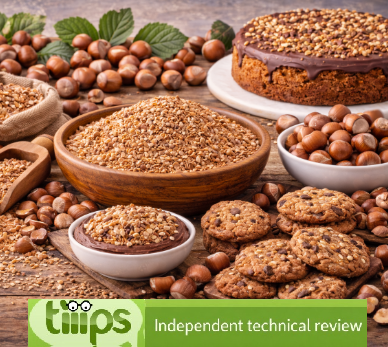
Production process
The supply chain includes harvesting, drying, shelling and sorting (size, defects). Processing into chopped form typically includes roasting (optional but common for flavour development and moisture reduction), cooling, optional blanching/peeling, then chopping and sieving to reach the target particle size while limiting fines. Industrial critical points include foreign bodies, moisture, microbiological load, oxidative stability and allergen management in the facility.
Key constituents
The matrix contains mainly lipids (predominantly unsaturated fatty acids), plant proteins, fibre, and micronutrients. Qualitatively, vitamin E and minerals (e.g., magnesium) are typically present at variable levels depending on origin and processing. Roasting (when used) intensifies aroma and can increase perceived sweetness/nuttiness; excessive roasting may introduce bitter or burnt notes.
Practical note: chopping accelerates potential rancidity if light, oxygen and temperature are not controlled (more surface area = higher vulnerability).
Identification data and specifications
| Parameter | Value | Note |
|---|---|---|
| Ingredient name | Chopped hazelnuts | Fine/medium/coarse pieces; “chunks” |
| Botanical name | Corylus avellana | Family: Betulaceae |
| Plant part | Seed | “Tree nut” (allergen) |
| Nature | Lipid–protein solid | Higher exposed surface than whole nuts |
| Key parameters | Particle size, % fines, moisture, roasting degree, oxidative stability, microbiological load, foreign bodies | Yield and shelf-life drivers |
| Allergen | Yes: tree nuts (hazelnut) | Critical for labelling |
| Caloric value | Typically ~600–650 kcal/100 g | Varies by variety and roasting |
Physico-chemical properties (indicative)
| Property | Indicative value | Note |
|---|---|---|
| Physical state | Pieces/granules | Dustier when finely chopped |
| Colour | Ivory → beige/brown | Darker if roasted |
| Odour | Hazelnut, roasted | Rancid notes indicate oxidation |
| Water solubility | Insoluble | Lipid phase dominates |
| Water activity | Low (if well dried) | Increases with moisture uptake |
| Stability | Good if protected | Key risk: oxidation and odour uptake |
| Typical criticalities | Rancidity, loss of crunch, oiling-off in mixes | Driven by process and packaging |
Main uses
Food
Used as inclusions in pastry (cakes, cookies/shortcrust), ice cream, toppings for desserts and yogurt, inclusions in chocolate and pralines, fillings and crunchy spreads. Pieces add crunch and a recognisable flavour; particle size drives perception: fine = more integrated and “meal-like”, coarse = more bite and crunch. In doughs, the lipid fraction can influence friability and handling.
Industrial use
Used in bars, cereals, inclusions in compound/chocolate, fillings and creams. Main industrial drivers are particle-size and roasting consistency, fines control (yield and line cleanliness), and oxidative stability over shelf-life.
Nutrition and health
Chopped hazelnuts provide energy mainly via the lipid fraction and also contain protein and fibre. The fats are largely MUFA (monounsaturated fatty acids) and PUFA (polyunsaturated fatty acids), with a lower share of SFA (saturated fatty acids). In a balanced diet, MUFA and PUFA are generally considered more favourable than a high SFA share, but energy density remains high and portion size is decisive.
Pros
They can contribute unsaturated fats, protein and fibre, potentially supporting satiety compared with sugar/starch-only snacks. They also improve sensory quality and perceived “richness” of products, often delivering strong flavour impact at relatively modest inclusion levels.
Cons
They are high-calorie, and uncontrolled use can rapidly increase energy intake. They are a major allergen (tree nuts). In processed products (bars, spreads, desserts), the “health” profile depends heavily on added sugars and fats in the overall recipe.
Serving note
Serving size depends on use (topping, inclusion, dough ingredient). For practical evaluation, consider the actual amount in the finished product and the presence of sugars/syrups/chocolate, which can dominate the nutrition profile.
Safety (allergens, contraindications)
Allergen: hazelnuts (tree nuts). Strict cross-contact management and correct label declaration are required. The chopped form, due to higher surface area, can be more sensitive to oxidative deterioration: freshness, odour and stability controls are relevant. In industrial production, foreign-body control and rejection of off-flavour lots are essential.
Storage and shelf-life
Store in a cool, dry place away from light and heat, in packaging with good oxygen and moisture barrier. Fine pieces turn rancid faster than whole nuts: stock rotation, lower storage temperatures and tightly closed packs are decisive for preserving flavour and crunch.
Labelling
Declare “hazelnuts” (or “chopped hazelnuts”) and highlight the allergen under tree nuts according to applicable rules. In composite products, “with hazelnuts” communication should be consistent with the real percentage and with any flavouring ingredients (e.g., aromas) that may influence consumer expectations.
Functional role and rationale for use
Chopped hazelnuts are a flavour and texture ingredient: they provide nutty/roasted notes and enhance premium perception. The lipid phase adds sensory roundness and can influence friability in doughs. Particle size selection is the main driver to tune crunch and integration into the matrix.
Formulation compatibility
In creams and yogurt, pieces soften over time; lipid coatings or protected inclusions help preserve crunch. In chocolate/compound, compatibility is high because the fat matrix acts as a moisture barrier, but fines must be controlled to avoid overly dense or gritty textures. In baked goods, pieces may require adjustments to fats and processing time to avoid excessive friability or uneven distribution.
Safety, regulatory and quality
GMP/HACCP management is central for allergen control, traceability, foreign bodies and lot stability. Clear specifications for particle size, roasting degree, moisture and oxidative parameters reduce variability and complaints (rancid odour, non-conforming flavour, inconsistent texture).
Conclusion
Chopped hazelnuts (Corylus avellana) are a high-sensory-value ingredient used to add crunch and hazelnut/roasted notes in sweets, creams and inclusions. Key drivers are particle size, roasting degree and oxidation control; from a safety standpoint, allergen management is the most critical requirement.
Mini-glossary
SFA: saturated fatty acids; in excess they may be less favourable than unsaturated fats for dietary lipid profile.
MUFA: monounsaturated fatty acids; often considered favourable when replacing part of SFA in a balanced diet.
PUFA: polyunsaturated fatty acids; include omega-6 and omega-3 families, with potential benefits when balanced in the diet.
Oxidation: lipid degradation causing rancid notes and flavour loss.
Water activity: measure of “available” water for reactions and microbial growth; affects stability and crunch.
GMP/HACCP: good manufacturing practices (GMP) and the hazard analysis and critical control points (HACCP) system for safety and contamination prevention.

