



Pistachios: properties, uses, pros, cons, safety
Definition
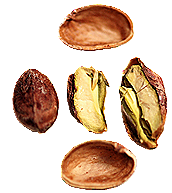
Pistachios are the edible seed (commercially classified as a “tree nut”) of Pistacia vera (family Anacardiaceae). In food applications they are used as kernels, pieces/granules, pistachio flour, or pistachio paste (with or without added sugar), as well as whole as inclusions in snacks and confectionery. Technologically, pistachios are a raw material with a significant share of lipids, proteins and fibre, a distinctive aroma profile, and a green colour linked to natural pigments (mainly chlorophylls, with carotenoid contribution). They are a major allergen.
Production process
The typical supply chain includes harvesting, cleaning, optional hull removal, drying to stabilise moisture and reduce microbiological risk, shelling and sorting (size grade, breakage, defects). For industrial uses, steps often include roasting (aroma development, moisture reduction), peeling (if required), milling to obtain pieces or flour, and fine grinding/refining to obtain paste (sometimes with added oils, sugars or flavourings depending on the target product). Critical controls include foreign bodies, sensory quality, oxidative stability and supply-chain contaminants.
Key constituents
The matrix contains mainly lipids (predominantly unsaturated fatty acids), plant proteins, dietary fibre, lower levels of available carbohydrates, and micronutrients. Qualitatively, pistachios contain vitamin E and some B vitamins (notably B6), minerals such as potassium, phosphorus and magnesium (variable by origin and roasting), plus compounds responsible for aroma and pigmentation.
Practical note: the lipid fraction makes pistachios sensitive to oxidation and rancid notes if storage conditions, light exposure and oxygen control are inadequate.
Identification data and specifications
| Parameter | Value | Note |
|---|---|---|
| Ingredient name | Pistachios | Whole, pieces, flour, paste |
| Botanical name | Pistacia vera | Family: Anacardiaceae |
| Plant part | Seed | “Tree nut” in commercial classification |
| Nature | Lipid–protein solid | Green intensity varies |
| Key parameters | Moisture, breakage, size grade, colour, microbiological load, oxidative stability, foreign bodies | Quality and consistency drivers |
| Allergen | Yes: tree nuts (pistachio) | Critical for labelling |
| Caloric value | Typically ~560–620 kcal/100 g | Depends on variety and processing |
Physico-chemical properties (indicative)
| Property | Indicative value | Note |
|---|---|---|
| Physical state | Solid (kernel/pieces/flour/paste) | Paste is semi-solid/flowable |
| Colour | Green → green-brown | Depends on cultivar and roasting |
| Odour | Nutty, sweet, roasted | Rancid notes indicate oxidation |
| Water solubility | Insoluble | Forms dispersions; lipid phase separates |
| Water activity | Low (if properly dried) | Increases with poor storage |
| Stability | Good if protected from oxygen and light | Key risk: rancidity, odour absorption |
| Typical criticalities | Oxidation, moisture/odour uptake, colour variation | Driven by packaging and temperature |
Main uses
Food
Pistachios are used in gelato/ice cream and pastry (pastes and inclusions), baked goods (cookies, creams, fillings), snacks and bars, sauces and pestos, and as a topping. Pistachio paste is a key semi-finished ingredient for flavouring and structuring creams, while pieces provide texture and a premium inclusion cue.
Industrial use
Used as a characterising ingredient in compounds, spreads, fillings, UHT desserts, and formulations where standardised colour, flavour and yield matter. Industrially, oxygen/light management, storage time, and clear specifications for particle size and roasting level are central.
Nutrition and health
From a nutritional standpoint, pistachios provide energy mainly via the lipid fraction and also contain protein and fibre. The fats are largely MUFA (monounsaturated fatty acids) and PUFA (polyunsaturated fatty acids), with a lower share of SFA (saturated fatty acids). In a balanced diet, MUFA and PUFA are generally considered more favourable than high SFA intake, but energy density remains high and portion size is decisive.
Pros
Pistachios contain unsaturated fats, protein and fibre, and may contribute to greater satiety compared with snacks based only on sugars or starches. In dietary patterns aiming to increase the share of “higher-quality” fats, pistachios can be useful when portioned appropriately.
Cons
They are energy-dense and, if consumed in large amounts, can quickly increase total calorie intake. They are also a major allergen and therefore critical for sensitised individuals. In processed products (spreads, gelato, snacks), nutritional quality depends heavily on added sugars and fats in the recipe.
Serving note
Serving size depends on the application (snack, inclusion, paste/spread). To assess the “health” impact, consider actual quantity, frequency, and the presence of added ingredients (sugars, oils, salt).
Safety (allergens, food safety)
Pistachios are a major allergen, requiring strict cross-contact management and correct label communication. From a food safety and quality perspective, moisture control, pest prevention, and management of supply-chain contaminants typical of tree nuts (including risks linked to improper storage) are important. For pastes and flours, higher surface area can increase sensitivity to oxidation and odour uptake.
Storage and shelf-life
Store in a cool, dry place, away from light and heat, in packaging with good oxygen and moisture barrier. To maximise flavour stability and minimise rancidity, lower storage temperatures and fast stock rotation are beneficial, especially for fine pieces and pastes.
Labelling
On labels, declare “pistachios” and manage allergen declaration under tree nuts according to applicable rules. For semi-finished products (pastes, creams/spreads), it is relevant to state pistachio percentage when used as a key differentiator and to clearly list any added ingredients (sugars, oils, flavourings, colourants) that affect quality and consumer expectation.
Functional role and rationale for use
Pistachios provide flavour, colour, and a lipid structure. In creams and ice cream, paste contributes to sensory roundness and viscosity; pieces deliver crunch and premium inclusion perception. Technologically, oxidation control is the primary driver to maintain a clean, stable flavour profile.
Formulation compatibility
In high-moisture systems (creams, yogurt, ice cream), pieces tend to lose crunch over time; stability is managed through size, roasting, and lipid barriers/coatings. In pastes, oil separation (surface oiling-off) may occur and is controlled through grinding, homogenisation and, where appropriate, application-compatible emulsifiers. In baked goods, roasting level and particle size guide flavour intensity and colour yield.
Safety, regulatory and environmental aspects
Implementation of GMP/HACCP is central for allergen management, traceability, foreign bodies and finished-product stability. For tree nuts, robust purchasing specifications and incoming controls reduce risks linked to defective or poorly stored lots. Environmental aspects depend mainly on origin, agricultural practices and logistics, while technical specifications typically prioritise safety, quality and sensory consistency.
Conclusion
Pistachios (Pistacia vera) are a high-value sensory and functional ingredient, used as inclusions, paste or flour to deliver flavour, colour and structure. Key drivers are batch quality, control of oxygen/light/temperature to limit oxidation, and rigorous allergen management in production and labelling.
Studies
Clinical and epidemiological studies have reported the beneficial effects of nuts and peanuts on high levels of moderate hypercholesteromy (cholesterol levels above 210 mg/dL).
A diet consisting of 15% of calories as pistachio nuts (about 2-3 ounces per day) over a four week period can favorably improve some lipid profiles in subjects with moderate hypercholesterolemia and may reduce risk of coronary disease (1).
The health benefits of nuts, mainly in relation to the improvement of dysmetabolic conditions such as obesity, type 2 diabetes mellitus and the related cardiovascular diseases, have been widely demonstrated. Compared to other nuts, pistachios have a lower fat and caloric content, and contain the highest levels of unsaturated fatty acids, potassium, γ-tocopherol, phytosterols and xanthophyll carotenoids, all substances that are well known for their antioxidant and anti-inflammatory actions. This variety of nutrients contributes to the growing body of evidence that the consumption of pistachios improves health, leading to a greater potential of healthy antioxidant and anti-inflammatory activity, glycemic control, and endothelial function. The present review examines the nutrients and phytochemicals present in pistachios as well as the potential health benefits of including pistachios in a diet (2).
It is necessary to put the pistachios away from the light to prevent the photo oxidation from degrading the healthy properties of the kernel (3).
Mini-glossary
SFA: saturated fatty acids; in excess, they may be less favourable for dietary lipid profile compared with unsaturated fats.
MUFA: monounsaturated fatty acids; often considered favourable when replacing part of SFA in a balanced diet.
PUFA: polyunsaturated fatty acids; include omega-6 and omega-3 families, with potential benefits when balanced in the overall diet.
Oxidation: reactions that degrade lipids, producing rancid notes and flavour loss.
Water activity: measure of “available” water for reactions and microbial growth; lower values generally improve stability.
GMP/HACCP: good manufacturing practices (GMP) and the hazard analysis and critical control points (HACCP) system for food safety and contamination prevention.

