



Spelt wheat (Triticum aestivum subsp. spelta)
Definition
Spelt wheat is a cereal belonging to Triticum aestivum subsp. spelta (family Poaceae), often referred to as “spelt” or “hulled wheat.” It is a hulled wheat: the kernel remains tightly enclosed by glumes and requires dehulling, with implications for the supply chain and yield. It is used as whole grain (dehulled spelt), flakes, and especially flour for baking and bakery products, typically showing a more “cereal/nutty” profile than many common wheat flours.
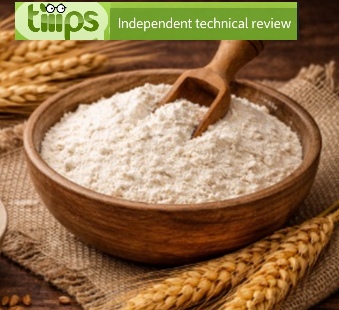
Use by field: food (bread, rustic pizza, biscuits, pasta, grain salads), cosmetics (rare use as a scrub particulate only with a suitable grade), medical/pharmaceutical (indirect use via foods), industrial use (bakery mixes and semi-finished products).
Production process
The process starts from harvested hulled grain, followed by dehulling (glume removal), cleaning, and sorting. For flour: conditioning to controlled moisture, milling and sieving to define particle size and extraction (refined or semi-whole/whole). For flakes: rolling and thermal stabilization; for whole grain: grading and packaging. Moisture control, pest management, and oxidation control during storage are central for quality and shelf-life.
Key constituents
Starch; wheat proteins (gliadins and glutenins, therefore gluten); dietary fiber (higher in more whole/less refined flours); trace lipids; mineral salts (magnesium, phosphorus, potassium at variable levels); B-group vitamins at variable levels; trace phenolic compounds; endogenous enzymes (variable amylase activity). Actual composition depends on extraction level and form (grain vs flour).
Practical note: although it is sometimes perceived as “more digestible,” it is still a wheat containing gluten; tolerance is individual and it is not suitable for people with celiac disease.
Identification data and specifications
| Characteristic | Value | Note |
|---|---|---|
| Ingredient name | Spelt (grain/flour/flakes) | Commercial form varies |
| Botanical name | Triticum aestivum subsp. spelta | Family: Poaceae |
| Plant part | Kernel (after dehulling) | Hulled cereal |
| Nature | Starch–protein powder or grain | Functionality driven by starch and proteins |
| Key parameters | Protein, gluten quality, ash, moisture, particle size | Drivers of dough performance and consistency |
| Allergen | Gluten (wheat) | Not suitable for gluten-free diets |
| Caloric value | Typically ~330–370 kcal/100 g | Depends on extraction and moisture |
Physicochemical properties (indicative)
| Characteristic | Indicative value | Note |
|---|---|---|
| Physical state | Grain/flakes/powder | Form dependent |
| Color | Beige → light brown | Darker if whole |
| Odor | Cereal-like, mild nutty note | Varies by lot and freshness |
| Water solubility | Not soluble | Forms dough; starch gelatinizes during baking |
| Water absorption | Medium | Depends on protein and fiber |
| Stability | Good if dry | Moisture- and pest-sensitive |
| Typical criticalities | Rheological variability, aroma oxidation, fermentation management | Supply chain and storage dependent |
Main uses
Food
As whole grain: salads, soups, side dishes. As flour: bread and leavened goods with a rustic profile, biscuits, pizzas and focaccia; as flakes: breakfast cereals and porridge mixes. In baking, it is used alone or in blends with other flours to improve dough strength and loaf volume, because gluten quality can differ from modern wheats.
Serving note
As cooked whole grain, typical servings may be 60–80 g dry (variable). In baked goods, serving size depends on the finished product. Carbohydrate intake is meaningful and should be contextualized.
Safety (allergens, food)
Contains gluten. Contraindicated for people with celiac disease. Proper storage is important to prevent pests and contamination.
Storage and shelf-life
Store in a cool, dry place in closed containers. Whole/less refined flours, with more germ lipids, may oxidize faster than refined flours: stock rotation and barrier packaging are useful.
Labelling
Declare “spelt” and the gluten allergen. Claims such as “wholegrain” or “organic” must be supported by applicable requirements and certifications.
Industrial use
Bakery mixes, specialty flours, and semi-finished products; key drivers are moisture, particle size, plant performance, and batch-to-batch consistency.
Functional role and use rationale
Spelt combines starch and wheat proteins (gluten) with an aromatic fraction that contributes a characteristic sensory profile. In dough, performance depends on hydration, mixing, and fermentation/maturation times; gluten quality may require adjustments to achieve volume and crumb structure. In wholegrain products, fiber influences water absorption and texture.
Formulation compatibility
In baking, it can be useful to increase hydration and carefully manage mixing and fermentation to avoid overly dense structures. Blending with stronger flours often improves volume. In sweet goods, the cereal note can be more pronounced and may require balancing with sugars and fats.
Pros and cons
Pros
Distinctive aromatic profile, often perceived as richer and more rustic.
Versatility across whole grain, flakes, and flour formats.
“Traditional cereal” positioning can be useful for certain product lines.
Cons
Contains gluten.
Potentially lower loaf volume/strength when used alone, depending on lot and milling grade.
Less refined flours may oxidize faster (freshness is more critical).
Safety, regulatory, and environment
Allergen
Yes: gluten (wheat).
Contraindications
Not suitable for people with celiac disease. In glycemic- or calorie-controlled regimens, portion size and meal context are the main practical drivers.
Regulatory/quality note
GMP/HACCP management across the supply chain and facility (pests, contaminants, traceability). Correct allergen declaration and claim consistency are mandatory.
Conclusion
Spelt wheat (Triticum aestivum subsp. spelta) is a hulled wheat used as whole grain and flour for products with a rustic, characteristic sensory profile. Technological performance depends on extraction level, particle size, and gluten quality, often requiring hydration and fermentation adjustments, especially when used alone in baking. The main drivers remain batch-to-batch consistency, correct storage, and management of the gluten allergen.
Mini-glossary
Hulled cereal: cereal whose kernel remains enclosed by glumes and requires dehulling.
Dehulling: removal of outer glumes to obtain edible grain.
Ash: indicator of mineral fraction; increases with higher extraction/wholegrain grades.
GMP/HACCP: good manufacturing practices and a food safety management system for food safety and contamination prevention.

