



Chocolate: properties, uses, pros, cons, safety
Chocolate is a food product obtained by processing the seeds of Theobroma cacao (family Malvaceae), combining cocoa mass (cocoa liquor), cocoa butter, and—depending on the type—sugars and sometimes milk and other ingredients. Technological and sensory quality depends decisively on bean fermentation and drying, roasting, the degree of refining, conching, and correct tempering temperature, which governs cocoa butter crystallization (stability, gloss, snap, and bloom resistance).
Definition
“Chocolate” refers to a lipid–solid matrix in which the fat phase is mainly cocoa butter and the solid phase includes cocoa particles and, where present, sugars and milk solids. Main commercial types include dark chocolate, milk chocolate, and white chocolate (the latter contains cocoa butter but does not contain cocoa mass). In food formulation, chocolate is a functional base that provides aroma, body, texture, and a specific rheological behavior, useful both as a finished product and as an ingredient (coatings, inclusions, fillings, glazes).
The Cocoa mass (Cocoa paste) is the first raw product obtained from the complex processing of cocoa, after the mixing process
To the taste, the cocoa mass is very bitter and to the aspect it is greasy.Two fundamental reasons for which we will need subsequent work of a certain complexity.
It is used in the food field as the first ingredient in the preparation of chocolate, biscuits, cakes and more.
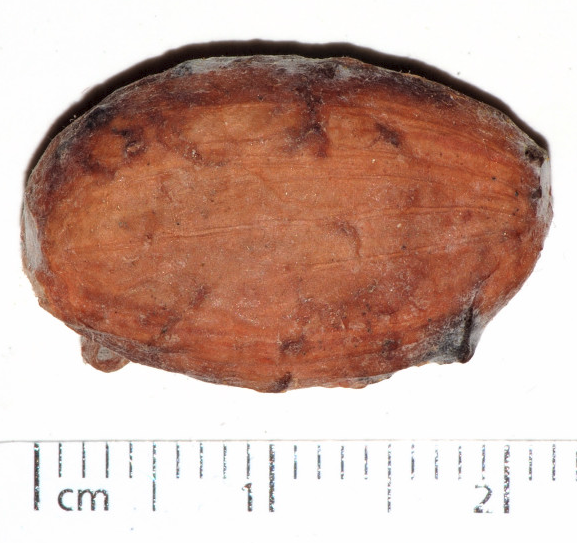
This is an enlarged cocoa bean:
Let's summarize the cocoa processing:
1 - Collection of cocoa pods. Still done by hand, as not to damage the trees.
2 - The cocoa pods are peeled and the beans dried in the sun for 8 days in order to reach fermentation.
3 - Drying of the beans
Mixing
4 - Picking, Cleaning and Roasting the beans
5 - Fanning the beans with industrial machinery
Cocoa mass
6 - Grinding the beans with a milling machine
7 - Refining the beans with roll refiners
At this point the cocoa butter can be separated
8 - Rolling process that creates heat for melting the cocoa mass.
From this point on, every manufacturer can add any product to personalize the chocolate. For example liqueurs, spices, etc.
Identification data and specifications
| Characteristic | Value | Note |
|---|---|---|
| Ingredient name | Chocolate | Denomination depends on type (dark, milk, white) |
| Key raw material | Cocoa (Theobroma cacao) | Sensory profile linked to origin and fermentation |
| Main components | Cocoa mass, cocoa butter, sugars; sometimes milk | Varies by type and recipe |
| Critical technical parameters | Particle size, viscosity, fat content, moisture | Determine processability and texture |
| Quality parameters | Gloss, snap, absence of bloom, aromatic profile | Mainly linked to tempering and storage |
| Caloric value | Typically ~500–600 kcal/100 g | Depends on recipe (sugars and fats) |
Physicochemical properties (indicative)
| Characteristic | Indicative value | Note |
|---|---|---|
| Physical state | Solid at room temperature | Progressive melting upon heating |
| Perceived melting point | Near body temperature | Governed by lipid fraction (cocoa butter) |
| Texture | From brittle to creamy | Depends on recipe, refining, and tempering |
| Melt rheology | Viscous, non-Newtonian fluid | Critical for casting, enrobing, molding |
| Moisture sensitivity | High | Water causes seizing and processing defects |
| Stability | Good if protected from heat and light | Bloom risk with thermal swings or suboptimal crystallization |
Main uses
Food
Chocolate is used as a finished product (bars, pralines) and as an ingredient (coatings, inclusions, glazes, fillings, ice cream, bakery). In industrial application, selecting the type and the thermal profile is decisive for stability and yield. The cocoa percentage (when declared) steers aromatic intensity and perceived sweetness, but technological performance depends mainly on the balance between fat phase, solids, and particle size.
Serving note
A typical serving often ranges between 10 and 30 g; energy intake is therefore meaningful depending on consumption frequency and type (dark vs milk/white).
Safety (allergens, food)
The most relevant allergens depend on the recipe and the facility: milk is frequent (milk chocolate and many productions), and tree nuts and soy (lecithin) may be present due to cross-contact or added ingredients. GMP/HACCP management is essential to prevent contamination and ensure consistent quality.
Storage and shelf-life
Store in a cool, dry place away from light and heat sources, avoiding temperature fluctuations. Excessive heat or oscillations promote fat bloom; humidity can promote sugar bloom and surface defects. Shelf-life varies with recipe (presence of milk and fillings), packaging, and storage conditions.
Labelling
Denomination (dark, milk, white) and any declared percentages must be consistent with applicable regulations and internal product standards. Correct declaration of ingredients and allergens is central, and—where relevant—statements regarding cocoa and cocoa butter.
Cosmetics
“Chocolate” as such is less commonly used as a cosmetic ingredient; more common is the use of cocoa derivatives (e.g., cocoa butter or extracts) for emollient and sensorial roles in body and lip products, under different logic than food use.
Medical and pharmaceutical
Limited and mostly indirect use (flavoring or carrier forms in specific products), subject to strict quality requirements and intended use.
Industrial use
Beyond food, certain cocoa derivatives are used as functional or aromatic ingredients in technical preparations; applications depend on the regulatory context and sector specifications.
Functional role and use rationale
Chocolate provides a distinctive combination of aroma, persistence, and texture linked to cocoa butter crystallization and particle fineness. In formulation it is a sensitive system, where management of temperature, moisture, and shear drives final quality more than the recipe alone. For industrial applications, reproducibility requires control of viscosity, thermal profile, and compatibility with added ingredients (fat-based fillings, inclusions, flavors, emulsifiers).
Formulation compatibility
Chocolate is incompatible with free water: even small amounts can cause seizing and loss of flow. Hygroscopic ingredients or high-moisture fillings require barriers and system design (water activity, coatings, barrier fats). In the presence of foreign fats (oily fillings, nut pastes), lipid migration can occur with bloom risk and softening. Compatibility therefore depends on fat balance, thermal stability, and correct design of enrobing/molding processes.
Pros and cons
Pros
High sensorial acceptability and strong capacity for product differentiation.
Good versatility as a base, coating, or inclusion.
Generally good stability when process and storage are controlled.
Cons
High sensitivity to moisture and thermal handling, with defects (bloom, seizing) if the process is not robust.
High energy density, with meaningful nutritional impact if consumed frequently.
Sensorial and technological variability linked to cocoa origin, recipe, and process standards.
Safety, regulatory, and environment
Allergen
Allergen presence is strongly dependent on type and production line; controlling cross-contact risk (milk, tree nuts, soy) and label accuracy is critical.
Contraindications
For individuals with nutritional restrictions (sugar or lipid control), consumption should be moderated. In people sensitive to stimulant components naturally present in cocoa, tolerability may vary with dose and type (dark chocolate typically higher in cocoa solids).
Regulatory/quality note
Compliance depends on requirements for ingredients, denominations, allergens, and traceability. Final quality requires controls on process, contaminants, and stability throughout shelf-life, with procedures consistent with GMP/HACCP.
Practical/formulation troubleshooting
Surface bloom: verify tempering, reduce thermal swings, control lipid migration from fillings, optimize barrier packaging.
Seizing during processing: eliminate water and condensation, control ambient humidity, select low-moisture ingredients, manage pre-heating and mixing correctly.
Out-of-spec viscosity: adjust cocoa butter content, permitted emulsifiers, thermal profile, and shear; verify particle size and conching.
Aroma loss: limit prolonged thermal stress, protect from light and oxygen, verify compatibility with flavors and inclusions.
Conclusion
Chocolate is a complex matrix whose quality depends on the balance between cocoa raw material, recipe design, and—above all—process control (refining, conching, tempering) and storage conditions. The main drivers for reproducible results are rigorous management of temperature and moisture, rheology control, and defect prevention (bloom, seizing, fat migration). From a nutritional standpoint, high energy density calls for attention to portion size and consumption frequency, while from a safety standpoint accurate allergen management and GMP/HACCP remain central for quality and compliance.
Mini-glossary
Tempering: thermal process that controls cocoa butter crystallization to achieve gloss, snap, and stability.
Bloom: surface defect; fat bloom relates to fat crystallization/migration, sugar bloom to humidity and sugar recrystallization.
Seizing: sudden thickening caused by contact with water, leading to loss of flow.
GMP/HACCP: good manufacturing practices and a food safety management system; essential to prevent contamination and ensure consistent quality.
The most relevant studies on this ingredient have been selected with a summary of their contents:
As for the positive properties, from a health point of view, cocoa beans contain a significant amount of antioxidants: flavonoids, proanthocyanidins, catechins, epicatechins and in particular a phytosterol, beta-sitosterol to which are attributed protective actions on the development of cancer.
This study warns about the risk of high chocolate intake, which is positively associated with the risk of prostate cancer as total, advanced, localized and low-grade disease. However, the authors also pointed out that although high intake of antioxidants from supplements was associated with an increased risk for all prostate cancer subgroups except fatal cancer, this finding must be interpreted with caution because of the possibility of reverse causality (1). Which, if we interpret the study correctly, means that small amounts of cocoa have anti-inflammatory activity in our bodies, whereas excessive amounts may cause an adverse effect.

