Criniera di leone: proprietà, usi, pro, contro, sicurezza
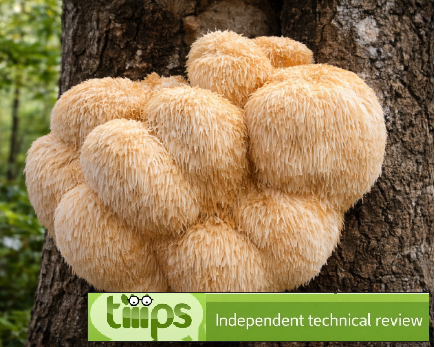
Criniera di leone (Hericium erinaceus), è un fungo basidiomicete edibile della famiglia Hericiaceae, diffuso nelle zone temperate e tipicamente associato a legno di latifoglie (tronchi vecchi o deperienti). È apprezzato sia come alimento sia come fungo “funzionale”, con una distinzione importante tra carpoforo (corpo fruttifero) e micelio: le due matrici possono avere profili fitochimici e tecnologici differenti.
Inquadramento botanico
Caratteristiche del fungo
Ecologia: lignicola e saprotrofa (può comportarsi anche da parassita debole su piante indebolite), legata a latifoglie.
Carpoforo: massa compatta bianca-crema con tipiche “spine” pendule (denti imeniali), aspetto facilmente riconoscibile.
Substrato naturale: legno di latifoglie; in coltivazione si usano substrati lignocellulosici (segatura/legno duro, paglia, miscele arricchite).
Variabilità: morfologia e resa dipendono da ceppo, substrato e parametri ambientali; anche il profilo metabolico può variare con il metodo colturale.
Composizione chimica e struttura
Il profilo chimico dipende da parte utilizzata (carpoforo vs micelio), substrato, stadio di crescita ed eventuale estrazione (acqua, idroalcolico, frazioni arricchite). Di seguito le classi più rilevanti con esempi di molecole specifiche frequentemente riportate in letteratura.
Polisaccaridi della parete e frazioni polisaccaridiche estratte
β-glucani (strutture tipiche β-(1→3) con ramificazioni β-(1→6) in molte specie fungine) e eteropolisaccaridi con unità monosaccaridiche ricorrenti come glucosio, galattosio, mannosio e fucosio.
Frazioni descritte come polisaccaridi/proteopolisaccaridi possono contribuire a proprietà tecnologiche e ad attività biologiche osservate in modelli sperimentali.
Diterpenoidi di tipo ciametano (soprattutto micelio)
Serie degli erinacini, citata come caratteristica del micelio: erinacina A, erinacina C, erinacina D, erinacina E, erinacina F, erinacina G, erinacina H, con ulteriori analoghi riportati in letteratura (fino a erinacine A–K in lavori storici di isolamento).
È stata descritta anche erinacina S come composto con attività neurotrofica in modelli sperimentali.
Composti aromatici/phenolici specifici del carpoforo
Serie degli hericenoni: in diverse revisioni e lavori di isolamento sono riportati hericenone A, hericenone B, e ulteriori analoghi (hericenones A–I, con segnalazioni anche di J in alcune sintesi bibliografiche).
Questi composti sono spesso descritti come derivati fenolici/resorcinolici e sono discussi per il potenziale ruolo su vie neurotrofiche (principalmente in modelli preclinici).
Altri metaboliti secondari riportati
Hericene A e molecole correlate (incluse segnalazioni come N-de(phenylethyl)isohericerin, NDPIH) in studi di metabolomica/attività neurotrofica sperimentale.
Ergothioneine (L-ergotioneina), un composto naturale di interesse per attività antiossidanti/citoprotettive, riportato in funghi e discusso anche per H. erinaceus.
Steroli: ergosterolo come sterolo fungino tipico, talvolta utilizzato anche come indicatore della frazione lipofila; in alcuni contesti tecnologici si discute la conversione fotoindotta a vitamina D2.
Fenolici “classici” e acidi organici (dipendenti da matrice e metodo analitico)
Acidi fenolici riportati includono acido protocatecuico, acido caffeico, acido p-cumarico, acido ferulico; tra i composti associati sono citati anche catechina e alcuni acidi organici come acido succinico.
Usi e benefici
Alimentare: consumato come fungo edibile; in cucina è apprezzato per consistenza e aromaticità (la resa sensoriale dipende molto dal grado di freschezza e dalla cottura).
Integratori e ambito “funzionale”: estratti/polveri di carpoforo o micelio sono spesso proposti per supporto di funzione cognitiva, benessere nervoso e asse intestino-cervello; le evidenze cliniche disponibili sono eterogenee e fortemente dipendenti da parte utilizzata, standardizzazione (es. frazioni arricchite in erinacini) e disegno degli studi.
Ricerca preclinica: ampia letteratura su polisaccaridi e terpenoidi (erinacini/hericenoni) in modelli sperimentali, con interesse per meccanismi neurotrofici (es. vie correlate a fattori di crescita nervosa) e modulazione di parametri infiammatori/ossidativi.
Alcune ricerche cliniche riportano che Hericium erinaceus potrebbe avere efficacia come antidepressivo (1) e come potenziale alimento funzionale nel trattamento dell'osteoartrite (2).
Applicazioni
Alimenti e gastronomia: fresco, essiccato, polverizzato; impiego in preparazioni calde, zuppe e secondi, con differenze marcate tra prodotto “intero” e ingredienti concentrati.
Integratori alimentari: capsule/polveri/estratti acquosi o idroalcolici; sul mercato sono frequenti prodotti standardizzati al micelio “arricchito” (es. marcatori legati a erinacina A).
Ricerca e controllo qualità: analisi di β-glucani, profilo di metaboliti terpenoidi (erinacini) e aromatici (hericenoni), oltre a parametri di filiera (microbiologia, metalli, contaminanti) in funzione dell’uso.
Coltivazione
Substrati: prevalgono matrici lignocellulosiche (legno duro/segatura, miscele con paglia e supplementi).
Parametri indicativi: crescita miceliare spesso riportata con ottimo intorno a 25 °C e fruttificazione favorita da temperature più basse (circa 15–18 °C) con umidità elevata; la ventilazione e la CO₂ influenzano forma e sviluppo delle “spine”.
Variabilità: ceppo e substrato possono modificare resa e profilo di metaboliti secondari.
Considerazioni ambientali e di sicurezza
Allergeni e tollerabilità: in genere ben tollerato come alimento; sono comunque possibili reazioni allergiche individuali e disturbi gastrointestinali (discomfort addominale, nausea/diarrea) in una minoranza di utilizzatori, soprattutto con estratti concentrati.
Fegato: nelle sintesi di farmacovigilanza disponibili, H. erinaceus risulta un improbabile responsabile di epatotossicità clinicamente significativa alle dosi d’uso tipiche; resta prudente considerare l’eterogeneità dei prodotti e le miscele multi-ingrediente negli integratori.
Aspetti regolatori UE (novel food): in documenti europei di consultazione sullo status novel food viene distinta la storia d’uso del carpoforo rispetto a prodotti di micelio disidratato, per i quali è stata indicata una classificazione come novel food in assenza di storia di consumo significativa pre-1997; sono presenti anche valutazioni più recenti su specifiche polveri/estratti di carpoforo in consultazioni nazionali.
Buone pratiche: preferire prodotti con tracciabilità, indicazione chiara della matrice (carpoforo vs micelio), standardizzazione e controlli su contaminanti.
Sinonimi
Bibliografia__________________________________________________________________________
(1) Limanaqi F, Biagioni F, Busceti CL, Polzella M, Fabrizi C, Fornai F. Potential Antidepressant Effects of Scutellaria baicalensis, Hericium erinaceus and Rhodiola rosea. Antioxidants (Basel). 2020 Mar 12;9(3):234. doi: 10.3390/antiox9030234.
Abstract. Recent studies focused on the pharmacology and feasibility of herbal compounds as a potential strategy to target a variety of human diseases ranging from metabolic to brain disorders. Accordingly, bioactive ingredients which are found within a variety of herbal compounds are reported to produce both neuroprotective and psychotropic activities which may help to combat mental disorders such as depression, anxiety, sleep disturbances and cognitive alterations. In the present manuscript, we focus on three herbs which appear effective in mitigating anxiety or depression with favourable risk-benefit profiles, namely Scutellaria baicalensis (S. baicalensis), Hericium erinaceus (H. erinaceus) and Rhodiola rosea (R. rosea). These three traditional folk medicinal herbs target the main biochemical events that are implicated in mental disorders, mimicking, to some extent, the mechanisms of action of conventional antidepressants and mood stabilizers with a wide margin of tolerability. In detail, they rescue alterations in neurotransmitter and neuro-endocrine systems, stimulate neurogenesis and the synthesis of neurotrophic factors, and they counteract oxidative stress, mitochondrial dysfunction and inflammation. Albeit the encouraging results that emerge from both experimental and clinical evidence, further studies are needed to confirm and better understand the mental-health promoting, and specifically, the antidepressant effects of these herbs.
(2) Yang SY, Fang CJ, Chen YW, Chen WP, Lee LY, Chen CC, Lin YY, Liu SC, Tsai CH, Huang WC, Wu YC, Tang CH. Hericium erinaceus Mycelium Ameliorates In Vivo Progression of Osteoarthritis. Nutrients. 2022 Jun 23;14(13):2605. doi: 10.3390/nu14132605.
Abstract. Osteoarthritis (OA) is an age-related disorder that affects the joints and causes functional disability. Hericium erinaceus is a large edible mushroom with several known medicinal functions. However, the therapeutic effects of H. erinaceus in OA are unknown. In this study, data from Sprague-Dawley rats with knee OA induced by anterior cruciate ligament transection (ACLT) indicated that H. erinaceus mycelium improves ACLT-induced weight-bearing asymmetry and minimizes pain. ACLT-induced increases in articular cartilage degradation and bone erosion were significantly reduced by treatment with H. erinaceus mycelium. In addition, H. erinaceus mycelium reduced the synthesis of proinflammatory cytokines interleukin-1β and tumor necrosis factor-α in OA cartilage and synovium. H. erinaceus mycelium shows promise as a functional food in the treatment of OA.
Vigna L, Morelli F, Agnelli GM, Napolitano F, Ratto D, Occhinegro A, Di Iorio C, Savino E, Girometta C, Brandalise F, Rossi P. Hericium erinaceus Improves Mood and Sleep Disorders in Patients Affected by Overweight or Obesity: Could Circulating Pro-BDNF and BDNF Be Potential Biomarkers? Evid Based Complement Alternat Med. 2019 Apr 18;2019:7861297. doi: 10.1155/2019/7861297.
Abstract. Epidemiological data indicate that subjects affected by obesity have an increased risk of developing mood disorders. The relationship between obesity and mood disorders is bidirectional. We assessed whether a Hericium erinaceus treatment improved depression, anxiety, sleep, and binge eating disorders after 8 weeks of supplementation in subjects affected by overweight or obesity under a low calorie diet regimen. Looking for a possible clinical biomarker, we assessed the serum balance between brain-derived neurotrophic factor (BDNF) and its precursor pro-BDNF before and after H. erinaceus supplementation. Seventy-seven volunteers affected by overweight or obesity were recruited at the offices of the Department of Preventive Medicine, Luigi Devoto Clinic of Work, Obesity Centre, at the IRCCS Foundation Policlinico Hospital of Milan (Italy). Patients were recruited only if they had a mood and/or sleep disorder and/or were binge eating as evaluated through self-assessment questionnaires. We used two different enzyme-linked immunosorbent assays kits to discriminate circulating levels of pro-BDNF and BDNF. Eight weeks of oral H. erinaceus supplementation decreased depression, anxiety, and sleep disorders. H. erinaceus supplementation improved mood disorders of a depressive-anxious nature and the quality of the nocturnal rest. H. erinaceus increased circulating pro-BDNF levels without any significant change in BDNF circulating levels.
Szućko-Kociuba I, Trzeciak-Ryczek A, Kupnicka P, Chlubek D. Neurotrophic and Neuroprotective Effects of Hericium erinaceus. Int J Mol Sci. 2023 Nov 3;24(21):15960. doi: 10.3390/ijms242115960.
Abstract. Hericium erinaceus is a valuable mushroom known for its strong bioactive properties. It shows promising potential as an excellent neuroprotective agent, capable of stimulating nerve growth factor release, regulating inflammatory processes, reducing oxidative stress, and safeguarding nerve cells from apoptosis. The active compounds in the mushroom, such as erinacines and hericenones, have been the subject of research, providing evidence of their neuroprotective effects. Further research and standardization processes for dietary supplements focused on H. erinaceus are essential to ensuring effectiveness and safety in protecting the nervous system. Advancements in isolation and characterization techniques, along with improved access to pure analytical standards, will play a critical role in achieving standardized, high-quality dietary supplements based on H. erinaceus. The aim of this study is to analyze the protective and nourishing effects of H. erinaceus on the nervous system and present the most up-to-date research findings related to this topic.
Cornford N, Charnley M. Hericium erinaceus: A possible future therapeutic treatment for the prevention and delayed progression of Alzheimer's disease? - A narrative review. Nutr Res Rev. 2025 Dec;38(2):613-627. doi: 10.1017/S0954422425000058.
Abstract. At present, the treatment of Alzheimer's disease involves only symptomatic medications which have continually demonstrated little efficacy, primarily due to the presence of biological barriers. Despite efforts, researchers have yet to discover a therapeutic treatment that delays neurodegenerative progression or restores associated Alzheimer neuropathological processes. For centuries, Hericium erinaceus (HE) has been used predominantly in Asian countries for its culinary and medicinal purposes; however, this mushroom has not yet been utilised in western pharmacology. This review systematically investigates evidence pertaining to the use of HE as a potential future therapeutic treatment for the prevention and delayed progression of Alzheimer's disease, by highlighting any fundamental neurotrophic and neuroprotective properties. In total, three human clinical trials and thirteen animal-model studies were included in review. The use of HE demonstrated positive significant differences in results obtained from behavioural, histological and biochemical assessments from both human clinical trials and animal model studies accentuating its utility for the improvement of cognitive function. In addition, erinacine-A-enriched HE appears to demonstrate the highest bioactive potency of all HE extracted compounds, providing the greatest effects while also showing transportability ease across biological barriers. In conclusion, evidence suggests that intake of HE may be an appropriate and relevant future therapeutic treatment for the prevention and delayed progression of Alzheimer's disease; however, continued research is necessary to provide further significant evidence of this relationship, through an increased quantity of human clinical trials.




