



Artichoke extract: properties, uses, pros, cons, safety
(Cynara scolymus extract) (Cynara cardunculus var. scolymus; Asteraceae)
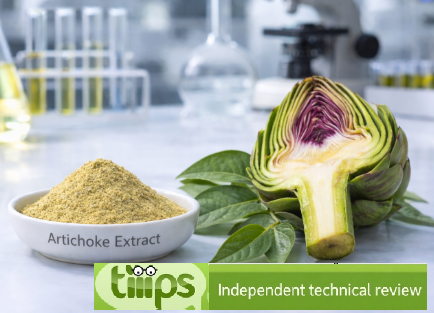
Artichoke extract is a botanical extract typically obtained from the leaves of Cynara (artichoke). In the food sector it is mainly used in dietary supplements (capsules, tablets, powders, liquid extracts) with positioning linked to digestive support and lipid metabolism, while in cosmetics it appears in “botanical” formulas where the main interest is antioxidant contribution and skin conditioning. Practical performance depends strongly on the commercial grade, solvent/carrier, extract strength, and standardization.
Definition
Artichoke extract is a variable-composition mixture: it is not a single molecule, but a set of constituents extracted from the botanical matrix. Quality and repeatability depend on the plant part used (often leaves), origin, drying conditions, extraction system, and the manufacturer’s specifications.
In botanical technical language, a DER (drug extract ratio, herb-to-extract ratio; practical note: a higher DER often indicates a more “concentrated” extract, but real quality depends primarily on standardization and impurity control).
Main uses
Food
Used in supplements as dry or liquid extracts, sometimes standardized to caffeoylquinic acids or other markers. Reliable use requires defined markers, impurity limits, and batch-to-batch consistency, as well as prudent labelling for claims (market- and authorization-dependent).
Cosmetics
Used in face/body products where botanical positioning and antioxidant support are sought. Formulation must consider colour/odour stability and compatibility with preservatives and the emulsifying system.
INCI functions.
Antioxidant agent. Ingredient that counteracts oxidative stress and prevents cell damage. Free radicals, pathological inflammatory processes, reactive nitrogen species and reactive oxygen species are responsible for the ageing process and many diseases caused by oxidation.
Skin conditioning agent. It is the mainstay of topical skin treatment as it has the function of restoring, increasing or improving skin tolerance to external factors, including melanocyte tolerance. The most important function of the conditioning agent is to prevent skin dehydration, but the subject is rather complex and involves emollients and humectants that can be added in the formulation.
Key constituents
Composition is process-dependent and, in practice, is often described by classes/markers. In leaf-based products, typically relevant constituents include caffeoylquinic acids (including chlorogenic acid), dicaffeoylquinic acids (with cynarin often cited as a representative compound), flavonoids (luteolin derivatives), and sesquiterpene lactones (e.g., cynaropicrin). Some preparations may also include polysaccharide fractions (e.g., inulin) depending on process and grade. Operationally, formulators focus on declared markers, colour/odour, and long-term stability.
Nutritional use note and bioactive compounds
In supplements, interest is linked to phenolic compounds and the plant’s characteristic bitter profile, with frequent use in “digestive” products. From a technical standpoint, the most important aspects are: marker definition (or sum of markers), per-serving dose consistency, and impurity/contaminant control. Consumer communication should remain aligned with claims permitted in the destination market and the finished-product documentation.
Energy (calories)
Practically, at typical use levels (mg to low g/day) the caloric contribution is generally negligible relative to the overall energy profile of the finished product; it is not an operational primary parameter compared with assay/markers and quality.
Identification data and specifications
| Caratteristica | Valore |
|---|---|
| Name (common use) | Artichoke extract |
| INCI name (cosmetics, common) | Cynara scolymus leaf extract |
| Typical plant part | Leaves |
| Botanical family | Asteraceae |
| CAS number (INCI, leaf) | 84012-14-6 |
| EC/EINECS number (INCI, leaf) | 281-659-3 |
| Substance type | Variable-composition botanical extract (mixture) |
| Molecular formula | Not applicable (mixture) |
| Molecular weight | Not applicable as a single value (mixture) |
| Standardization (possible) | To caffeoylquinic acids and/or specific markers, depending on manufacturer |
Indicative physico-chemical properties
| Caratteristica | Valore indicativo | Nota |
|---|---|---|
| Appearance | Powder / liquid extract | Depends on grade and carrier |
| Solubility | Carrier-dependent | Check supplier technical sheet |
| pH stability | Matrix-dependent | Extreme pH can affect colour/haze |
| Light/oxygen stability | Variable | Possible organoleptic drift; barrier packaging can help |
| Thermal stability | Sensitive to prolonged stress | Validate via accelerated tests, especially in beverages |
| Critical parameters | Markers, colour, odour, haze, micro limits, contaminants | Drivers for repeatability and acceptance |
Functional role and practical mechanism of action
In supplements, the role is that of a botanical ingredient positioned mainly for digestive and metabolic support, linked to the profile of phenolic compounds and other leaf-characteristic fractions. In cosmetics, use is more often oriented to antioxidant and skin-conditioning functions, with practical performance dependent on real stability in the formula and the use level compatible with colour/odour.
Formulation compatibility
In powders and tablets, key issues are flowability, blend uniformity, and moisture control (caking risk). In liquids, perceived solubility, haze, and time stability become central; in cosmetic emulsions, beyond physical stability, colour/odour impact and preservative compatibility must be managed. In all cases, supplier variability makes a specification including markers and organoleptic criteria useful.
Use guidelines
Use levels/doses depend on grade and target (positioning, marker content, sensory profile). Good practice is to define markers and specifications, validate stability in real packaging, set batch acceptance criteria, and control botanical-relevant contaminants (especially for continuous use products).
Quality, grades, and specifications
Variability across grades can be significant. Robust control includes: marker specifications, microbiological limits consistent with dosage form, metals and contaminant control (pesticides where relevant), carrier declaration, and batch-to-batch repeatability verification. Adoption of GMP (good manufacturing practice; benefit: reduces variability and contamination) and HACCP (hazard analysis and critical control points; benefit: identifies and controls food-safety risks) strengthens traceability and supply reliability.
Safety, regulatory, and environment
Safety must be assessed on the finished product considering dose, duration of use, and target population. For variable-composition botanical extracts, practical topics include contaminant control, managing compositional variability through standardization, and individual tolerability (especially in sensitive users).
Allergen.
It is not typically classified as a labelling allergen, but reactions may occur in individuals sensitized to the Asteraceae (formerly Compositae) family due to possible cross-reactivity.
Contraindications (brief).
Use caution in cases of bile duct obstruction or biliary disorders (medical evaluation advisable), and in known hypersensitivity to Asteraceae. During pregnancy/breastfeeding and in people on chronic therapies, a conservative, professional-guided approach is prudent.
Formulation troubleshooting
Haze or precipitation in liquids.
Action: optimize pH and order of addition, choose a grade with a more suitable carrier, validate via accelerated stability and real packaging.
Colour/odour drift over time.
Action: select a more stable grade, reduce light/oxygen stress (packaging), introduce tighter organoleptic criteria in the specification.
Perceptible batch-to-batch variability.
Action: strengthen marker and impurity specifications, increase incoming controls, and agree on standardization strategies with the supplier.
Conclusion
Artichoke extract is a variable-composition botanical used mainly in supplements and selectively in cosmetics. For robust industrial use, the decisive factors are: standardization (markers), contaminant control, organoleptic stability, and matrix compatibility, together with a finished-product safety assessment including a concise note on potential allergenicity and practical contraindications.
Mini-glossary
DER. Drug extract ratio; an indicator of herb-to-extract ratio (note: it does not replace marker standardization).
GMP. Good manufacturing practice; benefit: reduces variability and contamination through controlled manufacturing practices.
HACCP. Hazard analysis and critical control points; benefit: systematic prevention and control of food-safety hazards via critical control points.
Studies
Its predominant use is culinary, but it is widely used in the medical field. In fact, phytonutrients are extracted from its leaves and roots:
- stimulate bile flow from the liver (1)
- reduce heartburn
- counter-cholesterol harmful LDL (2)
- counteract colon irritability
- reduce bladder infections
- reduce nausea
Its polyphenol content, exerts an antioxidant activity (3) and also chlorogenic acid, luteolin, apigenine, cinary, coffee acid derivatives, flavonoids (4) and polyphenols help improve the integrity and functionality of endothelial cells.

