



Psicosio (Allulosio): proprietà, usi, pro, contro, sicurezza
Psicosio o Allulosio (Allulose, D-Allulose)) è un monosaccaride “rare sugar”, epimero C-3 del fruttosio, usato come dolcificante a bassa energia e con profilo tecnologico vicino al saccarosio (dolcezza, corpo, reazioni di imbrunimento). In ambito formulativo è impiegato per ridurre l’apporto calorico e l’impatto glicemico rispetto allo zucchero, mantenendo caratteristiche sensoriali e di processo utili (es. bakery).
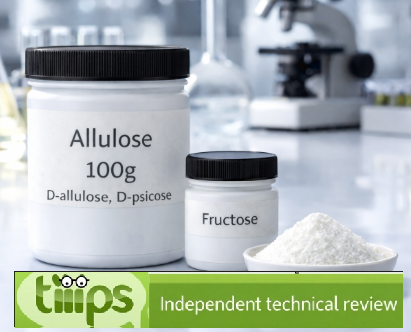
Definizione
Allulosio è una sostanza definita (non una miscela) con formula C6H12O6. In termini pratici, si distingue dagli zuccheri tradizionali perché viene in gran parte assorbito ma poco metabolizzato, con eliminazione prevalentemente come molecola intatta; questo supporta un contributo energetico inferiore rispetto ai carboidrati convenzionali. La dolcezza è tipicamente intorno a ~70% del saccarosio, con resa e profilo gustativo dipendenti da matrice e concentrazione.
La differenza tra psicosio e D-psicosio è stereochimica e terminologica.
Psicosio
È un termine generico che indica il monosaccaride allulosio senza specificarne la configurazione ottica.D-psicosio
Indica la forma D, che è quella naturalmente presente, utilizzata in ambito alimentare e nutrizionale.
In pratica: quando si parla di alimentazione e ingredienti food, psicosio = D-psicosio. La distinzione è rilevante solo in chimica stereoisomerica.
Usi principali
Alimentazione.
Uso come ingrediente dolcificante in polveri e sciroppi, in particolare in prodotti “reduced sugar” o “lower calorie”, con applicazioni frequenti in bakery, lattiero-caseari, gelati e bevande. In tecnologia alimentare può favorire imbrunimento e note caramellate (reazioni tipo Maillard/caramellizzazione), quindi la gestione di tempo/temperatura è un driver di processo.
Uso industriale.
Materia prima per formulazioni “sugar-reduction” con attenzione a purezza, controllo contaminanti, comportamento in processo (imbrunimento, igroscopicità) e ripetibilità lotto-lotto.
Principali sostanze contenute
Il prodotto è costituito principalmente da allulosio. La variabilità pratica tra gradi è legata a: purezza (titolo), umidità, ceneri, profilo impurità, contaminanti (metalli) e caratteristiche fisiche (granulometria nel solido; solidi disciolti e viscosità negli sciroppi).
Nota d’uso nutrizionale e composti bioattivi
Allulosio è impiegato come alternativa allo zucchero per ridurre l’energia e, in diversi contesti, per limitare l’aumento postprandiale di glucosio rispetto a zuccheri tradizionali. La gestione formulativa deve considerare: equivalenza di dolcezza (spesso non 1:1 col saccarosio), impatto su texture/umidità e comportamento termico (tendenza a imbrunire).
Calorie (valore energetico)
Valore indicativo: contributo energetico molto basso; in ambito etichettatura e calcolo energetico, in alcuni mercati viene utilizzato un fattore fino a circa 0,4 kcal/g. In pratica industriale, il valore da applicare dipende dal quadro normativo del mercato di destinazione e dalla categoria di prodotto.
Dati di identificazione e specifiche
| Caratteristica | Valore |
|---|---|
| Nome | Allulosio, Allulose (d-allulose, d-psicose) |
| Numero CAS | 551-68-8 |
| Numero EC/EINECS | 208-999-7 |
| Formula molecolare | C6H12O6 |
| Peso molecolare | 180,16 g/mol |
| Dolcezza relativa | ~70% del saccarosio (indicativa) |
| Stato regolatorio UE | ingrediente soggetto a iter “novel food”; a valle dell’ultimo parere pubblico EFSA disponibile, la sicurezza non risulta stabilita (contesto autorizzativo da verificare per data e categoria) |
| Gradi commerciali | polvere cristallina e sciroppo; specifiche dipendenti da standard e fornitore |
Proprietà chimico-fisiche (indicative)
| Caratteristica | Valore indicativo | Nota |
|---|---|---|
| Aspetto | polvere cristallina bianca / sciroppo | grado-dipendente |
| Solubilità in acqua | elevata | utile in bevande e sciroppi; dipende da temperatura e solidi |
| Igroscopicità | possibile | impatta scorrevolezza e caking; richiede packaging barriera |
| Punto di fusione | ~96 °C (indicativo) | può variare per forma/idratazione e fonte dati |
| Stabilità | buona in secco; in processo può favorire imbrunimento | attenzione in bakery e trattamenti termici |
| Parametri critici | purezza, umidità, colore, contaminanti, profilo sensoriale | driver principali per qualità e ripetibilità |
Ruolo funzionale e meccanismo d’azione (pratico)
Il ruolo funzionale è la dolcificazione con contributo energetico ridotto rispetto al saccarosio e, in molte applicazioni, un comportamento tecnologico “simile allo zucchero” (corpo, mouthfeel, browning). La formulazione richiede taratura su: potere dolcificante reale in matrice, bilanciamento con altri edulcoranti, e controllo del colore in cottura o in shelf-life.
Compatibilità formulativa
In polveri: attenzione a umidità ambientale e compattazione (igroscopicità), con scelta di granulometria e packaging idonei.
In bevande/sciroppi: considerare solubilità, viscosità e stabilità nel tempo; validare sedimentazione/cristallizzazione in condizioni reali.
In bakery: possibile imbrunimento più rapido rispetto al saccarosio; gestire profilo termico e tempi di cottura per evitare eccesso di colore o note troppo caramellate.
Linee guida d’uso
L’impostazione tipica è definire un target sensoriale (dolcezza, corpo, aftertaste) e un target tecnologico (colore, umidità, texture), quindi ottimizzare in iterazioni controllate. In prodotti destinati a mercati diversi, la definizione di “calorie” e le regole di etichettatura possono variare: serve allineamento regolatorio per claims e dichiarazioni nutrizionali.
Qualità, gradi e specifiche
La qualificazione del fornitore è centrale: purezza e profilo impurità, controllo contaminanti e standard di sicurezza alimentare. L’adozione di GMP (good manufacturing practice; beneficio: riduce variabilità e contaminazioni) e HACCP (hazard analysis and critical control points; beneficio: identifica e controlla i rischi di sicurezza alimentare) è un indicatore pratico di robustezza della filiera e ripetibilità.
Sicurezza, normativa e ambiente
La sicurezza va valutata sul prodotto finito considerando dose, frequenza di consumo e popolazione target. Un limite pratico d’uso è spesso la tollerabilità gastrointestinale: dosi elevate possono causare meteorismo o effetto lassativo (meccanismo osmotico), soprattutto se assunte in singola somministrazione.
Allergene.
Non è tipicamente classificato come allergene.
Controindicazioni
Cautela in soggetti con intestino sensibile o sindromi funzionali (es. tendenza a diarrea), e in formulazioni che possono portare a dosi elevate per porzione; gestione mediante porzionamento, indicazioni d’uso e valutazione di tolleranza. Per popolazioni vulnerabili (bambini piccoli, soggetti con patologie specifiche) è prudente un approccio conservativo e basato su valutazioni del prodotto finito e del contesto normativo del mercato.
Troubleshooting formulativo
Imbrunimento eccessivo in cottura.
Intervento: ridurre temperatura o tempo, modificare rapporto con altri zuccheri, ottimizzare umidità e pH di impasto/impasto liquido.
Caking nelle polveri.
Intervento: ridurre umidità residua, usare packaging barriera, ottimizzare granulometria e condizioni di stoccaggio.
Disturbi gastrointestinali nei consumatori.
Intervento: ridurre dose per porzione, distribuire l’assunzione giornaliera, combinare con altri dolcificanti per ridurre il carico di allulosio, inserire avvertenze d’uso quando pertinenti.
Conclusione
Allulosio è un dolcificante “rare sugar” con contributo energetico ridotto e profilo tecnologico utile per prodotti “sugar-reduction”. L’adozione industriale richiede controllo di qualità (purezza/umidità/contaminanti), gestione dei parametri di processo (browning) e attenzione a tollerabilità gastrointestinale e quadro regolatorio del mercato di destinazione, in particolare in UE dove l’inquadramento come novel food resta un punto determinante.
Mini-glossario
Epimero. Zucchero che differisce per la configurazione di un solo centro stereogenico (per allulosio: epimero C-3 del fruttosio).
GMP. Good manufacturing practice; beneficio: riduce variabilità e contaminazioni tramite pratiche produttive controllate.
HACCP. Hazard analysis and critical control points; beneficio: prevenzione e controllo sistematico dei pericoli per la sicurezza alimentare tramite punti critici.

