Artemisia ludoviciana (Artemisia ludoviciana – famiglia Asteraceae)
Descrizione
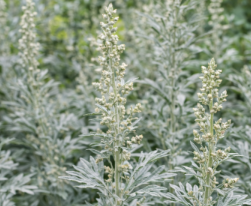
Artemisia ludoviciana è una specie erbacea perenne appartenente alla famiglia delle Asteraceae, nota per il suo portamento cespitoso e per la marcata colorazione grigio–argentea dell’apparato aereo. La pianta presenta fusti eretti o leggermente arcuati, che possono raggiungere 60–100 cm di altezza, spesso ricoperti da una fitta pubescenza.
Le foglie sono alterne, lanceolate o strettamente ellittiche, con margini interi o leggermente lobati; la superficie è vellutata, dovuta alla presenza di peli fini che riducono la traspirazione e conferiscono alla pianta l’aspetto caratteristico. Le infiorescenze sono costituite da piccoli capolini globosi, poco appariscenti, riuniti in pannocchie terminali; i fiori sono generalmente giallo–verdognoli.
Distribuzione, ecologia e aspetti colturali
Artemisia ludoviciana è originaria del Nord America, dove è diffusa in un ampio range di habitat, dalle praterie aride alle zone collinari e montane. Dal punto di vista ecologico, la specie si distingue per:
elevata adattabilità a suoli poveri, sabbiosi o ghiaiosi;
buona tolleranza alla siccità, grazie alla pubescenza fogliare e all’apparato radicale sviluppato;
preferenza per esposizioni soleggiate o leggermente ventilate;
resistenza al freddo invernale nelle aree temperate.
In coltivazione, è considerata una pianta rustica e poco esigente, utilizzata sia in ambito ornamentale sia in contesti di rinaturalizzazione. La propagazione avviene facilmente per divisione dei cespi, talea o tramite rizomi sotterranei, che favoriscono la capacità di espansione laterale.
Composizione chimica e caratteristiche funzionali
Come molte specie del genere Artemisia, A. ludoviciana è caratterizzata da una composizione ricca in metaboliti secondari, tra cui:
oli essenziali, con componenti terpenici variabili;
lattoni sesquiterpenici, tipici del genere;
flavonoidi e altri composti fenolici;
tannini e sostanze amare.
La composizione fitochimica può variare in funzione di ecotipo, condizioni ambientali, stadio di sviluppo e parte della pianta utilizzata (foglie e sommità fiorite).
Impieghi tradizionali e applicazioni
Nelle tradizioni etnobotaniche nordamericane, Artemisia ludoviciana è stata utilizzata come pianta aromatica e funzionale, soprattutto sotto forma di infusi, decotti o applicazioni esterne. Tradizionalmente è associata a:
utilizzo come pianta aromatica e amara;
impiego in preparazioni rituali o fumigatorie;
uso popolare per il benessere digestivo e per applicazioni topiche.
In ambito moderno, la specie è oggetto di interesse per studi fitochimici e per l’uso come pianta ornamentale nei giardini a bassa richiesta idrica.
Valutazione qualitativa del materiale vegetale
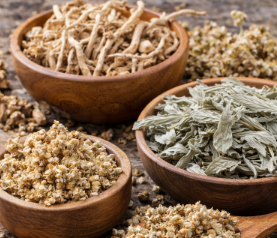
La qualità della droga vegetale (foglie e sommità fiorite) è valutata in base a:
colore argenteo uniforme, indice di corretta essiccazione;
aroma caratteristico, privo di note sgradevoli o rancide;
assenza di contaminazioni (terra, parti estranee, muffe);
contenuto in umidità residua compatibile con una buona conservazione;
purezza botanica, con corretta identificazione della specie.
Una raccolta effettuata nel periodo balsamico e una corretta essiccazione in ambienti aerati e ombreggiati sono determinanti per preservare le caratteristiche chimiche e sensoriali.
Valore ecologico e ornamentale
Oltre agli aspetti funzionali e tradizionali, Artemisia ludoviciana riveste un ruolo importante come pianta ornamentale e paesaggistica, apprezzata per il fogliame decorativo, la resistenza agli stress ambientali e la capacità di inserirsi in giardini aridi, naturalistici o mediterranei. La specie contribuisce inoltre alla biodiversità vegetale e alla stabilizzazione del suolo in ambienti marginali.
Classificazione
Livello | Classificazione |
|---|
Origine | Vegetale |
Specie | Artemisia ludoviciana |
Famiglia botanica | Asteraceae |
Genere | Artemisia |
Categoria | Pianta erbacea perenne |
Caratteristiche della pianta e della materia prima
Aspetto | Descrizione |
|---|
Tipo di pianta | Erbacea perenne |
Altezza media | 30–100 cm |
Foglie | Lanceolate, tomentose |
Colore foglie | Grigio-argenteo |
Infiorescenza | Capolini piccoli |
Parte utilizzata | Parti aeree |
Forma di utilizzo | Fresca o essiccata |
Allergeni | Non noti |
Valori nutrizionali indicativi
Non applicabili in senso alimentare.
Artemisia ludoviciana non è un alimento e non viene utilizzata per il suo apporto energetico o nutrizionale. L’interesse è di tipo botanico e tradizionale, non dietetico.
Nota sull’uso e sui composti bioattivi presenti
Le parti aeree di Artemisia ludoviciana contengono oli essenziali e lattoni sesquiterpenici tipici del genere Artemisia, oltre a flavonoidi e composti fenolici. Queste sostanze sono alla base degli impieghi tradizionali documentati in ambito etnobotanico. L’utilizzo non rientra nell’alimentazione comune e deve essere considerato esclusivamente in contesti specialistici, nel rispetto delle conoscenze tradizionali e delle normative vigenti.
Bibliografia________________________________________________________________________
Kamarauskaite J, Baniene R, Raudone L, Vilkickyte G, Vainoriene R, Motiekaityte V, Trumbeckaite S. Antioxidant and Mitochondria-Targeted Activity of Caffeoylquinic-Acid-Rich Fractions of Wormwood (Artemisia absinthium L.) and Silver Wormwood (Artemisia ludoviciana Nutt.). Antioxidants (Basel). 2021 Sep 1;10(9):1405. doi: 10.3390/antiox10091405.
Abstract. Caffeoylquinic acids are some of the chemophenetically significant specialized metabolites found in plants of the family Asteraceae Dumort., possessing a broad spectrum of biological activities. As they might be potential mitochondria-targeted antioxidants, effective preparation methods-including extraction, isolation, and purification of caffeoylquinic acids from plant sources-are in great demand. The aim of this study was to fractionate the caffeoylquinic acids from cultivated wormwood (Artemisia absinthium L.) and silver wormwood (Artemisia ludoviciana Nutt.) herb acetone extracts and evaluate their phytochemical profiles, antioxidant activity (radical scavenging and reducing activities), effects on kidney mitochondrial functions, and cytochrome-c-reducing properties. The main findings of our study are as follows: (1) Aqueous fractions purified from wormwood and silver wormwood herb acetone extracts are rich in monocaffeoylquinic acids (chlorogenic acid, neochlorogenic acid, 4-O-caffeoylquinic acid), while methanolic fractions purified from wormwood and silver wormwood herb acetone extracts are rich in dicaffeoylquinic acids (4,5-dicaffeoylquinic acid, 3,4-dicaffeoylquinic acid, 3,5-dicaffeoylquinic acid). Aqueous fractions purified from wormwood and silver wormwood herb acetone extracts were solely composed of monocaffeoylquinic acids. Methanolic fractions purified from wormwood and silver wormwood herb acetone extracts contained only dicaffeoylquinic acids. (2) Fractions purified from silver wormwood herb acetone extracts stood out as having the greatest content of caffeoylquinic acids. (3) The greatest radical scavenging activity was determined in the dicaffeoylquinic-acid-rich fraction purified from silver wormwood herb acetone extract; the greatest reducing activity was determined in the dicaffeoylquinic-acid-rich fraction purified from wormwood herb acetone extract. (4) The effect of both fractions on mitochondrial functions was dose-dependent; lower concentrations of caffeoylquinic-acid-rich fractions had no effect on mitochondrial functions, whereas higher concentrations of caffeoylquinic-acid-rich fractions reduced the state 3 respiration rate (with the complex-I-dependent substrate glutamate/malate). (5) Both monocaffeoylquinic- and dicaffeoylquinic-acid-rich fractions possessed cytochrome-c-reducing properties; the greatest cytochrome c reduction properties were determined in the dicaffeoylquinic-acid-rich fraction purified from wormwood herb acetone extract. In summary, these findings show that caffeoylquinic acids might be beneficial as promising antioxidant and cytochrome-c-reducing agents for the modulation of mitochondria and treatment of various mitochondrial-pathway-associated pathologies.
Swor K, Poudel A, Satyal P, Setzer WN. The Essential Oil Compositions of Ambrosia acanthicarpa Hook., Artemisia ludoviciana Nutt., and Gutierrezia sarothrae (Pursh) Britton & Rusby (Asteraceae) from the Owyhee Mountains of Idaho. Molecules. 2024 Mar 20;29(6):1383. doi: 10.3390/molecules29061383.
Abstract. As part of our interest in the volatile phytoconstituents of aromatic plants of the Great Basin, we have obtained essential oils of Ambrosia acanthicarpa (three samples), Artemisia ludoviciana (12 samples), and Gutierrezia sarothrae (six samples) from the Owyhee Mountains of southwestern Idaho. Gas chromatographic analyses (GC-MS, GC-FID, and chiral GC-MS) were carried out on each essential oil sample. The essential oils of A. acanthicarpa were dominated by monoterpene hydrocarbons, including α-pinene (36.7-45.1%), myrcene (21.6-25.5%), and β-phellandrene (4.9-7.0%). Monoterpene hydrocarbons also dominated the essential oils of G. sarothrae, with β-pinene (0.5-18.4%), α-phellandrene (2.2-11.8%), limonene (1.4-25.4%), and (Z)-β-ocimene (18.8-39.4%) as major components. The essential oils of A. ludoviciana showed wide variation in composition, but the relatively abundant compounds were camphor (0.1-61.9%, average 14.1%), 1,8-cineole (0.1-50.8%, average 11.1%), (E)-nerolidol (0.0-41.0%, average 6.8%), and artemisia ketone (0.0-46.1%, average 5.1%). This is the first report on the essential oil composition of A. acanthicarpa and the first report on the enantiomeric distribution in an Ambrosia species. The essential oil compositions of A. ludoviciana and G. sarothrae showed wide variation in composition in this study and compared with previous studies, likely due to subspecies variation.
Lopes-Lutz D, Alviano DS, Alviano CS, Kolodziejczyk PP. Screening of chemical composition, antimicrobial and antioxidant activities of Artemisia essential oils. Phytochemistry. 2008 May;69(8):1732-8. doi: 10.1016/j.phytochem.2008.02.014.
Abstract. The chemical composition of essential oils isolated from aerial parts of seven wild sages from Western Canada -Artemisia absinthium L., Artemisia biennis Willd., Artemisia cana Pursh, Artemisia dracunculus L., Artemisia frigida Willd., Artemisia longifolia Nutt. and Artemisia ludoviciana Nutt., was investigated by GC-MS. A total of 110 components were identified accounting for 71.0-98.8% of the oil composition. High contents of 1,8-cineole (21.5-27.6%) and camphor (15.9-37.3%) were found in Artemisia cana, A. frigida, A. longifolia and A. ludoviciana oils. The oil of A. ludoviciana was also characterized by a high content of oxygenated sesquiterpenes with a 5-ethenyltetrahydro-5-methyl-2-furanyl moiety, of which davanone (11.5%) was the main component identified. A. absinthium oil was characterized by high amounts of myrcene (10.8%), trans-thujone (10.1%) and trans-sabinyl acetate (26.4%). A. biennis yielded an oil rich in (Z)-beta-ocimene (34.7%), (E)-beta-farnesene (40.0%) and the acetylenes (11.0%) (Z)- and (E)-en-yn-dicycloethers. A. dracunculus oil contained predominantly phenylpropanoids such as methyl chavicol (16.2%) and methyl eugenol (35.8%). Artemisia oils had inhibitory effects on the growth of bacteria (Escherichia coli, Staphylococcus aureus, and Staphylococcus epidermidis), yeasts (Candida albicans, Cryptococcus neoformans), dermatophytes (Trichophyton rubrum, Microsporum canis, and Microsporum gypseum), Fonsecaea pedrosoi and Aspergillus niger. A. biennis oil was the most active against dermatophytes, Cryptococcus neoformans, Fonsecaea pedrosoi and Aspergillus niger, and A. absinthium oil the most active against Staphylococcus strains. In addition, antioxidant (beta-carotene/linoleate model) and 2,2-diphenyl-1-picrylhydrazyl (DPPH) radical scavenging activities were determined, and weak activities were found for these oils.
Julián-Flores A, Aguilar-Zárate P, Michel MR, Sepúlveda-Torre L, Torres-León C, Aguilar CN, Chávez-González ML. Exploring the Therapeutic Potential of Medicinal Plants in the Context of Gastrointestinal Health: A Review. Plants (Basel). 2025 Feb 20;14(5):642. doi: 10.3390/plants14050642.
Abstract. Medicinal plants represent promising sources for the treatment of gastrointestinal disorders because of their abundance in bioactive compounds with therapeutic properties. Throughout history, various plant species have been used to alleviate digestive ailments, and studies have revealed the presence of metabolites with anti-inflammatory, antibacterial, antiviral, antiparasitic, antidiarrheal, antioxidant, and anticancer activities. The secondary metabolites responsible for these properties include alkaloids, terpenoids, and phenolic compounds, with the latter, particularly flavonoids, being the most associated with their bioactivities. Gastrointestinal diseases, such as gastritis, peptic ulcers, gastroesophageal reflux disease, inflammatory bowel disease, irritable bowel syndrome, and gastrointestinal cancer, are caused primarily by bacteria, parasites, viruses, and the consumption of raw or undercooked foods. These conditions significantly impact human health, necessitating the development of safer and more effective therapeutic alternatives. After an extensive literature review, several plant species with widespread use in the treatment of these disorders were identified, including Matricaria chamomilla, Mentha spicata, Melissa officinalis, Artemisia ludoviciana, Flourensia cernua, Phoradendron californicum, and Turnera difusa. This study revealed that the analyzed plants are rich in bioactive compounds, which confer their medicinal properties. However, many other plants commonly used to treat digestive disorders have been scarcely studied, highlighting the need for further research.