



Pork Belly
Description
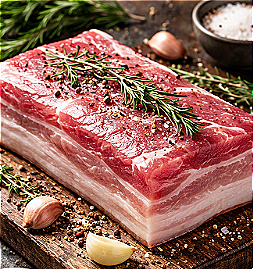
Pork belly is a meat cut and cured product obtained from the ventral section of the pig, an anatomical area naturally characterised by a balanced proportion of fat and lean muscle. It is widely used in both traditional and modern gastronomy and is valued for its rich sensory profile and culinary versatility.
Depending on processing, pork belly may be consumed fresh, salted, cured, or smoked, either whole or sliced, with significant variations reflecting regional traditions and production methods.
Raw material and origin
Pork belly is derived from adult pigs, with final quality strongly influenced by:
Breed and genetic background;
Feeding regime, which affects fat composition and flavour;
Age and weight at slaughter;
Fat quality, a key factor for texture, aroma and oxidative stability.
The raw cut consists of the abdominal muscles and subcutaneous fat, carefully trimmed to remove non-edible portions and ensure uniformity.
Caloric value (per 100 g)
Raw streaky bacon: ~350–450 kcal (fat ~30–40 g; protein ~11–15 g; salt ~2–3%).
Pan-fried, drained: ~500–600 kcal (fat ~40–50 g; protein ~35–40 g).
Values vary with cut, cure strength, and cook loss (fat rendering).
Key constituents
Proteins (myofibrillar) and collagen; triacylglycerol (pork fat) with minor phospholipids/sterols.
Salt (NaCl), nitrite/nitrate (or natural sources), sugars (sucrose, dextrose), spices/pepper, optional smoke constituents (phenolics, carbonyls).
Typical analytics: % moisture, % fat, % salt, residual nitrite, pH, water activity (aᵥ).
Processing methods
Traditional processing of cured pork belly generally includes:
Trimming and shaping of the belly;
Dry salting or brining, using salt and selected seasonings;
Seasoning and aromatisation, often with black pepper, garlic and herbs;
Optional rolling and tying (rolled pork belly) or maintaining a flat form;
Curing and ageing under controlled temperature and humidity for periods ranging from a few weeks to several months.
Fresh pork belly, by contrast, undergoes salting and seasoning only, without extended curing.
Main types
Commonly recognised types include:
Flat pork belly: cured in a flat form, with a compact structure and regular slices;
Rolled pork belly: rolled and tied, showing a concentric cross-section;
Smoked pork belly: subjected to light smoking, typical of certain regions;
Fresh pork belly: uncured, intended primarily for cooking.
Each type exhibits specific sensory characteristics in terms of aroma, texture and flavour.
Composition and nutritional characteristics
Pork belly is a high-energy food, mainly due to its high fat content. In general, it provides:
Lipids, predominantly triglycerides, responsible for tenderness and flavour release;
Animal proteins with good biological value;
Minerals, particularly sodium in cured products;
Variable amounts of B-group vitamins.
The energy value often exceeds 400–500 kcal per 100 g, depending on fat-to-lean ratio and degree of curing.
Sensory properties
From a sensory perspective, pork belly is characterised by:
Soft to moderately firm texture in cured products;
Intense aroma, influenced by seasoning, curing and smoking where applicable;
Rich, savoury flavour, with sweet notes from the fat and characteristic spices;
Progressive fat melting during cooking, which enhances juiciness and mouthfeel.
High-quality fat is essential to avoid rancid notes or excessive greasiness.
Culinary uses
Pork belly is widely used in cooking for:
Direct consumption when cured, sliced thin;
Flavour base for sautés, sauces and stocks;
Ingredient in traditional pasta and rice dishes;
Pairing with legumes, vegetables and meats;
Use in baked goods and savoury fillings.
Fresh pork belly is particularly suited to roasting, braising and slow cooking, while cured versions are often used to enhance flavour intensity.
Quality assessment and commercial requirements
Key quality parameters include:
Balanced fat-to-lean ratio;
Colour of fat (white to slightly pink) and muscle (bright red);
Absence of off-odours or signs of rancidity;
Uniform salting and curing;
Appropriate firmness for the declared product type;
Compliance with hygienic and food safety regulations.
Proper storage requires controlled temperatures and protection from excessive air exposure and light. For cured products, maintaining appropriate humidity is essential to preserve texture and aroma.

