Wholemeal Tumminia wheat flour (Triticum turgidum ssp. durum var. tumminia)
Description
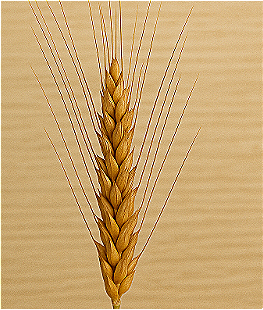
Wholemeal Tumminia wheat flour is obtained by low-refinement milling of Tumminia (Timilia) durum wheat, an ancient Sicilian landrace belonging to the botanical family Poaceae. This traditional wheat has been cultivated for centuries in inland and hilly areas of Sicily and is known for its short growing cycle, early heading, and strong adaptation to marginal environments.
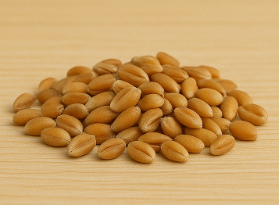
The flour has a dark brown–grey colour, reflecting the use of the entire grain—including bran, germ and endosperm. When produced by stone milling, which is common for Tumminia, the granulometry is typically medium to coarse, preserving a distinct aromatic profile and a broad spectrum of grain constituents.
Origin And Agronomic Context
Tumminia wheat developed under semi-arid Mediterranean conditions, on poor soils and with irregular rainfall. It is characterised by:
Low yield potential compared to modern cultivars;
High rusticity and resilience;
Good tolerance to water stress and high temperatures;
Low input requirements, often compatible with organic or low-impact farming systems.
These traits make Tumminia particularly suitable for traditional and sustainable agricultural models, closely linked to the preservation of local cereal biodiversity and short supply chains.
Botanical classification (APG IV system)
| Category | Data |
|---|
| Common name | Tumminia wheat, Timilia |
| Botanical name | Triticum turgidum L. subsp. durum (Desf.) Husn. var. Tumminia |
| Kingdom | Plantae |
| Clade | angiosperms → monocots |
| Order | Poales |
| Family | Poaceae |
| Subfamily | Pooideae |
| Tribe | Triticeae |
| Genus | Triticum |
| Species | Triticum turgidum subsp. durum |
Flour characteristics
| Parameter | Specification |
|---|
| Raw material | whole Tumminia wheat kernels |
| Flour type | wholemeal flour |
| Milling method | stone milling or roller milling with bran and germ retained |
| Particle size | medium to coarse |
| Color | dark brown |
| Gluten | present (not suitable for coeliac diets) |
| Aroma | intense, typical of ancient durum wheats |
Allergens and intolerances
Wheat contains gluten, a regulated allergen and contraindicated for people with coeliac disease or non-coeliac gluten sensitivity.
Wheat allergy (IgE-mediated) can occur, especially in children.
Some functional gastrointestinal disorders (e.g. irritable bowel syndrome) may be affected by fermentable wheat components (FODMAPs such as fructans).
Indicative nutritional values per 100 g
Average values for wholemeal Tumminia durum wheat flour; variations may occur depending on milling and harvest year.
| Component | Average value |
|---|
| Energy | ~ 330–340 kcal |
| Total carbohydrates | ~ 65–68 g |
| Dietary fiber | ~ 9–12 g |
| Proteins | ~ 12–14 g |
| Total lipids | ~ 2–3 g |
| Ash | ~ 1.6–2.0 g |
| Sodium | < 5 mg |
Nutritional use note and bioactive compounds
Wholemeal Tumminia wheat flour is traditionally used for breadmaking, baked goods, and artisan pasta, often with long fermentation or sourdough processes.
Its nutritional interest is linked to the use of the entire grain, which preserves dietary fiber, micronutrients, and naturally occurring bioactive compounds.
Main bioactive compounds present:
Polyphenols: phenolic acids (especially ferulic acid), mainly concentrated in the bran
Dietary fibers (soluble and insoluble): contributing to intestinal function and glycaemic modulation
Phytosterols: located primarily in the wheat germ
B-group vitamins: particularly thiamine and niacin
Minerals: iron, magnesium, phosphorus, zinc
Antioxidant compounds: associated with bran fractions
These components are of interest for the overall nutritional profile of the flour and for diets emphasizing whole grains.
Food applications
| Area | Use |
|---|
| Breadmaking | Traditional Sicilian bread, often sourdough-leavened |
| Baked goods | Rustic breads, crackers, wholemeal biscuits |
| Artisan pasta | Used alone or blended with durum semolina |
| Traditional cuisine | Regional recipes based on ancient wheats |
Industrial applications
| Sector | Application |
|---|
| Artisan milling industry | Production of wholemeal flours from ancient wheats |
| Food industry | Value-added baked goods with territorial identity |
| Short and organic supply chains | Valorisation of local wheat varieties |
| Quality gastronomy | Ingredients for traditional and specialty products |
Food Uses
Wholemeal Tumminia wheat flour is commonly used for:
Traditional sourdough bread;
Savoury and sweet baked goods with a low degree of refinement;
Artisanal doughs designed for a more natural, fibre-rich diet;
Regional recipes connected to Sicilian culinary heritage.
Its use is particularly appreciated in contexts focused on wholegrain nutrition, ancient wheats, and authentic cereal flavours.
Quality Assessment And Commercial Requirements
Key quality parameters include:
Certified origin of the grain (Tumminia/Timilia);
Milling method, preferably stone milling;
Fibre and ash content, indicative of wholemeal status;
Residual moisture suitable for safe storage;
Absence of contaminants (e.g. mycotoxins, chemical residues);
Sensory profile, with clean cereal aroma and no rancid notes.
Because of the presence of the germ, storage requires cool, dry conditions, appropriate packaging and relatively short shelf life to limit oxidative rancidity.
Cultural And Nutritional Value
Wholemeal Tumminia wheat flour represents not only a food ingredient but also a Sicilian agri-food heritage, closely tied to historical farming practices, traditional breadmaking and territorial identity. Its revival is part of a broader movement aimed at enhancing ancient wheat varieties, nutritional quality, and the sustainability of local cereal supply chains.
References__________________________________________________________________________
Melini, V., Melini, F., & Acquistucci, R. (2021). Nutritional characterization of an Italian traditional bread from ancient grains: The case study of the durum wheat bread “Pane di Monreale”. European Food Research and Technology, 247(1), 193-200.
Abstract. Common wheat flour is the raw material of choice in bread-making; however, local food customs and the availability of supplies mainly determine the use of ingredients other than common wheat. In Southern Italy, durum wheat semolina from locally grown varieties is mainly used in bread-making that is still performed according to a long-lasting tradition. The traditional traits of some durum breads have been acknowledged by the Italian denomination Prodotto Agroalimentare Tradizionale—standing for Traditional Agricultural Food Product. Among them, “Pane di Monreale” refers to a traditional durum bread produced in the area of Monreale (Sicily). Despite being the cornerstones of the native diet, traditional products have been poorly studied. This paper reports on color characteristics, chemical composition, starch digestibility and carotenoid content of two samples of “Pane di Monreale” bread, made with the durum ancient grains Russello or Tumminia. A dominant red tone was found in the crust of both samples and a low content of lutein was detected. High crude fat and ash content was observed. A low amount of resistant starch was found, while the content of non-starch polysaccharides in Russello bread was two-fold higher than in Tumminia bread.
Palumbo, M., Blangiforti, S., Cambrea, M., Gallo, G., Licciardello, S., & Spina, A. (2008). Sicilian durum wheat landraces for production of traditional breads. In Proc. Int. Durum Wheat Symposium “From Seed to Pasta: The Durum Wheat Chain. Bologna, Italy (pp. 132-132).
Abstract. A large number of durum wheat landraces were grown in Sicily in the first half of the last century because of their suitability to the environmental conditions of Mediterranean areas. Thanks to their high adaptability and particular qualitative characteristics, some landraces, such as “Timilia” (Fig. 1), are still cultivated today in limited areas of Sicily and used to produce typical local bread (Fig. 2). Wholegrain flour of “Timilia” is used for the preparation of handmade bread from Castelvetrano (“Pane Nero di Castelvetrano”) (Fig. 3), which is widely distributed in the western area of Sicily. The principal characteristic of this typical Sicilian bread is the dark color of the crumb and its sweet taste.
Pandolfo, A., Messina, B., & Russo, G. (2021). Evaluation of glycemic index of six different samples of commercial and experimental pasta differing in wheat varieties and production processes. Foods, 10(9), 2221.
Abstract. Pasta is a staple food of the Mediterranean Diet, and it is traditionally made of durum wheat semolina. In Sicily, durum wheat production and its transformation into semolina, bread, and pasta are well-developed economic sectors. For pasta, there is a wide supply of commercial brands, whether coming from conventional industrial manufacturing or from medium to small and local handcrafted production. Both conventional durum wheat and local durum wheat landraces, such as Timilia and Russello, are used for pasta production, but local landraces are, for the most, transformed into handcrafted pasta. The market of local landraces durum wheat pasta has risen in recent decades, in Sicily and in Italy as well, boosted by a perceived high nutritional and healthy value of these wheat derivatives. In particular, a popular and scientifically unproven idea suggests that a reduced glycemic response might be elicited by these pasta landraces. Therefore, to test this hypothesis, the main objective of the present study was the evaluation of the glycemic index (GI) of four samples of Timilia and Russello handcrafted pasta and two samples of conventional durum wheat pasta. The study enrolled fourteen healthy weight male and female volunteers aged from 18 to 46; eight test sessions were performed twice a week, every session testing a pasta sample (six sessions) or the glucose solution chosen as reference food (two sessions). The standard methodology for GI measurement was followed during each step of the study. The six tested pasta samples were characterized regarding their composition (protein, fiber, and starch content) and their whole production processes (milling method and milling diagram of flour or semolina, drying temperature, and diagram of pasta shape). The six tested pasta samples showed GI values ranging from low (34.1) to intermediate (63.1). Timilia and Russello pasta are the first GI calculations available. The two samples made of conventional grains showed lower values of GI (34.1 and 37.8). The results do not support the popular idea of a reduced glycemic response elicited by Timilia and Russello wheat landrace pasta; the tested samples showed GI values in the range of 56.2 to 63.1. However, some consideration should be made of factors other than wheat varieties and related to production processes that may have affected the final GIs of the pastas. Even if the study is not designed to discriminate among factors related to wheat varieties or processes used to produce different pasta, it is a preliminary step in the characterization of the healthy potential of the local wheat landraces, popularly called ancient grain. A future implementation of the local wheat landraces supply chain should pay attention to all the factors above, from a better seed identity certification to the production process in order to further improve the healthy value of these staples of the Mediterranean Diet.