Phyllantus estratto secco (Phyllanthus niruri)
Descrizione
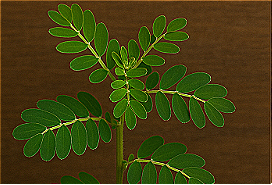
L’estratto secco di Phyllanthus niruri è ottenuto da una pianta erbacea annuale appartenente alla famiglia Phyllanthaceae, ampiamente diffusa nelle regioni tropicali e subtropicali, Phyllanthus niruri. L’estratto secco rappresenta una forma concentrata e standardizzata dei principali costituenti fitochimici della pianta, permettendo un utilizzo più controllato e riproducibile rispetto alla droga vegetale tal quale.
Dal punto di vista compositivo, l’estratto contiene una combinazione di lignani, flavonoidi, tannini, composti fenolici e terpenoidi, che ne determinano il profilo funzionale. Grazie a queste caratteristiche, l’estratto secco di Phyllanthus niruri è utilizzato come ingrediente funzionale in ambito nutraceutico, cosmetico e tecnico, soprattutto in formulazioni orientate al supporto fisiologico e alla protezione cellulare.
La forma secca consente inoltre una maggiore stabilità nel tempo, una più facile integrazione nelle formulazioni solide o semisolide e una migliore gestione del dosaggio, aspetti particolarmente rilevanti per applicazioni industriali e regolamentate.
Nome INCI / Nome tecnico:
Numero CAS: 84775-91-7 (Numero associato agli estratti vegetali di Phyllanthus niruri)*
Numero EC: 283-914-4
Scomposizione del nome e funzione dei componenti
Phyllanthus: genere botanico che identifica il gruppo di piante da cui si ricava l’estratto
niruri: specie botanica di riferimento, utilizzata tradizionalmente come fonte di composti bioattivi
Estratto secco: forma concentrata ottenuta mediante rimozione del solvente, che migliora stabilità, conservabilità e precisione di impiego
I diversi componenti fitochimici concorrono alle proprietà funzionali dell’estratto e ne determinano l’interesse applicativo nei prodotti finiti.
Classificazione botanica (sistema APG IV)
| Categoria | Dato |
|---|
| Nome comune | phyllanthus, chanca piedra (per alcune specie) |
| Nome botanico | Phyllanthus spp. |
| Regno | Plantae |
| Clade | angiosperme → eudicotiledoni |
| Ordine | Malpighiales |
| Famiglia | Phyllanthaceae |
| Genere | Phyllanthus |
| Specie più utilizzate | Phyllanthus niruri L., Phyllanthus amarus Schumach. & Thonn. |
Caratteristiche dell’estratto secco
| Parametro | Specifica |
|---|
| Parte di pianta utilizzata | parti aeree |
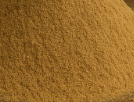
| Forma fisica | polvere fine |
| Colore | marrone chiaro – marrone scuro |
| Metodo di estrazione | estrazione acquosa o idroalcolica con successiva essiccazione |
| Rapporto di estrazione | variabile (es. 4:1 – 10:1) |
| Solubilità | parzialmente solubile in acqua |
Valori nutrizionali indicativi per 100 g (estratto secco)
Valori medi indicativi; l’estratto è utilizzato in quantitativi nettamente inferiori.
| Componente | Valore medio |
|---|
| Energia | ~ 250–300 kcal |
| Carboidrati totali | ~ 45–55 g |
| Fibra alimentare | ~ 20–30 g |
| Proteine | ~ 8–12 g |
| Lipidi totali | ~ 2–4 g |
| Ceneri | ~ 6–10 g |
Nota sull’uso nutrizionale e composti bioattivi
Alle dosi di impiego tipiche negli integratori alimentari (generalmente 300–1000 mg/die), l’apporto calorico è trascurabile.
L’interesse nutrizionale dell’estratto secco di Phyllanthus è funzionale, legato alla presenza di composti bioattivi, più che ai macronutrienti.
Principali composti bioattivi presenti:
Lignani: fillantina, ipofillantina (marcatori caratteristici di P. niruri e P. amarus)
Polifenoli: inclusi acido gallico e acido ellagico
Flavonoidi: quercetina, rutina, derivati del kaempferolo
Tannini: soprattutto tannini idrolizzabili, associati all’attività antiossidante
Alcaloidi e terpenoidi: presenti in quantità minori, variabili in base alla specie e al metodo di estrazione
Questi composti sono oggetto di studi per attività antiossidanti, epatoprotettive e di supporto alle funzioni cellulari, inclusa l' attività promotrice della crescita dei capelli (1).
Applicazioni mediche (tradizionali e di interesse scientifico)
| Ambito | Applicazione |
|---|
| Fitoterapia tradizionale | Supporto alla funzione epatica e urinaria |
| Attività epatoprotettiva | Studiata la protezione delle cellule del fegato |
| Benessere urinario | Uso tradizionale per il supporto delle vie urinarie |
| Attività antiossidante | Elevato contenuto in composti fenolici |
| Attività antivirale e antimicrobica | Evidenze sperimentali in studi in vitro |
Applicazioni cosmetiche
| Ambito cosmetico | Funzione |
|---|
| Cura della pelle | Proprietà antiossidanti e lenitive |
| Prodotti anti-age | Supporto alla protezione dallo stress ossidativo |
| Cosmetici naturali | Ingrediente funzionale di origine vegetale |
| Prodotti riequilibranti | Utilizzo in formulazioni per pelli stressate o impure |
Principali funzioni INCI:
Skin conditioning
Antioxidant
Soothing
Protecting
Applicazioni industriali
| Settore | Applicazione |
|---|
| Industria nutraceutica | Integratori alimentari in capsule, compresse e polveri |
| Industria erboristica | Produzione di estratti secchi e miscele fitoterapiche |
| Cosmetica industriale | Ingrediente funzionale per formulazioni naturali |
| Ricerca farmaceutica | Studio dei composti bioattivi |
| Industria alimentare | Uso limitato come ingrediente funzionale |
Impatto ambientale
L’estratto secco di Phyllanthus niruri è considerato a basso impatto ambientale, in quanto derivato da una risorsa vegetale rinnovabile. Non è classificato come sostanza pericolosa per l’ambiente. Un profilo ambientale favorevole è garantito quando la coltivazione, la raccolta e la trasformazione della materia prima avvengono nel rispetto delle buone pratiche agricole e produttive, limitando l’uso di solventi e gestendo correttamente i residui di lavorazione.
Bibliografia__________________________________________________________________________
(1) Patel S, Sharma V, S Chauhan N, Thakur M, Dixit VK. Evaluation of hair growth promoting activity of Phyllanthus niruri. Avicenna J Phytomed. 2015 Nov-Dec;5(6):512-9.
Abstract. Objective: This study was designed to investigate the potential Phyllanthus niruri (P. niruri ) extracts in promotion of hair growth. Materials and methods: Here, we studied the hair growth promoting activity of petroleum ether extract of P. niruri following its topical administration. Alopecia was induced in albino rats by subcutaneous administration of testosterone for 21 days. Evaluation of hair loss inhibition was done by concurrent administration of extract and monitoring parameters like follicular density, anagen/telogen (A/T) ratio and histological observation of animal skin sections. Finasteride solution was applied topically as standard. In vitro experiments were also performed to study the effect of extract on the activity of 5α-reductase enzyme. Results: Groups treated with petroleum ether extract of plant showed hair re-growth as reflected by follicular density, A/T ratio and skin sections. Histopathology and morphologic observations of hair re-growth at shaved sites showed active follicular proliferation. In vitro experiments results showed inhibitory activity of petroleum ether extract on type-2 5α-reductase enzyme and an increase in the amount of testosterone with increasing concentrations. Conclusion: It could be concluded that petroleum ether extracts of P. niruri might be useful in the treatment of testosterone-induced alopecia in the experimental animal by inhibiting 5α-reductase enzyme.
Lee, N. Y., Khoo, W. K., Adnan, M. A., Mahalingam, T. P., Fernandez, A. R., & Jeevaratnam, K. (2016). The pharmacological potential of Phyllanthus niruri. Journal of pharmacy and pharmacology, 68(8), 953-969.
Abstract. Introduction. Phyllanthus niruri is a traditional shrub of the genus Phyllanthaceae with long-standing Ayurvedic, Chinese and Malay ethnomedical records. Preliminary studies from cell and animal model have provided valuable scientific evidence for its use. Aim. This review aims to summarize selected scientific evidence on the pharmacological properties of P. niruri over the past 35 years while identifying potential areas of further development of this herb as an economical adjunct. Methods.The review covers literature pertaining to the evidence base therapeutic potential of P. niruri spanning from 1980 to 2015 available on PubMed. Results. Evidence suggests that the extracts of P. niruri possess hepatoprotective, antiviral, antibacterial, hypolipidaemic, hypoglycaemic, analgesic, anti-inflammatory, cardioprotective, anti-urolithiatic and antihyperuricaemic properties due its novel bioactive compounds. Conclusion. Scientific evidence suggests that there is strong pharmacological potential in developing P. niruri as a drug to be used in liver disorders and in antiviral therapy. Despites this, large-scale heterogeneity in study protocol and unstandardized reporting standards limit the ability for valuable comparison and may mask the ability to replicate these studies. Thus interpretation of findings should be performed with caution and further studies should be performed in line with best practices. More cheminformatics, toxicological and mechanistic studies would aid the progress to clinical trial studies.
Murugaiyah, V., & Chan, K. L. (2009). Mechanisms of antihyperuricemic effect of Phyllanthus niruri and its lignan constituents. Journal of ethnopharmacology, 124(2), 233-239.
Abstract. Ethnopharmacological relevance. Phyllanthus niruri Linn. (Euphorbiaceae) is used as folk medicine in South America to treat excess uric acid. Our initial study showed that the methanol extract of Phyllanthus niruri and its lignans were able to reverse the plasma uric acid of hyperuricemic animals. Aim of the study. The study was undertaken to investigate the mechanisms of antihyperuricemic effect of Phyllanthus niruri and its lignan constituents. Material and methods. The mechanisms were investigated using xanthine oxidase assay and uricosuric studies in potassium oxonate- and uric acid-induced hyperuricemic rats. Results. Phyllanthus niruri methanol extract exhibited in vitro xanthine oxidase inhibition with an IC50 of 39.39 μg/mL and a moderate in vivo xanthine oxidase inhibitory activity. However, the lignans display poor xanthine oxidase inhibition in vitro and a relatively weak in vivo inhibitory activity at 10 mg/kg. On the other hand, intraperitoneal treatment with Phyllanthus niruri methanol extract showed 1.69 folds increase in urinary uric acid excretion when compared to the hyperuricemic control animals. Likewise, the lignans, phyllanthin, hypophyllanthin and phyltetralin exhibited up to 2.51 and 11.0 folds higher in urinary uric acid excretion and clearance, respectively. The co-administration of pyrazinamide with phyllanthin exhibited a significant suppression of phyllanthin's uricosuric activity resembling that of pyrazinamide with benzbromarone.. Conclusions. The present study showed that the antihyperuricemic effect of Phyllanthus niruri methanol extract may be mainly due to its uricosuric action and partly through xanthine oxidase inhibition, whereas the antihyperuricemic effect of the lignans was attributed to their uricosuric action.
Hassim, N., Markom, M., Rosli, M. I., & Harun, S. (2020). Effect of static extraction time on supercritical fluid extraction of bioactive compounds from Phyllanthus niruri. Journal of Computational and Theoretical Nanoscience, 17(2-3), 918-924.
Abstract. Supercritical fluid extraction (SFE) is an effective method to extract active components from plants. SFE process can be conducted by using a static or/and dynamic extraction. Static extraction is important for the diffusion of solvated analyte to the matrix surface. Therefore, the main objective of this study is to evaluate the static extraction time influence on SFE extraction of Phyllanthus niruri and the main bioactive compounds. The extraction was conducted by using supercritical carbon dioxide (SC-CO2) with 50% ethanol-water as a co-solvent at selected operating conditions (200 bar, 60 °C, 10% co-solvent content and 3 ml/min solvent total flow rate). The static extraction time was investigated in the range of 15 min–75 min by allowing the plant matrix to immerse in a mixture of SC-CO2 and 50% ethanol-water at the operating condition. The quantification of targeted compounds, which were gallic acid (GA), corilagin (CO) and ellagic acid (EA) were analysed by using high performance liquid chromatography (HPLC). The observation on the physical characteristics of the plant matrix was performed by using the scanning electron microscopy (SEM). The best result for total extraction yield was obtained at 60 min of static extraction time, which was 20.7% g/g sample. It also gave a better result for all three targeted compounds in terms of total content percentage (0.35% g GA/g extract, 3.05% g CO/g extract, and 5.17% g EA/g extract). In conclusion, static extraction time was crucial in extracting bioactive compounds in P. niruri by using SFE method and should be considered as the main parameter other than pressure and temperature.
Kania-Dobrowolska, M. (2020). The health benefits of Phyllanthus niruri. Postępy Fitoterapii.
Abstract...Phytochemical profile. In various parts of the Phyllanthus niruri plant, compounds such as: lignans (m.in. philantine, hypophilantine, nirantin, nirtetralin, philtelin, lintetralin, isolintetralin, linanthin), terpenes (limonene, p-cymene, lupeol), tannins (elagotannin), polysaccharides, saponins, flavonoids (quercetin, rutin, astragalin, quercetrol, kaempferol), gallocatechin, gallic acid, ellagic acid, coumarins, as well as alkaloids (securinin, ent-norsecurinin, 4-methoxy-nor-securinin) and sterols, m.in. amarosterol A and B. Studies show that the highest amounts of philanthropin (0.7% at first or first or first or time) and hypophyllant (0.3% by weight) were recorded in the leaves, while in the stem they are present in small amounts (1, 3-5)....