



Tagetes erecta (Asteraceae)
Marigold (Tagetes erecta), a member of the Asteraceae family, is an annual herbaceous plant widely cultivated for ornamental purposes due to its large, showy flower heads with bright yellow to orange coloration. Native to Central America, it is now grown worldwide thanks to its robust growth habit, extended flowering period, and high adaptability to different environmental conditions.
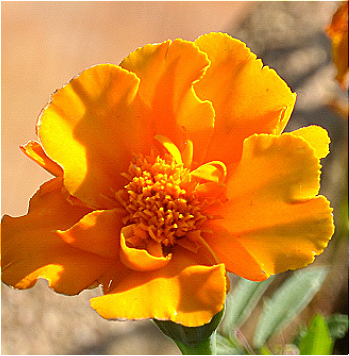 | 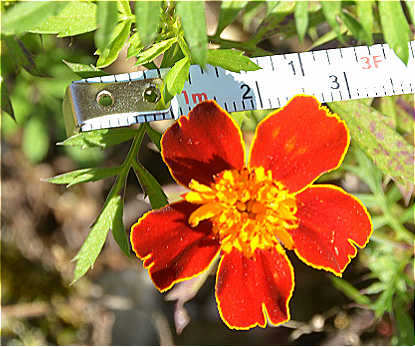 |
The term “Marigold” is ambiguous and can refer to two different plants, depending on the context.
Marigold (common English usage) → Tagetes erecta (family Asteraceae), also called African or Aztec marigold, used mainly as an ornamental plant and for natural colorants.
Pot marigold (herbal/traditional usage) → Calendula officinalis (family Asteraceae), known as calendula, used in herbal medicine, cosmetics, and food.
In summary
Marigold, without qualifiers, generally refers to Tagetes erecta.
Calendula officinalis is more correctly called pot marigold.
In cosmetic INCI, there is no ambiguity: Tagetes erecta and Calendula officinalis are always listed by their botanical names.
From a morphological perspective, Tagetes erecta is characterized by:
– an upright growth habit, with sturdy, branched stems reaching approximately 30–110 cm in height;
– pinnate, deeply divided leaves, dark green in color, emitting a strong and distinctive aroma;
– large capitulum-type inflorescences, globular to semi-globular, composed of ligulate and tubular florets;
– a fibrous root system, associated with the release of compounds showing repellent activity against certain soil organisms.
The characteristic aroma of marigold is linked to the presence of essential oils, mainly composed of monoterpenes and sesquiterpenes such as linalool, limonene, ocimene, tagetone, and β-caryophyllene, along with sulfur-containing thiophenes, which are typical of the Tagetes genus.
From a phytochemical standpoint, Tagetes erecta contains:
– carotenoids, especially lutein and xanthophyll esters, responsible for the intense pigmentation of the flowers;
– flavonoids and phenolic compounds with antioxidant potential;
– essential oils with variable biological activity;
– thiophenes, known for their repellent properties against insects and nematodes.
In agricultural contexts, marigold is valued not only as an ornamental plant but also as a support crop, due to its contribution to soil pest management. It performs best in full sun, prefers well-drained soils, and shows good tolerance to high temperatures.
In terms of applications, Tagetes erecta is used in:
– ornamental horticulture and landscaping, for flower beds, borders, and seasonal displays;
– natural pigment production, particularly lutein for food and feed applications;
– sustainable agriculture, as a natural aid in pest control strategies;
– limited traditional uses, mainly in local culinary or ethnobotanical practices.
The combination of ornamental appeal, cultivation resilience, and phytochemical relevance makes marigold one of the most widely cultivated and studied annual flowering species.
Botanical classification (APG IV system)
| Category | Data |
|---|---|
| Common name | marigold, African marigold |
| Botanical name | Tagetes erecta L. |
| Kingdom | Plantae |
| Clade | angiosperms → eudicots → asterids |
| Order | Asterales |
| Family | Asteraceae |
| Subfamily | Asteroideae |
| Tribe | Tageteae |
| Genus | Tagetes |
| Species | Tagetes erecta L. |
Indicative nutritional values per 100 g (fresh aerial parts of Tagetes erecta)
Average values referring to fresh leaves and young aerial parts. The plant is mainly used as an ornamental, aromatic, or functional ingredient; food use is limited and typically involves quantities far below 100 g.
| Component | Approximate value per 100 g |
|---|---|
| Energy | ~ 30–35 kcal |
| Water | ~ 88–90 g |
| Total carbohydrates | ~ 6–7 g |
| — of which sugars | ~ 3–4 g (estimate for fresh herbaceous plants) |
| Dietary fiber | ~ 4–5 g |
| Proteins | ~ 1.8–2.2 g |
| Total lipids | ~ 0.5–0.7 g |
| — saturated fatty acids (SFA – Saturated Fatty Acids) | ~ 0.10–0.15 g |
| — monounsaturated fatty acids (MUFA – MonoUnsaturated Fatty Acids) | ~ 0.05–0.08 g |
| — polyunsaturated fatty acids (PUFA – PolyUnsaturated Fatty Acids) | ~ 0.25–0.30 g |
| Sodium | ~ 10–20 mg (very low) |
| Main minerals | potassium (≈ 200–350 mg), calcium (≈ 90–130 mg), magnesium, phosphorus, iron |
| Relevant vitamins | vitamin C, carotenoids (lutein, zeaxanthin as provitamin A), trace B vitamins |
Nutritional use note
At typical usage portions (approximately 1–3 g of fresh leaves or petals, when used as an aroma, garnish, or natural coloring agent), the caloric intake is negligible.
The nutritional relevance of Tagetes erecta is qualitative rather than quantitative, mainly associated with carotenoids (especially lutein), bioactive compounds, and dietary fiber, rather than macronutrients or energy contribution.
Lipid profile note
Tagetes erecta has a very low fat content.
SFA (Saturated Fatty Acids) are present in small amounts; high dietary prevalence of SFA is generally considered less favorable for cardiovascular balance.
MUFA (MonoUnsaturated Fatty Acids) and PUFA (PolyUnsaturated Fatty Acids) occur only in trace quantities and do not significantly affect daily lipid intake.
From a nutritional standpoint, the plant’s interest lies mainly in pigments and secondary metabolites, not in fats.
Medical applications (traditional and scientific interest)
| Area | Application |
|---|---|
| Traditional herbal use | Aerial parts and flowers used in folk preparations to support digestion and mild gastrointestinal comfort |
| Antioxidant activity | Presence of carotenoids (notably lutein and zeaxanthin) and flavonoids studied for oxidative stress modulation. Traditionally used for cardiovascular and kidney diseases (1) |
| Eye health support | Lutein extracted from flowers widely used as an ingredient for macular and visual function support (2) |
| Antimicrobial potential | Extracts and essential oil show in vitro activity against selected microorganisms |
| Traditional topical use | Leaf and flower preparations historically used to soothe minor skin irritations |
Note: medical applications are mainly traditional or experimental and do not replace pharmacological treatments.
Cosmetic applications
| Cosmetic area | Function |
|---|---|
| Skin care | Extracts used for antioxidant, soothing, and protective properties |
| Anti-age products | Carotenoids support protection against oxidative skin stress |
| Natural cosmetics | Used in plant-based formulations to enhance functional and sensory profiles |
| Fragrances | Essential oil employed for herbal–floral aromatic notes |
| Natural coloring | Yellow-orange pigments used as natural cosmetic colorants |
Main INCI functions:
Skin conditioning
Antioxidant
Soothing
Fragrance
Industrial applications
| Sector | Application |
|---|---|
| Food industry | Extraction of lutein as a natural colorant and functional ingredient (regulated use) |
| Feed industry | Flower extracts used to enhance yolk and poultry pigmentation |
| Natural colorants | Production of yellow–orange pigments for food, cosmetics, and technical uses |
| Agriculture | Cultivated as a companion or rotation plant for its nematode-repellent effects |
| Perfumery and flavors | Essential oil used as an aromatic raw material |
| Biopesticides | Plant extracts studied as natural alternatives to synthetic pesticides |

