



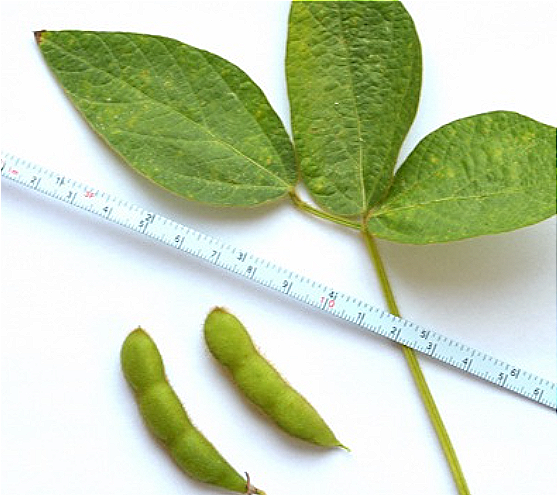
Soy pieces, Glycine max (Fabaceae)
Soy pieces, best known as soy chunks or textured soy pieces, are a protein-rich ingredient derived from soybean products and widely used in vegetarian and vegan dietary patterns. They originate from Glycine max, one of the world’s most cultivated legumes thanks to its high protein yield and valuable nutritional composition. Soy chunks are appreciated for their high protein density, culinary versatility, and their ability to absorb flavours and seasonings.
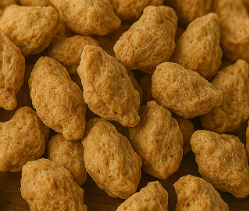
Morphologically, soy chunks appear as porous, irregular pieces of light beige colour with a hard texture when dry. Once rehydrated, they develop a soft, fibrous consistency similar to that of meat, which makes them a key ingredient in many plant-based alternatives to traditional protein dishes.
 |  |
Compositionally, soy chunks contain:
– high levels of plant proteins, with a relatively complete amino acid profile due to soybean’s natural lysine content;
– moderate amounts of complex carbohydrates;
– dietary fibre, supporting digestive modulation;
– a small fraction of lipids, predominantly unsaturated;
– minerals such as iron, calcium, phosphorus, magnesium, and potassium;
– B-group vitamins and soybean-specific bioactive compounds such as isoflavones.
Nutritionally, soy chunks provide a highly protein-dense and satiating food suitable for replacing animal proteins in a wide range of preparations. Their lack of cholesterol and the presence of unsaturated fats make them a favourable option in dietary patterns focused on cardiovascular wellness. Fibre contributes to intestinal regularity and improved nutrient absorption dynamics. Soy protein also demonstrates generally good digestibility and assimilation, supporting high-protein nutritional regimens.
From a culinary perspective, soy chunks are valued for their ability to:
– absorb sauces, spices, and marinades effectively;
– serve in stews, plant-based ragù, curries, ethnic dishes, and savoury preparations;
– be transformed into burgers, meat-free patties, kebab-style dishes, and vegan main courses;
– replicate the structure of meat due to their fibrous texture after hydration.
Botanical classification (APG IV system)
(Classification refers to the plant used to produce defatted soy flour, the base ingredient of soy chunks.)
| Category | Data |
|---|---|
| Common name | soy; soy chunks; textured soy protein (TSP); textured vegetable protein (TVP) |
| Botanical name | Glycine max (L.) Merr. |
| Kingdom | Plantae |
| Clade | Angiosperms → eudicots |
| Order | Fabales |
| Family | Fabaceae |
| Genus | Glycine |
| Species | Glycine max (L.) Merr. |
Indicative nutritional values per 100 g (dry soy chunks)
Average values refer to extruded and dehydrated chunks made from defatted soy flour. Values may vary by brand and level of defatting.
| Component | Approximate value per 100 g |
|---|---|
| Energy | ~ 330–345 kcal |
| Water | ~ 6–8 g |
| Total carbohydrates | ~ 30–33 g |
| — of which sugars | ~ 7–10 g |
| Dietary fiber | ~ 15–17 g |
| Protein | ~ 50–53 g (very high) |
| Total lipids | ~ 0.5–1.5 g (depending on defatting process) |
| — saturated fatty acids (SFA) | ~ 0.2 g |
| — monounsaturated fatty acids (MUFA) | ~ 0.1–0.2 g |
| — polyunsaturated fatty acids (PUFA) | ~ 0.2–0.4 g |
| Sodium | ~ 5–10 mg |
| Main minerals | iron (≈ 9 mg), calcium (≈ 200 mg), magnesium (≈ 250 mg), phosphorus (≈ 600 mg), potassium |
| Relevant vitamins | B-vitamins (variable), vitamin K, phytosterols, isoflavones |
Nutritional considerations
Soy chunks are one of the most concentrated plant protein sources, containing over 50% protein.
Lipid content is extremely low due to the defatting of soy flour.
Levels of SFA, MUFA, and PUFA are minimal and do not meaningfully affect daily fat intake.
Rich in fiber, minerals (notably iron, magnesium, phosphorus), and bioactive compounds such as isoflavones.
After rehydration (3–4× the dry weight), caloric density decreases significantly.
Production process
Soy chunks are produced from defatted soybean meal or soy protein concentrate. The raw material is moistened and processed through high-temperature extrusion, which denatures the proteins and creates a fibrous, sponge-like texture. Upon exiting the extruder, the material expands, is cut into uniform pieces and then dried to achieve very low moisture content for long shelf-life. The product is finally cooled, screened for uniformity and packaged.
Physical properties
Soy chunks are lightweight, irregular pieces with a porous, sponge-like structure. Their colour ranges from pale yellow to beige. In the dry state they are very firm and low in moisture; after rehydration they become chewy, moist and structurally similar to pieces of cooked lean meat.
Sensory and technological properties
Soy chunks have a naturally neutral or mildly legume-like flavour, which makes them highly adaptable to marinades, sauces and spices. Once hydrated, they gain a fibrous, chewy texture suitable for dishes that require a protein element in solid pieces. Technologically, they:
absorb large amounts of water, broth or sauces;
act as a flavour carrier, retaining seasonings well;
remain structurally stable during cooking;
contribute to protein enrichment of formulations;
can be chopped or minced for sauces, fillings or vegetable ragù.
Food applications
Soy chunks are widely used in vegetarian and vegan cuisine, as well as in hybrid or partially meat-reduced products. Main uses include:
stews, curries, goulash and plant-based “meat” dishes;
vegetable ragù for pasta, lasagne and baked dishes;
stuffings, fillings, patties, burgers and plant-based balls;
sautéed dishes with vegetables and sauces;
components in ready-to-eat meals, instant mixes, dehydrated soups and emergency/camping foods.
Industrially, they can function as structuring agents or protein extenders in plant-based products or mixed-protein formulations.
Nutrition and health
Soy chunks are extremely high in plant protein, often comparable to or exceeding the protein density of lean meat on a dry-weight basis. They contain all essential amino acids, minimal fat, no cholesterol, and varying amounts of dietary fibre. They also contribute minerals (iron, magnesium, calcium if fortified) and B vitamins. Their high protein and fibre content can support satiety when included in balanced meals.
People with soy allergy must avoid them. Individuals with specific endocrine conditions or those monitoring intake of isoflavones should consult healthcare providers.
Serving note
Typical serving size refers to the dry weight. For a main dish, 30–50 g of dry soy chunks per person is common; once hydrated they expand considerably.
Allergens and intolerances
Soy chunks derive from SOY, which is a major allergen under most regulations. They are naturally gluten-free, but may be exposed to gluten cross-contamination depending on manufacturing practices. Allergen declaration of SOY is mandatory in ingredient lists.
Storage and shelf-life
As a low-moisture product, soy chunks have an extended shelf-life (typically 12–24 months) when stored in a cool, dry, dark place in sealed containers. After rehydration, they must be treated like fresh food: refrigerate promptly and consume within a few days.
Safety and regulatory
Soy chunks belong to the category of textured vegetable proteins (TVP). They must comply with general food-safety rules, contamination limits (mycotoxins, heavy metals, pesticide residues), allergen management requirements and regulations governing nutrition claims.
Use of GMO soybeans is regulated individually by jurisdiction; if present, it must be clearly declared.
Labelling
In labelling, soy chunks may appear as:
“soy chunks”, “textured soy protein”, “textured vegetable protein (TVP)” or “soy protein pieces”.
Mandatory elements include:
bold declaration of SOY as an allergen;
compliance with criteria for claims such as “high in protein”, “low fat”, “vegan”;
gluten-free declaration only if <20 ppm gluten is verified in production.
Troubleshooting
Too tough after cooking: insufficient hydration or short cooking time; extend soaking or simmering.
Mushy texture: overcooking or boiling too vigorously; reduce cooking time and heat.
Persistent soy/bean flavour: pre-boil and rinse, or use marinades and aromatic broths.
Weak flavour absorption: hydrate directly in seasoned broth or sauce, not just water.
Main INCI functions (cosmetics)
While soy chunks themselves are not used in cosmetics, soy derivatives (e.g., Hydrolyzed Soy Protein, Glycine Soja Seed Extract, Soy Isoflavones) can perform:
Skin conditioning
Hair conditioning
Antioxidant activity
Emollient effects in lipid-based fractions
Film forming on skin or hair
Functional performance depends on extraction method, concentration and formulation type.
Conclusion
Soy chunks are a versatile, high-protein, shelf-stable ingredient widely used in plant-based cooking. Their ability to rehydrate into a chewy, meat-like texture and to absorb flavours makes them especially valuable in vegetarian and vegan recipes. Correct hydration, seasoning, allergen management and storage ensure optimal results. Soy derivatives also play a role in cosmetics, offering conditioning and antioxidant benefits.
Mini-glossary
Textured Vegetable Protein (TVP): protein-rich plant ingredient processed via extrusion to create a fibrous, porous structure.
Rehydration: absorption of water by a dehydrated product to restore usable texture.
Isoflavones: soy-derived phenolic compounds with hormone-modulating potential.
Cross-contamination: unintended presence of an allergen (e.g., gluten) from shared processing lines.
20 ppm: threshold defining “gluten-free” status in many jurisdictions.
Shelf-life: time during which a product remains safe and acceptable under proper storage.
Studies
Soy contains several polyphenol compounds, especially isoflavones, which have positive effects on human health, but their presence in percentage varies depending on the type of soy.
Isoflavones (classified as phytoestrogens) have shown positive potential against cardiovascular disease, diabetes, cancer. osteoporosis and neurogenerative disorders. In the soybean, 12 different types were identified divided into: aglycones (daizein, glicitein, genistein); beta-glucosides (daidzin, glicitin, genistin) (1)
In 1999, the FDA recognized soy proteins with some protection against coronary heart disease and authorized the following posology: 25 grams of soy protein per day as part of a low-fat, cholesterol-low diet. In 2017, the FDA announced its intention to review the authorization for lack of scientific data as only 19 studies confirmed the usefulness of soy in reducing coronary risk, while 27 studies did not support this positive thesis.
It's a rather controversial food.
On the one hand, some studies draw attention to isoflavones present in soy that help defend the cardiovascular system by regulating cellular and enzymatic functions in situations such as inflammation, thrombosis and atherosclerotic progression (2). On the other hand, it is feared that it may cause damage, particularly to Alzheimer's disease, if ingested in the form of an industrial product. This study analyses the problem (3). However, a certain amount of post-2017 scientific studies confirm the positive activity of soy bea on human health. In a 20 km cycling race, a fermented soybean extract improved the performance of athletes both in terms of power and speed (4). Patients with type 2 diabetes achieved improved blood conditions, increased brachial blood flow, improved endothelial function, increased total serum antioxidants and lipid profile. There was no significant effect on blood pressure and HDL cholesterol (5) Soy and its isoflavones have a positive influence on mortality risks associated with cancer and cardiovascular disorders (6).
Soy studies
References__________________________________________
(1) Orts A, Revilla E, Rodriguez-Morgado B, Castaño A, Tejada M, Parrado J, García-Quintanilla A. Protease technology for obtaining a soy pulp extract enriched in bioactive compounds: isoflavones and peptides Heliyon. 2019 Jun 22;5(6):e01958. doi: 10.1016/j.heliyon.2019.e01958.
Abstract. This work presents a new bioprocess process for the extraction of bioactive components from soy pulp by-product (okara) using an enzymatic technology that was compared to a conventional water extraction. Okara is rich in fiber, fat, protein, and bioactive compounds such as isoflavones but its low solubility hampers the use in food and fertilizer industry. After the enzymatic attack with endoproteases half of the original insoluble proteins were converted into soluble peptides. Linked to this process occured the solubilization of isoflavones trapped in the insoluble protein matrix. We were able to extract up to 62.5% of the total isoflavones content, specially aglycones, the more bioactive isoflavone forms, whose values rose 9.12 times. This was probably due to the increased solubilization and interconversion from the original isoflavones. In conclusion, our process resulted in the formulation of a new functional product rich in aglycones and bioactive peptides with higher antioxidant potency than the original source. Therefore, we propose that the enzymatic extraction of okara bioactive compounds is an advantageous tool to replace conventional extraction.
(2) González Cañete N, Durán Agüero S. Soya isoflavones and evidences on cardiovascular protection. Nutr Hosp. 2014 Jun 1;29(6):1271-82. doi: 10.3305/nh.2014.29.6.7047. Spanish.
(3) Roccisano D, Henneberg M, Saniotis A. A possible cause of Alzheimer's dementia - industrial soy foods. Med Hypotheses. 2014 Mar;82(3):250-4. doi: 10.1016/j.mehy.2013.11.033. Epub 2013 Dec 7.
(4) Seeley AD, Jacobs KA, Signorile JF. Acute Soy Supplementation Improves 20-km Time Trial Performance, Power, and Speed. Med Sci Sports Exerc. 2020 Jan;52(1):170-177. doi: 10.1249/MSS.0000000000002102.
Abstract. Introduction: Isoflavones, a chemical class of phytoestrogens found in soybeans and soy products, may have biological functions similar to estradiol. After binding with ERβ or perhaps independently of estrogen receptors, isoflavones may augment vascular endothelial relaxation, contributing to improved limb blood flow. Purpose: To determine if acute fermented soy extract supplementation influences 20-km time trial cycling performance and cardiac hemodynamics compared with a placebo. Methods: Subjects included 25 cyclists and triathletes (31 ± 8 yr, V˙O2peak: 55.1 ± 8.4 mL·kg·min). Each subject completed a V˙O2peak assessment, familiarization, and two 20-km time trials in randomized order after ingestion of a fermented soy extract supplement or placebo. The fermented soy extract consisted of 30 g powdered supplement in 16 fl. ounces of water. The placebo contained the same quantities of organic cocoa powder and water. Each trial consisted of 60 min of rest, 30 min at 55% Wpeak, and a self-paced 20-km time trial. Results: Soy supplementation elicited a faster time to 20-km completion (-0.22 ± 0.51 min; -13 s), lower average HR (-5 ± 7 bpm), and significantly greater power (7 ± 3 W) and speed (0.42 ± 0.16 km·h) during the last 5 km of the time trial compared with placebo. Analysis of the results by relative fitness level (<57 vs ≥ 57 mL⋅kg⋅min) indicated that those with a higher level of fitness reaped the largest performance improvement alongside a reduced HR (-5 ± 7 bpm). Conclusions: Ingestion of a fermented soy extract supplement improved sprint-distance performance through improvements in both power and speed. For those with great aerobic fitness, soy supplementation may help to decrease cardiac demand alongside performance improvement.
(5) Sedaghat A, Shahbazian H, Rezazadeh A, Haidari F, Jahanshahi A, Mahmoud Latifi S, Shirbeigi E. The effect of soy nut on serum total antioxidant, endothelial function and cardiovascular risk factors in patients with type 2 diabetes. Diabetes Metab Syndr. 2019 Mar - Apr;13(2):1387-1391. doi: 10.1016/j.dsx.2019.01.057
(6) Nachvak SM, Moradi S, Anjom-Shoae J, Rahmani J, Nasiri M, Maleki V, Sadeghi O. Soy, Soy Isoflavones, and Protein Intake in Relation to Mortality from All Causes, Cancers, and Cardiovascular Diseases: A Systematic Review and Dose-Response Meta-Analysis of Prospective Cohort Studies J Acad Nutr Diet. 2019 Jul 2. pii: S2212-2672(19)30362-4. doi: 10.1016/j.jand.2019.04.011
Woo HW, Kim MK, Lee YH, Shin DH, Shin MH, Choi BY. Habitual consumption of soy protein and isoflavones and risk of metabolic syndrome in adults ≥ 40 years old: a prospective analysis of the Korean Multi-Rural Communities Cohort Study (MRCohort). Eur J Nutr. 2019 Oct;58(7):2835-2850. doi: 10.1007/s00394-018-1833-8.
Abstract. Purpose: Although considerable attention has been paid to the potential benefits of soy protein and isoflavones for preventing metabolic syndrome (MetS) and its components, findings linking habitual consumption of these factors to MetS are limited. This study aimed to evaluate the association of MetS incidence with habitual intake of soy protein/isoflavones among Korean men and women aged ≥ 40 years old who did not have MetS at baseline (n = 5509; 2204 men and 3305 women). Methods: Dietary intake of soy protein/isoflavones at baseline and average consumption during follow-up were used. Results: A significant inverse association between dietary intake and incidence of MetS was found in women (incidence rate ratios, IRR = 0.60, 95% CI = 0.46-0.78, P for trend = 0.0094 for the highest quintile of average soy protein intake compared with the lowest quintile; IRR = 0.57, 95% CI = 0.44-0.74, P for trend = 0.0048 for the highest quintile of average isoflavones intake compared with the lowest quintile). A tendency towards an inverse association was also found in men, although it was not significant for the highest quintile (IRR = 0.80, 95% CI = 0.58-1.11, P for trend = 0.9759, comparing the lowest to the highest quintile of average soy protein intake; IRR = 0.73, 95% CI = 0.53-1.01, P for trend = 0.8956, comparing the lowest to the highest quintile of average isoflavones intake). In terms of individual abnormalities, a significant inverse association was found between soy protein and isoflavones and the incidence of low-high-density lipoprotein cholesterol in both men and women. Abdominal obesity and elevated blood pressure were inversely related to soy protein/isoflavones only in women, and an inverse association of elevated triglyceride appeared only in men. Conclusion: Our findings suggest that habitual intake of soy protein and isoflavones is inversely associated with the risk of MetS and its components. There is likely to be a reverse J-shaped association of average intake with MetS.

