



Wheat flakes, Triticum aestivum (Poaceae)
Wheat flakes, derived from the cereal Triticum aestivum, are one of the most common processed forms of wheat for human consumption. Belonging to the family Poaceae, wheat is among the most widely cultivated cereals globally due to its technological versatility, high energy value, and the presence of proteins such as gluten, which are essential for breadmaking and dough structure. Flaking involves steaming the kernels and then rolling them into thin layers, a process that enhances chewability, cooking speed, and overall culinary usability.
Morphologically, wheat flakes are thin, flattened layers obtained from whole decorticated kernels or pearled wheat. Their colour ranges from light beige to pale gold, and they retain a characteristic cereal aroma. Thanks to their laminated structure, they absorb water rapidly, making them suitable for instant or short-cooking preparations.
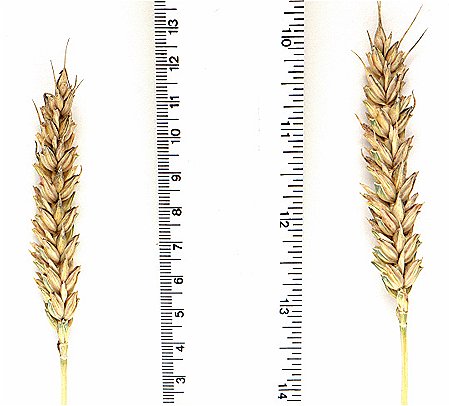 | 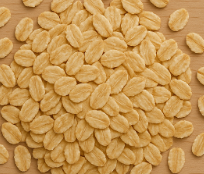 |
The plant Triticum aestivum thrives in temperate climates and represents a cornerstone of human nutrition. Its spikes contain starchy, protein-rich caryopses, and modern cultivars are selected for yield, resilience, and technological performance. The flaking process preserves many of the cereal’s nutritional properties while improving digestibility compared with whole kernels.
From a phytochemical perspective, wheat flakes contain primarily complex carbohydrates (starch), dietary fibre, plant proteins, a fraction of tocopherols, B vitamins, and minerals such as phosphorus, magnesium, and iron. Phenolic compounds—especially those concentrated in the bran—contribute to a moderate antioxidant activity, which is higher when flakes are produced from wholegrain wheat.
Nutritionally, wheat flakes are an important source of energy, supporting satiety and providing a stable supply of carbohydrates. When made from wholegrain kernels, they offer increased amounts of fibre and micronutrients, promoting intestinal regularity and improving the nutritional profile. Due to their gluten content, wheat flakes are unsuitable for individuals with coeliac disease, though they remain widely tolerated by the general population.
From a culinary perspective, wheat flakes are used in a variety of preparations:
– muesli, porridge, and breakfast cereal mixes;
– soups, broths, and creamy dishes as natural thickeners;
– wholegrain baked goods and cereal-based snacks;
– energy bars and high-carbohydrate formulations.
Indicative nutritional values per 100 g (dry wheat flakes)
Average values refer to flakes obtained by steaming and rolling wheat grains (usually common wheat); figures vary by cultivar, degree of refinement, and bran content.
| Component | Approximate value per 100 g |
|---|---|
| Energy | ~ 360–370 kcal |
| Water | ~ 8–10 g |
| Total carbohydrates | ~ 72–74 g |
| — of which sugars | ~ 1–2 g |
| Dietary fiber | ~ 10–12 g (higher in wholegrain flakes) |
| Protein | ~ 12–13 g |
| Total lipids | ~ 2–2.5 g |
| — saturated fatty acids (SFA) | ~ 0.4–0.5 g |
| — monounsaturated fatty acids (MUFA) | ~ 0.3–0.4 g |
| — polyunsaturated fatty acids (PUFA) | ~ 1.0–1.1 g |
| Sodium | ~ 3–5 mg |
| Main minerals | phosphorus (≈ 300 mg), magnesium (≈ 110 mg), potassium (≈ 350 mg), iron, zinc |
| Relevant vitamins | B-vitamins (B1, B3, B6) and small amounts of vitamin E |
Nutritional considerations
Wheat flakes are a moderately energy-dense cereal rich in complex carbohydrates.
Dietary fiber varies widely depending on processing, with higher levels in wholegrain flakes.
Levels of SFA, MUFA, and PUFA are low and do not significantly affect daily lipid intake.
Good source of plant protein and B-vitamins, important for energy metabolism.
Suitable for breakfast cereals, porridge, yogurt mixes, and baked goods.
Production process
Wheat flakes are obtained from cleaned and selected soft wheat grains. After harvest, the grain is freed from impurities (straw, stones, foreign seeds) and may be used as wholegrain or partially refined, depending on the target product.
For flaking, whole grains or groats are first softened with steam or moisture conditioning, bringing the kernel to the right humidity for rolling. The conditioned wheat is then passed through smooth rollers, which flatten the kernels into thin flakes. A stage of controlled drying follows to stabilise moisture content, after which the flakes are cooled and packed.
Wheat flakes can then be used in breakfast cereals, cereal mixes, bars, or in soups and savoury preparations.
Applications
Wheat flakes are widely used in both sweet and savoury products:
Breakfast: muesli, granola, porridge, mixed cereals with nuts and seeds, cereal bars.
Bakery products: multigrain breads, crackers, rustic biscuits, toppings on loaves and rolls.
Savoury preparations: thickeners in soups and stews, component of veggie burgers, patties, baked mixes and gratins.
Compared with whole wheat kernels, flakes offer much shorter cooking times and a softer texture, making them convenient for quick recipes.
Nutrition & health
Typical average values per 100 g wheat flakes (exact figures depend on wholegrain/refined ratio and processing):
Energy: about 330–370 kcal
Carbohydrates: ~60–70 g
Fibre: ~6–12 g (higher in more wholegrain products)
Protein: ~10–14 g
Fat: ~1.5–3 g
Wheat flakes provide complex carbohydrates, a notable amount of plant protein, dietary fibre and minerals such as phosphorus, magnesium, potassium and zinc, along with B-group vitamins. Fibre contributes to satiety and supports normal bowel function, while the moderate energy density fits well into a balanced diet when portions are controlled.
Portion note
A typical household portion for breakfast or as a base in a main dish is usually 30–50 g of dry wheat flakes, adjusted to individual energy needs and the rest of the meal.
Allergens and intolerances
Wheat is a gluten-containing cereal. Consequently:
Wheat flakes are not suitable for people with coeliac disease or non-coeliac gluten sensitivity.
They can cause reactions in individuals with allergy to wheat proteins.
In composite products, additional allergens (tree nuts, milk, sesame, soy, etc.) may be present and must always be checked on the label.
Storage and shelf-life
Although wheat flakes are relatively low in fat, they can deteriorate when exposed to humidity, heat or light.
Store in a cool, dry place, away from direct heat sources.
Keep the packaging well closed, or transfer to airtight jars.
Once opened, it is advisable to consume within a few months to maintain flavour and quality.
Commercial shelf-life is typically 9–12 months, depending on the manufacturer and the degree of wholegrain content.
Safety and regulatory aspects
As a traditional cereal product, wheat flakes must comply with general food-safety requirements:
Limits for contaminants (mycotoxins, heavy metals, pesticide residues).
Standards for hygiene and microbiological quality.
Implementation of GMP and HACCP throughout the production chain.
Any nutrition claims (e.g. “source of fibre”) must be supported by actual content per portion and comply with applicable nutrition and health-claims regulations.
Labeling
On packaging, wheat flakes usually appear as:
“fiocchi di frumento” / “wheat flakes”,
sometimes “whole wheat flakes” when the product is fully or largely wholegrain.
Prepacked foods must carry a nutrition declaration, including energy in kJ and kcal and the main macronutrients. Other allergens present in mixed products must be highlighted according to legislation. In breakfast mixes and bakery products, ingredients are listed in descending order of weight.
Conclusion
Wheat flakes are a versatile, convenient and nutritious ingredient suitable for breakfast preparations, baking and many sweet or savoury recipes. They supply complex carbohydrates, protein and fibre with a moderate energy load. While their gluten content makes them unsuitable for people who must avoid it, for the general population they are an excellent option to diversify everyday cereal intake beyond bread and pasta, especially when combined with other wholegrains, fruits and nuts in the context of a balanced diet.
Studies
The main component (60-70%) of wheat is starch, a source of glucose rapidly released during digestion that contains two main glucose polymers, Amylosis and Amilopectin.
With the rise of human health problems such as obesity and diabetes, there has been a growing interest in altering the composition of starch in cereals and increasing the percentage of resistant starch.
Resistant starch is the fraction of starch that escapes digestion in the small intestine (1) and is considered a form of dietary fiber with beneficial health properties (2). Because foods high in resistant starch are digested more slowly, they have been shown to improve insulin response and increase satiety (3).
The advantages of resistant starch also extend to colon health where fermentation occurs in the large intestine (4).
Mini-glossary
SFA: saturated fatty acids. Excess in the diet can raise LDL cholesterol; in wheat they are present mainly in the germ and at moderate levels.
MUFA: monounsaturated fatty acids, such as oleic acid; generally favourable for cardiovascular health when they replace saturated fats.
PUFA: polyunsaturated fatty acids; in wheat, omega-6 (linoleic acid) predominates, with small amounts of omega-3 (α-linolenic acid). A good n-6/n-3 balance is important for modulating inflammatory processes.
TFA: trans fatty acids. Natural TFAs in wheat are only present in traces; the main nutritional concern is industrial TFAs from hydrogenated fats.
GMP/HACCP: good manufacturing practices / hazard analysis and critical control points, management systems designed to ensure hygiene and food safety along the supply chain.
Glycaemic index (GI): measure of how quickly a carbohydrate-containing food raises blood glucose; whole grain wheat products usually have a lower GI than their refined counterparts when eaten in mixed meals.

