



Datterini tomatoes
Description
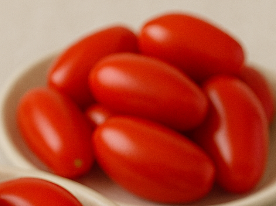
Datterini tomatoes are a small, elongated variety of Solanum lycopersicum (family Solanaceae) known for their bright red color, thin skin, compact pulp, and naturally sweet flavor. They are widely used in fresh dishes and quick-cooking preparations thanks to their intense aroma and low acidity.
Indicative nutritional values per 100 g
Energy: 18–25 kcal
Water: 90–92%
Carbohydrates: 3–4 g
Sugars: 2.5–3.5 g
Protein: 0.8–1.2 g
Total fat: 0.2–0.3 g
SFA (saturated fatty acids – excessive intake may have adverse cardiovascular effects): traces
MUFA (monounsaturated fatty acids – generally associated with cardiovascular benefits): traces
PUFA (polyunsaturated fatty acids – involved in cellular and metabolic functions): traces
Dietary fiber: 1–1.5 g
Vitamin C: 12–20 mg
Provitamin A (β-carotene): 40–70 µg RAE
Potassium: 200–250 mg
Values vary depending on cultivation system, season, and ripeness.
Key constituents
Carotenoids: lycopene, β-carotene, lutein
Vitamins: vitamin C, provitamin A, small amounts of B-group vitamins
Minerals: potassium, magnesium, phosphorus
Phenolic compounds: chlorogenic acid, rutin, quercetin
Dietary fiber (soluble and insoluble)
Natural sugars: glucose, fructose
Organic acids: citric and malic acids (low levels)
Production process
Varietal selection of high-Brix, firm, intensely aromatic cultivars
Seedling preparation in controlled nurseries
Cultivation in open field or greenhouse with drip irrigation and integrated pest management
Harvesting manually or semi-manually to preserve the fruit
Sorting and washing to remove defects and impurities
Packaging in trays, clusters, or sealed punnets (sometimes in modified atmosphere)
Cold-chain transport to maintain freshness and firmness
Physical properties
Shape: elongated, “date-shaped”
Size: 2–4 cm
Skin: thin but resilient
Pulp: compact with low free water
Color: deep, glossy red
Density: relatively high due to firm pulp
pH: approx. 4.2–4.6
Sensory and technological properties
Taste: markedly sweet with low acidity
Aroma: fresh, fruity, green-vegetal
Texture: crunchy and juicy
Technological behavior:
retains shape during quick cooking
caramelizes easily
maintains color intensity
suitable for fresh sauces and oven preparations
Food applications
Fresh consumption (salads, bruschetta, cold dishes)
Quick pasta sauces and sautéed preparations
Oven-roasted or confit dishes
Soups and vegetable blends
Sweet tomato preserves or gourmet condiments
Pairing with fish, white meat, fresh cheeses
Nutrition & health
The high lycopene content contributes antioxidant activity and supports cellular protection.
Low energy density makes them suitable for weight-management diets.
Dietary fiber promotes digestion and contributes to satiety.
Potassium supports normal blood pressure.
Vitamin C contributes to normal immune function and collagen synthesis.
Portion note
A typical portion is 100–150 g, corresponding to 8–12 datterini tomatoes.
Allergens and intolerances
Naturally free from major EU-listed allergens.
Belong to the Solanaceae family—individuals sensitive to this botanical family may react.
May cause issues for people with histamine intolerance.
Storage and shelf-life
Best stored at room temperature to preserve aroma and texture.
Shelf-life: 5–8 days from harvest at room temperature.
Refrigeration extends shelf-life to 10–12 days but reduces flavor intensity.
Store in a dry, ventilated place; avoid excessive humidity and temperature fluctuations.
Safety and regulatory aspects
Must comply with EU fresh-produce standards (quality classes, size, appearance).
Pesticide residues must remain below MRL (Maximum Residue Levels).
Post-harvest handling must follow GMP and HACCP requirements.
Packaging materials must be food-grade and compliant with EU food-contact regulations.
Labelling
Name: “Datterini tomatoes”
Country of origin
Net weight
Lot identification
Packaging method (e.g., “packaged in modified atmosphere” if applicable)
Troubleshooting
Skin too tough → premature harvesting or unsuitable cultivar
Excessive acidity → insufficient ripening
Watery pulp → over-irrigation
Mold or soft rot → excessive humidity or poor ventilation in packaging
Wrinkling → dehydration due to storage in overly dry environments
Sustainability and supply chain
Greenhouse and drip irrigation systems reduce water use.
Integrated pest management lowers chemical input.
Short supply chains reduce transport emissions.
By-products (skin, seeds) can be valorized for extracts or compost.
Increasing adoption of recyclable and compostable packaging.
Main INCI functions (cosmetics)
Tomato-derived cosmetic ingredients (from seeds, skins, or extracts) may serve as:
Antioxidants (lycopene-rich extracts)
Skin-conditioning agents
Soothing agents
Protective agents against environmental oxidative stress
Refreshing agents
Conclusion
Datterini tomatoes combine excellent sensory qualities, nutritional value, and culinary versatility. Their rich phytochemical profile makes them useful not only in food applications but also in cosmetic formulations. With appropriate cultivation, handling, and sustainable practices, they constitute a high-value product for both consumers and industry.
Mini-glossary
SFA – Saturated fatty acids. Excess intake may negatively affect cardiovascular health.
MUFA – Monounsaturated fatty acids. Generally associated with heart-friendly lipid profiles.
PUFA – Polyunsaturated fatty acids. Important for cell membranes and anti-inflammatory pathways.
GMP – Good Manufacturing Practices; ensures proper hygiene and production control.
HACCP – Hazard Analysis and Critical Control Points; system to control food-safety risks.
BOD/COD – Biochemical and Chemical Oxygen Demand; indicators of organic load in wastewater used in environmental assessments.
Studies
The tomato is rich in vitamins A and C and lycopene , the pigment that turns it red and is being studied for the prevention of many types of cancer, as it has antioxidant properties.
It is referred to by many studies as a prevention for prostate cancer (1).
Tomato varieties are many, including: Solanum arcanum, Solanum cheesmaniae, Solanum chilense, Solanum chmielewskii, Solanum corneliomuelleri, Solanum galapagense, Solanum habrochaites, Solanum huaylasense, Solanum neorickii, Solanum pennelli, Solanum perivianum, Solanum pimpinellifolium.
GMO tomatoes. Tomatoes have also been genetically modified, but European legislation requires that the term GMO be indicated on the label. There is no distinction in the USA. In terms of the components contained in the transgenic tomato Calcium and Magnesium are more abundant than the natural tomato.
Tomatoes have been associated with various health benefits, including the prevention of chronic diseases such as cancer, cardiovascular, and neurodegenerative diseases. The presence of antioxidants like lycopene plays a key role in these benefits.
Tomatoes have been associated with various health benefits, including the prevention of chronic diseases such as cancer, cardiovascular and neurodegenerative diseases. The presence of antioxidants such as lycopene plays a key role in these benefits.
Tomatoes are rich in vitamins A and C and lycopene, the pigment that produces the characteristic red coloring and is being studied for the prevention of many types of cancer, as it has antioxidant properties and plays a protective role for cardiovascular disease (1).
It is indicated by many studies as a prevention for prostate cancer (2), inhibits serum lipid peroxide production by improving the lipid profile (3)

