



Pepperoni
(American-style cured fermented sausage)
Description
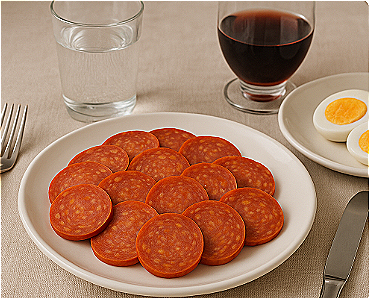
Pepperoni is a cured, fermented and dried sausage typically made from a blend of pork and beef, seasoned with paprika, chili pepper, and other spices.
It is known for its reddish colour, spicy–smoky flavour, and elastic yet firm texture.
It is one of the most widely used toppings on American-style pizza, but is also used in sandwiches, snacks, ready meals and processed food applications.
Indicative nutritional values per 100 g
(values may vary by recipe and fat content)
Energy: 480–520 kcal
Carbohydrates: 1–3 g
sugars: <1 g
Protein: 19–23 g
Lipids: 40–45 g
SFA (first occurrence – saturated fatty acids): 13–16 g
MUFA: 18–20 g
PUFA: 3–5 g
TFA: small natural amounts from ruminant fat
Sodium: 1,200–1,600 mg
Minerals: iron, zinc, phosphorus
Vitamins: B3, B6, B12
Key constituents
Meat proteins and lipids (pork and/or beef)
Salt
Spices (paprika, chili, pepper, garlic)
Nitrites/nitrates (curing agents)
Starter cultures (lactic acid bacteria)
Smoke flavour (natural or added)
Natural colouring from paprika and curing reactions
Production process
Meat selection and trimming of pork and beef.
Grinding to the desired particle size.
Mixing with salt, curing agents (nitrite/nitrate), dextrose, spices and starter cultures.
Stuffing into casings (natural or collagen).
Fermentation at controlled temperature and humidity to lower pH and develop flavour.
Smoking (optional depending on style).
Drying and aging to reduce moisture and stabilise texture and flavour.
Packaging as sticks, slices or mini-pepperoni.
All steps follow GMP/HACCP and regulatory limits for nitrites and microbiological safety.
Physical properties
Appearance: bright red-orange colour, fine grind, marbled fat.
Texture: firm, sliceable, slightly elastic.
Moisture: 30–40% depending on drying.
pH: typically 5.0–5.3 after fermentation.
Stability: shelf-stable or refrigerated depending on formulation.
Sensory and technological properties
Flavour: spicy, smoky, tangy, slightly acidic from fermentation.
Aroma: rich meat aromas with paprika and chili overtones.
Technology:
high fat content for meltability, crisping and flavour,
nitrite curing provides colour stability,
fermentation lowers pH for safety and characteristic taste,
browns and curls when cooked (desirable on pizza).
Food applications
Pizza topping (primary global use).
Sandwiches and subs.
Ready meals: pasta dishes, frozen pizzas, baked entrées.
Snacks: pepperoni sticks, jerky, bites.
Cheese blends and fillings: calzones, stromboli, savoury pastries.
Salads and antipasti (cubed).
Nutrition & health
Good source of protein, iron and B-vitamins.
High in fat, especially SFA; should be eaten in moderation.
High sodium content, typical of cured meat products.
Contains nitrites/nitrates, regulated ingredients used for safety and colour; excessive consumption of processed meats is discouraged in many dietary guidelines.
Not suitable for low-sodium or low-fat diets without reformulated versions.
Portion note
Typical serving:
14–30 g for pizza topping (10–15 slices).
30–50 g in sandwiches.
Snack sticks: 20–30 g per piece.
Allergens & intolerances
Contains meat (pork and/or beef).
Some formulations may contain:
milk derivatives (e.g., lactic acid starter carriers),
soy (protein binders),
spice extracts with carriers.
Always check manufacturer specifications.
Naturally gluten-free unless cross-contaminated.
Storage & shelf-life
Unopened refrigerated pepperoni: up to 6 months depending on packaging.
Shelf-stable versions: several months at room temperature.
Opened product: typically 1–3 weeks refrigerated.
Freezing is possible and extends shelf-life to 6–12 months, though texture may change slightly.
Protect from oxygen to prevent rancidity.
Safety & regulatory
Must comply with regulations for:
nitrite/nitrate limits,
microbiological criteria (Listeria, Salmonella),
fat/moisture/protein ratios,
labelling of allergens and meat species.
Produced following GMP/HACCP, including fermentation control and water activity reduction.
Labeling
Declared as “pepperoni”.
Ingredient list typically includes:
pork, beef, salt, spice(s), paprika, dextrose, natural flavours, nitrite, starter cultures.
Optional claims: “no added MSG”, “natural casing”, “reduced sodium”, etc., depending on formulation.
Troubleshooting
Greasy melt on pizza: high fat → use thinner slices or lower-fat pepperoni.
Insufficient curl/browning: moisture too high → adjust drying or slice thickness.
Acidic/off flavour: fermentation issues → verify culture viability and temperature control.
Colour fading: inadequate curing or oxygen exposure → improve packaging and nitrite control.
Sustainability & supply chain
Environmental concerns tied to pork and beef production (GHG emissions, land and water use).
Processing plants must manage effluents (monitored via BOD/COD) and energy consumption.
Possible certifications: Animal Welfare, Organic, Non-GMO feed, reduced nitrite formulations.
Main INCI functions (cosmetics)
(rare, only derivatives sometimes used)
Skin conditioning (from hydrolysed proteins/fats in some formulations).
Fragrance components derived from spices (not the meat itself).
Conclusion
Pepperoni is a widely used cured fermented sausage, appreciated for its spicy flavour, colour stability and cooking performance.
When manufactured under GMP/HACCP and stored correctly, it is a safe, stable and flavourful ingredient suitable for pizza, snacks, sandwiches and ready meals.
Mini-glossary
SFA – Saturated fatty acids: high in pepperoni; moderation recommended.
MUFA – Monounsaturated fats: a major part of pork/beef fat.
PUFA – Polyunsaturated fats: smaller fraction of meat fat.
TFA – Natural trans fats from ruminant fat.
GMP/HACCP – Food safety and quality management systems.
BOD/COD – Indicators of wastewater impact from meat processing.

