



Ginger root
(Rhizome of Zingiber officinale)
Description
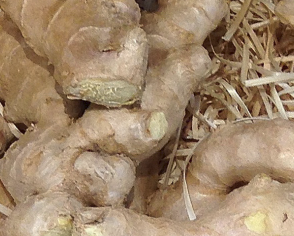
Ginger root (botanically a rhizome, not a true root) is the underground stem of the plant Zingiber officinale, used fresh, dried, or ground as a spice and food ingredient.
It has a knobbly, branched shape, with fibrous, juicy flesh that is pale yellow to light golden in colour.
The flavour is pungent, spicy, slightly citrusy and warming, with a fresh, aromatic top note; intensity varies with origin, freshness and processing (fresh vs dried/powder).
Widely used in Asian and Western cuisines, in sweet and savoury dishes, beverages, and processed foods.
Indicative nutritional values per 100 g
(fresh ginger; dried/powdered ginger has higher values per 100 g due to lower moisture)
Energy: 75–85 kcal
Protein: 1.5–2.0 g
Carbohydrates: 17–18 g
sugars: 1.5–2.0 g
Lipids: 0.6–0.8 g
SFA (first occurrence – saturated fatty acids): ~0.2 g
MUFA: ~0.1 g
PUFA: ~0.2 g
TFA: negligible
Dietary fibre: 2–3 g
Vitamins and minerals: small amounts of vitamin C, some B vitamins, potassium, magnesium.
At typical culinary use levels (about 5–20 g per serving), energy contribution is modest; the main importance is flavour and bioactive compounds.
Key constituents
Gingerols (e.g., 6-gingerol, 8-gingerol, 10-gingerol):
phenolic compounds responsible for ginger’s characteristic pungency and many of its functional properties.
Shogaols (e.g., 6-shogaol):
formed mainly from gingerols during drying, ageing or prolonged heating;
generally more pungent than gingerols and more abundant in dried ginger and some extracts.
Zingerone:
formed partly during cooking from gingerols;
less pungent, with a warmer, sweeter, vanilla-like profile.
Essential oil (about 1–3% in fresh ginger, higher in dried):
rich in sesquiterpenes such as zingiberene, β-bisabolene, farnesene and others.
Carbohydrates and fibre (starch, structural polysaccharides).
Minerals (K, Mg, Ca, P) and traces of vitamins.
Production process
(for fresh, dried and powdered ginger as a food ingredient)
Cultivation and harvesting of mature rhizomes, usually 8–10 months after planting.
Cleaning: soil and rootlets removed; washing with potable water.
For fresh ginger:
optional partial or full peeling (depending on market);
grading by size and quality;
packing in crates or trays for fresh distribution.
For dried/powdered ginger:
cutting into slices or pieces;
drying at controlled temperature (sun or hot-air driers);
optional complete peeling;
milling into powder under controlled conditions to limit loss of volatile oils;
sieving and packing.
Production under GMP/HACCP, with checks for:
microbiological quality;
pesticide residues;
mycotoxins;
heavy metals;
foreign matter.
Physical properties
Appearance (fresh): fleshy, branched rhizome with light beige skin and pale yellow internal flesh.
Appearance (dried): hard, fibrous slices or chunks; powder is a pale to light brown-yellow flour.
Odour: aromatic, spicy, fresh, characteristic ginger smell.
Taste: pungent, spicy, slightly sweet and citrusy.
Moisture: fresh ~80–85%; dried ~8–12%.
Solubility: rhizome is not soluble; aromatic and pungent components are extracted by hot water, oils and food-grade solvents.
Sensory and technological properties
Provides pungency and a complex spicy flavour profile to foods and beverages.
Fresh ginger has a more green, citrusy, balsamic character; dried/powdered ginger is typically warmer, more “spice-like” and pungent, with higher shogaol content.
Pairs well with acids (lemon, lime, vinegar) and sugars, making it ideal for drinks, sauces and desserts.
Exhibits mild antioxidant and antimicrobial effects in some food systems (due to phenolics and terpenes), which can support shelf-life in certain formulations.
As a powder it disperses easily in doughs, dry mixes and spice blends but loses volatiles faster during storage.
Food applications
Savoury cuisine:
stir-fries, curries, soups, broths and sauces (especially Asian dishes);
marinades and rubs for meat, poultry and fish;
vegetable sautés and pickles.
Sweet applications:
cakes, biscuits/cookies, gingerbread, festive baked goods;
puddings, fruit compotes, creams, chocolate products.
Beverages:
herbal infusions and teas, spiced teas, ginger tea;
ginger-based soft drinks (ginger ale), kombucha, fruit and vegetable juices or “shots”;
mulled drinks, winter punches.
Dairy:
flavoured yoghurts, ice cream, dairy desserts and spreads.
Processed foods:
sauces and condiments, ready meals, snack seasonings.
Functional foods:
bars, wellness shots, fortified juices (subject to local rules on claims and positioning).
Nutrition & health
Ginger contains phenolic compounds (gingerols, shogaols, zingerone) and terpenes with functional interest.
In traditional and herbal use it is associated with:
support of digestion;
relief of mild nausea;
a subjective sense of warmth and circulation stimulation.
Such effects belong primarily to the realm of herbal products and supplements and cannot automatically be used as claims for standard foods.
Fibre and micronutrient content is positive but modest at usual culinary doses.
At very high intakes (particularly from concentrated extracts), some individuals may experience gastrointestinal discomfort (heartburn, reflux, diarrhoea).
Portion note
In cooking:
fresh ginger: 5–15 g per portion (grated, sliced or crushed);
dried/powdered ginger: 0.5–3 g per recipe, depending on desired intensity.
In infusions:
2–5 g of sliced fresh root per 200–250 mL water;
1–2 g dried root/powder per 200–250 mL water.
Allergens and intolerances
Ginger root is not a major listed allergen.
Rare cases of individual sensitivity have been reported (e.g., mild GI symptoms or idiosyncratic reactions).
Naturally gluten-free, unless cross-contaminated during processing.
In compound foods, any other allergens (e.g., honey, citrus, soy, milk) must be considered and labelled separately.
Storage and shelf-life
Fresh ginger:
store in a cool, dry place or in the refrigerator;
if refrigerated properly, shelf-life is typically 2–4 weeks;
can be frozen after peeling/cutting.
Dried/powdered ginger:
store in airtight containers, protected from light, heat and humidity;
typical shelf-life: 18–24 months, with gradual aroma loss over time.
Main risks:
mould and decay in poorly stored fresh ginger;
aroma loss and slight oxidative off-notes in old powders;
absorption of foreign odours.
Safety & regulatory
Considered safe as a traditional food ingredient at normal dietary levels.
Subject to requirements for plant ingredients:
limits for pesticide residues, heavy metals, mycotoxins;
microbiological criteria for fresh produce and dried spices.
For standardised extracts and high-dose products, specific rules for food supplements may apply.
Processing should follow GMP/HACCP, with full traceability from raw rhizome to finished product.
Labeling
Typical denominations:
“ginger root”, “ginger”, optionally with botanical name Zingiber officinale;
for dried forms: “dried ginger”, “ginger powder”.
In multi-ingredient foods: listed in the ingredients list in descending order of weight; can be highlighted as a characterising ingredient (e.g., “ginger-flavoured”).
No specific allergen warning is required for ginger itself, unless cross-contamination or other ingredients introduce regulated allergens.
Troubleshooting
Weak flavour in the final product:
old or low-quality ginger → use fresher material with stronger aroma;
insufficient dosage → increase level;
addition too early in cooking → add part of the ginger later or at the end to preserve top notes.
Excessive pungency or dominance:
too high dosage or very pungent batch → reduce amount, balance with sugar and acid, or combine with milder aromatics.
Unwanted browning or dark colour in beverages:
oxidation of phenolics → limit air exposure, consume quickly, optionally acidify (e.g., lemon juice).
Fresh ginger spoilage (mould, rot):
poor storage conditions → improve ventilation, temperature and moisture control; avoid water accumulation in packaging.
Sustainability & supply chain
Ginger is mainly grown in tropical regions; sustainability aspects include:
soil management and erosion control;
responsible use of water and plant protection products;
biodiversity conservation in producing areas.
Processing steps (washing, cutting, drying, milling) require:
efficient energy management;
proper treatment of wash water and effluents, often monitored via BOD/COD or similar indicators.
Organic, fair trade or sustainability certifications can support responsible sourcing and market positioning.
Main INCI functions (cosmetics)
(e.g., “Zingiber Officinale (Ginger) Root Extract”, “Zingiber Officinale (Ginger) Root Oil”)
Fragrance ingredient (warm, spicy, slightly citrus note).
Skin-conditioning agent in body care and massage products.
Used in “warming” or “stimulating” themed products (body creams, massage oils, bath products).
Must be dosed carefully to avoid skin irritation in sensitive users.
Conclusion
Ginger root is a highly versatile ingredient that delivers pungency, freshness and aromatic complexity across a wide variety of sweet and savoury dishes and beverages. Its main role is sensory, but the presence of gingerols, shogaols and terpenes also makes it interesting in functional and herbal contexts, especially in extracts and targeted products. With a well-controlled supply chain, adherence to GMP/HACCP, proper storage and appropriate dosing, ginger root offers a safe, stable and high-quality ingredient for both home cooking and industrial applications.
Mini-glossary
SFA – Saturated fatty acids: “solid” fats; present at very low levels in ginger, with negligible health impact at culinary doses.
MUFA – Monounsaturated fatty acids: intermediate fats, a small part of ginger’s lipid fraction.
PUFA – Polyunsaturated fatty acids: more oxidation-sensitive fats; present in modest amounts in ginger.
TFA – Trans fatty acids: not characteristic of ginger root.
GMP/HACCP – Good Manufacturing Practices / Hazard Analysis and Critical Control Points, systems used to ensure hygiene, safety and quality in food production.
BOD/COD – Biological / Chemical Oxygen Demand, indicators of the environmental impact of industrial wastewater.
Shogaols – Dehydration products of gingerols formed mainly during drying or heating; more pungent phenolic compounds contributing to the stronger “bite” of dried ginger.
Studies
Widely used in the food and medical fields.
Among its components are interesting bio-actives: gingerol (co-responsible of spiciness), zingiberene, zingerone (co-responsible of spiciness), shogaol which has anti-inflammatory properties.
Studies
Zingerone has demonstrated particular properties, such as antioxidant, anti-inflammatory, anticancer and antidiabetic. As oxidative stress and inflammation contribute to acute and chronic myocardial lesions, this component can be a powerful treatment in the prevention and treatment of heart failure (1).
This study carried out an in-depth meta-analysis of the safety of ginger to counteract the severity of nausea and postoperative vomiting. Ginger is safe and well tolerated and can reduce the demand for antiemetic drugs (2).
Chemotherapy has serious side effects that may be detrimental to the patient, namely complaints of nausea and vomiting. To reduce the side effects of chemotherapy, many patients in our country choose herbal therapy. One such therapy is the intake of ginger. The aim of this article is to explore the effectiveness of ginger to overcome nausea and vomiting caused by chemotherapy in breast cancer patients. The method used is a systematic review. Results of the study suggest that ginger is only effective to reduce nausea, but does not lower the frequency of vomiting caused by chemotherapy in breast cancer patients (3).
It has an antifungal activity through its oil, which, used at 2% together with a 1.5% of its extract delays the ripening of the fruit Papaya (4).
Together with citric acid, it serves to improve the softness of meat in deli products (5).

