



Natural and artificial flavourings, Natural and artificial flavors
Description
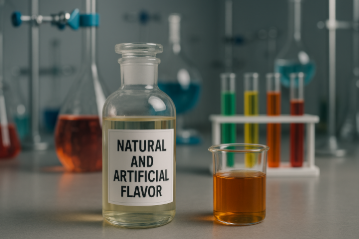
Natural and artificial flavourings are concentrated aroma-producing ingredients used to impart or enhance flavor in foods and beverages.
Natural flavors derive from plant or animal sources through physical, enzymatic, or microbiological processes.
Artificial flavors are chemically synthesized compounds that mimic the taste and aroma of natural substances.
Both types are widely used across the food industry to ensure sensory consistency, stability, and flavor intensity in processed foods.
Indicative nutritional values per 100 g
(Flavours are used in very small quantities; typical nutritional contribution is negligible.)
Energy: 0–20 kcal
Proteins: 0 g
Carbohydrates: 0–3 g
Sugars: 0–2 g
Lipids: 0–2 g
SFA (first occurrence): trace–very low
MUFA: trace
PUFA: trace
Sodium: depends on formulation
Other nutrients: not nutritionally relevant due to usage levels
Key constituents
Natural flavors may include:
essential oils, oleoresins, distillates
extracts from fruits, vegetables, spices, herbs
fermentation-derived aromatic components
enzymatically modified flavor compounds
Artificial flavors may include:
esters
aldehydes
ketones
alcohols
lactones
other aroma mimics synthesized to replicate natural flavor molecules
Carriers (in both categories):
propylene glycol, glycerol
ethanol
vegetable oils
maltodextrin
Production process
Natural flavors
Raw material selection: botanical or animal-derived sources.
Extraction: steam distillation, cold pressing, solvent extraction, CO₂ extraction.
Concentration & purification: removal of impurities, adjustment of aromatic profile.
Standardization: blending to achieve consistent sensory attributes.
Artificial flavors
Chemical synthesis of specific aroma molecules.
Purification to remove residual reagents or by-products.
Blending of multiple synthetic compounds to create a desired flavor profile.
Stabilization with carriers and solvents.
Common quality controls:
identity and purity tests
GC–MS profiling
solvent residue analysis
microbiological control (mainly for natural flavors)
Physical properties
Appearance: liquid concentrates, powders, emulsions, essential oils.
Solubility: water-soluble, oil-soluble, or emulsified depending on application.
Density: variable based on carrier.
Volatility: critical for aroma release; temperature sensitive.
Color: usually clear or pale yellow; powdered versions are white to off-white.
Sensory and technological properties
Provide aroma, taste, and flavor intensity.
Enhance or restore flavor lost during processing.
Maintain batch-to-batch consistency.
Improve perception of sweetness, freshness, creaminess, or fruitiness.
Functional roles:
masking off-notes
flavor modulation
improving consumer acceptance
stabilizing aroma in heat-processed foods through encapsulation
Food applications
Beverages: carbonated drinks, juices, flavored waters.
Snacks: chips, crackers, popcorn seasonings.
Bakery products: cakes, cookies, pastries.
Dairy products: yogurt, ice cream, flavored milk.
Confectionery: candies, chocolates, gums.
Convenience foods: soups, sauces, ready meals.
Meat analogues: flavor masking and enhancement.
Nutrition & health
Natural and artificial flavors are used at extremely low levels and do not contribute to nutritional intake.
Natural flavors may contain complex mixtures of aromatic compounds from plant/animal sources.
Artificial flavors are chemically identical or similar to flavor molecules found in nature, though produced via synthesis.
Safety consideration (as you noted):
Artificial flavors undergo rigorous safety testing before regulatory approval.
However, because formulations are often proprietary, the exact components might not always be disclosed, making it difficult for individuals with allergies to identify potential allergens.
Natural flavors can contain allergens naturally present in the source ingredient.
Both must comply with toxicity, purity, and exposure limits set by regulatory agencies.
Portion note
Typical usage levels: 0.01–2% depending on flavor strength, product type, and regulatory limits.
Powders used at lower doses than liquids due to concentration.
Allergens and intolerances
Natural flavors:
may contain trace allergens from botanical or animal sources (e.g., milk, soy, nuts, celery, shellfish).
Artificial flavors:
individual molecules are rarely allergenic,
but complete mixtures may contain carriers or minor components that pose allergy risks.
Mandatory allergen labelling applies if allergenic sources are used.
Some flavors contain ethanol (not an allergen but relevant for restrictions).
Regarding safety, artificial flavors are indeed subject to rigorous testing before approval for use in food products. However, the concern about allergens in artificial flavors is understandable, as the specific components of an artificial flavor mixture might not always be fully disclosed due to proprietary reasons. This can make it difficult for individuals with allergies to identify potential allergens.
Storage & shelf-life
Store in cool, dark, dry conditions.
Shelf-life:
liquids: 12–24 months
encapsulated powders: 18–36 months
Sensitivity:
light → degradation of aromatic compounds
heat → loss of volatile molecules
oxygen → oxidation in natural flavors
Safety & regulatory
Must comply with food-additive and flavor regulations.
Regulated as “flavoring substances,” “flavoring preparations,” “aroma chemicals,” etc.
Key controls:
purity, solvent residues
toxicological evaluation
allergen screening
compliance with usage limits
Artificial flavors are subject to pre-market safety assessments and ongoing reevaluation.
Natural flavors must be derived via approved processes.
Labeling
Standard declarations:
“natural flavor”
“artificial flavor”
“natural and artificial flavors”
More specific declarations may be required depending on the source of allergens.
Carriers (e.g., propylene glycol) must be listed when present in significant quantities.
Encapsulated flavors must list encapsulating agents (e.g., maltodextrin).
Troubleshooting
Flavor fade:
due to oxidation, heat, or poor encapsulation; improve packaging or use encapsulated ingredients.
Harsh/off-notes:
excessive dosage or heat degradation; adjust concentration or use stabilizers.
Poor solubility or separation:
oil-soluble flavors in aqueous systems; use emulsified forms.
Inconsistent flavor release:
particle size or distribution issues; improve mixing or granulation.
Sustainability & supply chain
Natural flavors depend on renewable botanical/agricultural sources.
Artificial flavors may reduce environmental impact by avoiding high-resource crops and improving sustainability.
Considerations:
energy use in extraction or synthesis
water usage
by-products and waste handling with BOD/COD monitoring
Encapsulation technologies help minimize waste and extend stability.
Main INCI functions (cosmetics)
(As “Flavor”, “Aroma”, “Fragrance”, or specific natural extracts)
Fragrance in lip care and oral care products
Taste masking in lip balms and edible cosmetics
Aromatic/odor-enhancing agent
Conclusion
Natural and artificial flavourings are essential tools in modern food formulation, offering consistent, stable, and customizable sensory experiences. Natural flavors derive from botanical or animal materials, while artificial flavors replicate specific aroma molecules through synthesis. Both categories undergo strict safety evaluations, but potential allergen concerns may arise—especially because proprietary blends do not always disclose all minor components. When used correctly and produced following high quality standards, flavors provide reliable and safe solutions for enhancing taste across a broad range of food products.
Mini-glossary
SFA – Saturated fatty acids: present only in trace amounts in flavor carriers.
GMP/HACCP – Good Manufacturing Practices / Hazard Analysis and Critical Control Points: systems ensuring hygienic and controlled food production.
BOD/COD – Biological oxygen demand / chemical oxygen demand: measures of wastewater impact during production.
Carrier – Substance used to dilute or stabilize a flavor (e.g., ethanol, glycerol, maltodextrin).
Encapsulation – Technique that protects delicate flavor compounds in a powder matrix for stability.

