



Dried potatoes
Description
Dried potatoes are dehydrated potato products obtained by removing most of the natural moisture from cooked or raw potatoes.
They preserve the flavor, structure, and nutritional properties of fresh potatoes while offering extended shelf-life and easy reconstitution.
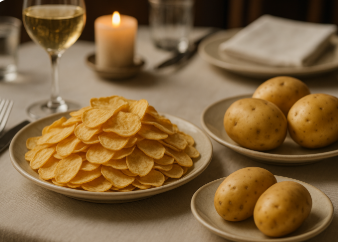
Common forms include flakes, granules, powders, diced dried potatoes, and instant mashed potato bases.
Widely used in bakery, snacks, instant meals, meat products, and ready-to-cook formulations.
Indicative nutritional values per 100 g
(Typical dehydrated potato flakes; values vary by form and processing)
Energy: 330–360 kcal
Proteins: 7–10 g
Carbohydrates: 70–80 g
sugars: 3–6 g
starch: major fraction
Lipids: 0.3–1 g
SFA (first occurrence): very low
MUFA: traces
PUFA: traces
Fiber: 5–8 g
Sodium: variable (higher when salted or pre-seasoned)
Minerals: potassium, magnesium, phosphorus
Vitamins: some B-vitamins retained; vitamin C significantly reduced during drying
Key constituents
Starch (amylose and amylopectin)
Dietary fiber (cellulose, hemicellulose, pectin)
Proteins: patatin and other potato peptides
Minerals: potassium, magnesium, phosphorus
Trace lipids and natural potato phytochemicals (phenolics, carotenoids depending on cultivar)
Production process
Selection and washing of raw potatoes.
Peeling (steam or mechanical).
Cutting and blanching to stabilize color and deactivate enzymes.
Cooking (for flakes and granules; raw drying for some diced forms).
Mashing (for flakes) and pre-gelatinization of starches.
Dehydration through drum drying, air drying, or freeze-drying.
Flaking or granulation depending on end use.
Sieving and milling to achieve consistent particle size.
Packaging under controlled humidity.
Quality control (GMP/HACCP): moisture, microbial load, color, solubility, bulk density, absence of contaminants.
Physical properties
Appearance: off-white to pale yellow flakes, granules, or powders.
Moisture: typically 5–8%.
Solubility: excellent in hot water for flakes; moderate for powders.
Texture: light, dry, free-flowing.
Density: low bulk density (~0.2–0.4 g/mL).
Shelf-stability: high when kept dry.
Sensory and technological properties
Flavor: mild potato taste, clean and neutral.
Texture development: rehydrates to a smooth or particulate structure depending on type.
Thickening and binding: useful in soups, sauces, and meat systems.
Water absorption: high water-binding capacity.
Starch functionality: contributes to viscosity, body, and stability in cooked systems.
Color: stable pale cream color when protected from oxidation.
Food applications
Instant mashed potatoes and ready-to-eat meals.
Bakery products: bread, buns, gluten-free formulations (improving softness and moisture).
Snacks: potato chips, extruded snacks, crackers.
Soups, sauces, and gravies (thickener and body enhancer).
Meat products: binder in sausages, patties, and formed meats.
Extruded and dehydrated meals: camping foods, emergency rations.
Baby food formulations.
Nutrition & health
Source of complex carbohydrates, fiber, and potassium.
Low in fat and naturally free from cholesterol.
Provides moderate protein content with good digestibility.
Reduced vitamin C compared to fresh potatoes due to heat treatment.
Suitable for gluten-free diets.
Glycemic index may increase depending on processing and reconstitution; portion control recommended.
Portion note
Typical use in prepared foods: 10–30% of the formulation depending on texture needs.
Instant mashed potatoes: 20–30 g dried product per serving (reconstituted with water/milk).
Bakery use: 3–10% of flour weight.
Allergens and intolerances
Potatoes are not a major allergen.
Naturally gluten-free.
Cross-contamination possible only if processed in shared facilities.
Some individuals sensitive to nightshades may react (rare).
Storage and shelf-life
Store in a cool, dry area, protected from humidity.
Shelf-life: typically 12–24 months, longer for freeze-dried products.
Sensitive to:
moisture (clumping, microbial growth)
oxidation (off-flavors in pre-seasoned mixes)
light (minor color changes)
Safety & regulatory
Must meet food-grade standards and be produced under GMP/HACCP.
Regular testing for:
moisture and water activity
contaminants (heavy metals, pesticides)
acrylamide levels (depending on processing)
microbial load
Regulations differ by region for dried vegetables, instant foods, and potato derivatives.
Labeling
Declared as:
“dried potatoes”
“dehydrated potatoes”
“potato flakes/powder/granules”
If fortified, seasoned, or mixed, all additional ingredients must appear in the label.
Gluten-free claims permitted when relevant controls are in place.
Troubleshooting
Lumpy reconstitution:
insufficient whisking or water too cold; use gradual hydration.
Off-flavors:
oxidation; ensure airtight packaging and avoid high humidity.
Poor expansion in snacks:
incorrect moisture content or particle size; adjust drying or milling.
Discoloration:
enzymatic browning or oxidation; improve blanching, storage, or antioxidant systems.
Thick paste:
excessive water binding; adjust ratio or blend with lower-viscosity starch sources.
Sustainability & supply chain
Uses whole potatoes and may include potato by-products → reduces food waste.
Environmental considerations:
energy consumption during drying
water usage during blanching and washing
wastewater management with BOD/COD control
Long shelf-life and lightweight nature reduce transportation footprint.
Sustainable sourcing can include low-input potato varieties and efficient irrigation.
Main INCI functions (cosmetics)
(When used as “Solanum Tuberosum Starch / Potato Starch” or “Potato Extract”)
Absorbent of sebum and moisture
Skin-conditioning agent
Bulking agent in powders
Viscosity modifier
Used in dry shampoos, face powders, masks, and creams.
Conclusion
Dried potatoes are highly versatile, shelf-stable ingredients with excellent functional properties, including water-binding, thickening, and texture enhancement. They are widely used across food categories—from bakery to instant meals—thanks to their clean flavor, nutritional value, and ease of use. When produced under strict quality and safety standards, dried potatoes offer reliable performance and a sustainable ingredient solution for both industrial and consumer applications.
Mini-glossary
SFA – Saturated fatty acids: present only in small amounts in dried potatoes.
MUFA – Monounsaturated fatty acids: beneficial fatty acids, present only in traces.
PUFA – Polyunsaturated fatty acids: omega-3/6 families; very low levels in potatoes.
TFA – Trans fatty acids: undesirable; absent in potatoes.
GMP/HACCP – Good Manufacturing Practices / Hazard Analysis and Critical Control Points: quality and safety systems for food production.
BOD/COD – Biological oxygen demand / chemical oxygen demand: indicators of environmental impact for processing wastewater.
Studies
About 80% of the weight of a fresh potato tuber is water; almost all the remaining dry matter is starch. Most of the starch (70%) is amylopectin, the rest being amylose (1).
Particular warning about the potato skin, which is a concentrate of phenolic compounds with antioxidant activity (2) and dietary fibres.
Potatoes are a source of carbohydrates in the diet all over the world and are generally considered high glycaemic index (3) foods, the parameter that indicates how much glucose is present in the blood.
Another problem with potato consumption is the pesticide residue that can be found in this tuber. Warning should be given as to where it is grown and what fertilisation it is subjected to.
In addition, warning must be given to prolonged frying at high temperatures, which degrades the qualities of the oil and the potato itself, generating acrylamide, a potentially carcinogenic molecule (4)
For more information:

